
TL;DR

Get art and craft supplies delivered free with Prime
- Fast, free delivery on millions of items
- Prime Video, Amazon Music and more included
- Member-only deals all year
A team of engineers has demonstrated that a conventional pen plotter can be used to generate three-dimensional holograms. This breakthrough could make holographic displays more accessible and affordable. The development is still in experimental stages, with further refinement needed.
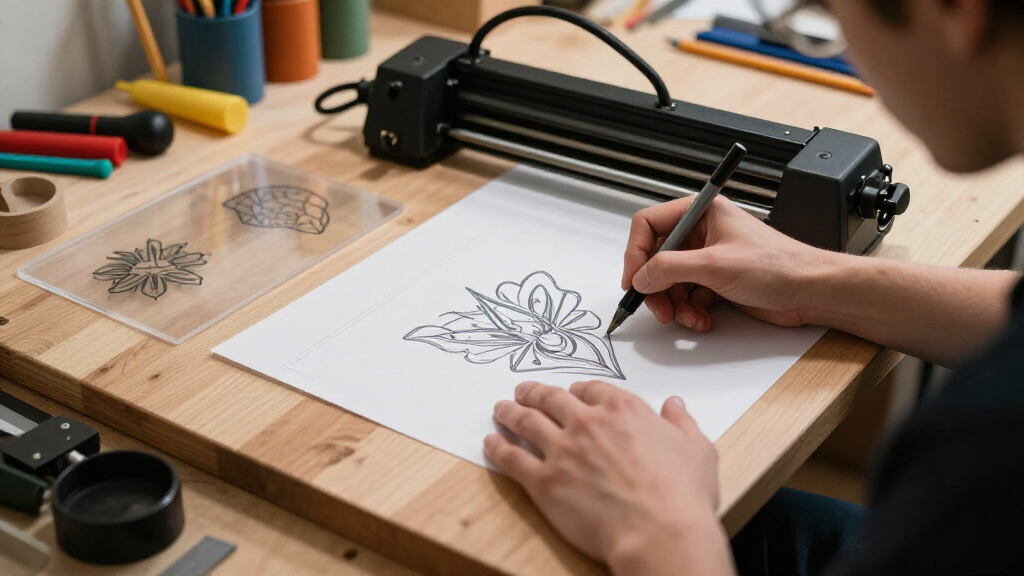
Researchers have demonstrated a method to produce hologram-like images using a standard pen plotter, a device typically used for drawing on paper. This breakthrough, announced in late October 2023, could significantly lower the cost and complexity of creating three-dimensional holograms, making this technology more accessible for educational, artistic, and commercial applications.
The team, composed of engineers and artists, modified a common pen plotter to control a light source and a reflective surface, enabling it to project layered images that create a three-dimensional illusion. According to the researchers, this setup can produce holograms without the need for expensive laser systems or complex optical equipment.
Initial experiments involved programming the plotter to move a laser pointer across multiple angles, which, when combined with reflective surfaces, generated images perceived as floating in space. The process relies on precise mechanical control and timing to produce the layered visual effect, mimicking the appearance of a hologram.
While the current prototypes produce small, static images, the researchers suggest that with further development, larger and more dynamic holograms could be possible using similar setups, potentially paving the way for affordable holographic displays in various fields.
Potential Impact of Pen Plotter-Based Holography
This development could democratize access to holographic technology by using inexpensive, widely available devices like pen plotters. It offers a low-cost alternative to traditional holography equipment, which often requires costly lasers and specialized optical components. If scalable, this method could enable new applications in education, art, advertising, and even medical imaging, where 3D visualization is valuable.
Furthermore, the approach could inspire innovations in DIY and maker communities, fostering experimentation with holography without the need for high-end lab setups. However, the current limitations in image size, resolution, and dynamic capability mean that widespread adoption remains a future goal rather than an immediate reality.
As an affiliate, we earn on qualifying purchases.
Advances in Low-Cost Holography Techniques
Recent years have seen increasing interest in making holography more accessible, with researchers exploring alternative methods such as smartphone-based hologram displays and simple optical setups. Prior efforts have often relied on expensive equipment or complex processes, limiting practical use outside specialized labs. The recent demonstration using a pen plotter builds on this trend by leveraging familiar, affordable technology to produce 3D illusions.
Historically, holography has been confined to high-end research labs due to the need for precise optical components and laser sources. This new approach, if refined, could shift some of that paradigm by utilizing mechanical control and light reflection, which are more manageable and cost-effective.
As an affiliate, we earn on qualifying purchases.
Current Limitations and Future Challenges
It is not yet clear how scalable or practical this method will be for commercial or widespread use. The size, resolution, and dynamic capabilities of the holograms produced are still limited, and further research is needed to develop real-time, larger-scale holographic displays. Additionally, the durability and stability of the images over time remain untested.
As an affiliate, we earn on qualifying purchases.
Next Steps in Developing Pen Plotter Holography
The research team plans to refine their setup to increase hologram size and resolution, and explore ways to animate or update the images dynamically. They also aim to collaborate with industry partners to test the technology in real-world applications, such as educational displays or artistic installations. Further experiments will focus on improving image stability and integrating more advanced control systems.
reflective surfaces for hologram projects
As an affiliate, we earn on qualifying purchases.
As an affiliate, we earn on qualifying purchases.
Key Questions
How does a pen plotter create a hologram?
The plotter moves a light source, such as a laser, across multiple angles and reflections, creating layered images that the brain perceives as a three-dimensional object.
Can this method produce full-color holograms?
Currently, the prototypes produce monochrome images, but researchers are exploring ways to incorporate color using multiple light sources or filters.
Is this technology ready for commercial use?
No, it remains experimental. Significant development is needed to produce larger, dynamic, and stable holograms suitable for consumer or industrial applications.
What are the main limitations of this approach?
Limitations include small image size, static images, limited resolution, and challenges in scaling up for real-time, large-scale displays.
Source: hn
Halloween Picks
halloween
As an affiliate, we earn on qualifying purchases.