
TL;DR

Get art and craft supplies delivered free with Prime
- Fast, free delivery on millions of items
- Prime Video, Amazon Music and more included
- Member-only deals all year
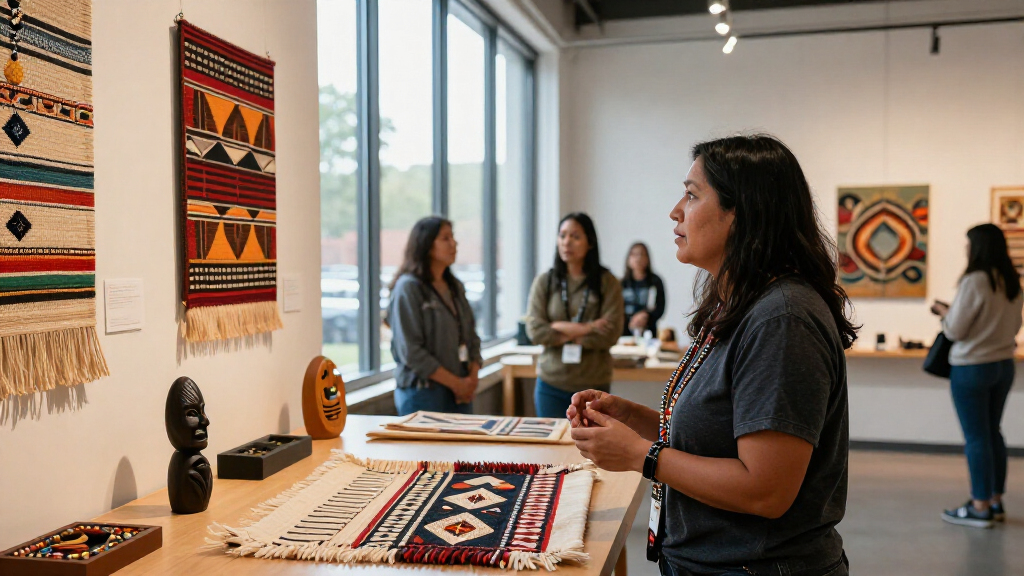
Crystal Bridges Museum of American Art reinstalled its contemporary Native art display alongside a two-day symposium organized by curator Jordan Poorman Cocker and Ashley Holland. Cocker says the project aims to recenter Indigenous art and support artists, while the museum’s Indigenous and Native works account for about 3% of its permanent collection.
Crystal Bridges Museum of American Art has reinstalled its contemporary Native art display and convened a two-day symposium on Indigenous art, a project led by Jordan Poorman Cocker and curator Ashley Holland. The development puts living Native artists and a wider range of Indigenous practices at the center of the museum’s presentation, while Cocker says Indigenous and Native art still makes up only about 3% of the permanent collection.
The reinstallation coincided with a symposium at the Bentonville, Arkansas, museum on October 16 and 17. The gathering brought together Indigenous artists, curators, and scholars. It included a keynote by Choctaw and Cherokee multidisciplinary artist Jeffrey Gibson, a conversation between Diné weaver Melissa Cody and her mother, Lola Cody, and a workshop by Lehuauakea based on traditional kapa practice. Kiowa artists and community members, including beadwork artist Terri Greeves, also took part.
Cocker, a citizen of the Kiowa and Tongan communities, joined Crystal Bridges in 2023 as its Native American Graves Protection and Repatriation Act officer and first full-time curator of Indigenous art. She organized the reinstallation with Ashley Holland, a citizen of the Cherokee Nation. The display includes work by living Native artists and artists connected to tribes whose ancestral lands are in Arkansas; the museum described the project as an effort to show diversity in style and medium across Indian Country.
In an interview with Hyperallergic, Cocker said the project seeks to recenter the museum’s Indigenous art and craft collections. She described artist commissions and support for apprenticeships, community classes, and art education as ways a museum can contribute to the communities and knowledge systems that sustain art practices. Those are Cocker’s stated goals; the source does not report specific new funding commitments or measure the reinstallation’s impact.
The project brings attention to the gap between Indigenous art’s importance to American art history and its representation in museum collections. Cocker told Hyperallergic that Native American and Indigenous art is foundational to American collections, while estimating that it comprises about 3% of Crystal Bridges’s permanent holdings. That figure is a share of this museum’s collection, not a measure of Indigenous art across museums generally.
The reinstallation also frames curatorial work as more than displaying objects. Cocker’s account links exhibition-making to commissions and practical support for artists whose practices depend on intergenerational learning. Whether those aims lead to sustained opportunities for the participating artists remains to be seen, but the project offers a concrete example of a museum making contemporary Native artists and their practices more visible.
Popular right now

Hisense 43-Inch E6SR Series Hi-QLED 4K UHD Smart Roku TV (2026 Model)

Shark AV2501S AI Ultra Robot Vacuum with Self-Empty Base

KitchenAid Classic Series 4.5-Quart Tilt-Head Stand Mixer, Onyx Black
As an affiliate, we earn on qualifying purchases.
Cocker’s Curatorial Approach
Cocker’s work draws on museum studies she pursued at Victoria University of Wellington in New Zealand, as well as her own practice as a beadwork and textile artist rooted in Kiowa and Tongan traditions. She describes her outlook through a global understanding of Indigeneity that challenges the divisions imposed by colonial nation-states. The source presents this as her curatorial perspective, not as a claim that Indigenous peoples share one identity or experience.
The museum stands on the ancestral homelands of the Osage, Quapaw, and Caddo Nations, whose people were forcibly relocated in the 19th century. The symposium opened with a land acknowledgment. Cocker told Hyperallergic that the reinstallation was also intended to include work by citizens of tribes ancestral to Arkansas. She has cited the 2019 exhibition Hearts of Our People: Native Women Artists at the Minneapolis Institute of Art as an influence; Greeves also spoke about its importance at the gathering.
“The impetus is to recenter two primary areas: the Indigenous art collection and the craft collection.”
— Jordan Poorman Cocker, in an interview with Hyperallergic
Collection Plans Still Unclear
The source does not specify the year of the October 16–17 symposium, provide a full list of works in the reinstallation, or say how long the display will remain in place. It also does not identify a budget, new acquisition targets, or continuing artist-support programs tied to the project. Cocker’s description of the collection’s roughly 3% Indigenous and Native art share is attributed to her interview; no separate collection audit is provided.
It is also unclear how the museum will evaluate whether the reinstallation changes Indigenous artists’ access to commissions, education resources, or long-term institutional opportunities. The source describes the project’s intent and events, but does not present outcome data or responses from all participating communities.
Follow-Up at Crystal Bridges
The source reports no announced next exhibition, funding decision, or follow-up symposium date. The immediate next measure of the project will be whether Crystal Bridges sustains the collaborations and artist support Cocker described, alongside the display itself. Any future acquisitions, commissions, or educational programs would clarify how the museum plans to extend the reinstallation’s goals beyond the symposium.
For now, the confirmed development is the rehang and accompanying gathering. Further details about the display’s duration, collection growth, and ongoing partnerships have not been supplied.
Key Questions
What happened at Crystal Bridges?
Crystal Bridges reinstalled its contemporary Native art display and held a two-day symposium on Indigenous art, led by Jordan Poorman Cocker and Ashley Holland.
Who is Jordan Poorman Cocker?
Cocker is a Kiowa and Tongan citizen, a beadwork and textile artist, and Crystal Bridges’ first full-time curator of Indigenous art. She joined the museum in 2023 and also serves as its NAGPRA officer.
What did the symposium include?
It featured a keynote by Jeffrey Gibson, a conversation between Melissa Cody and her mother Lola Cody, a kapa-practice workshop by Lehuauakea, and participation by Kiowa artists and community members.
How much of Crystal Bridges’ permanent collection is Indigenous or Native art?
Cocker told Hyperallergic that it makes up about 3% of the museum’s permanent collection. The source does not provide an independent audit or a broader comparison across museums.
What remains unknown about the reinstallation?
The source does not state how long the display will remain, whether it will lead to new acquisitions or ongoing programs, or how the museum will measure its effects for artists and communities.
Source: hyperallergic.com