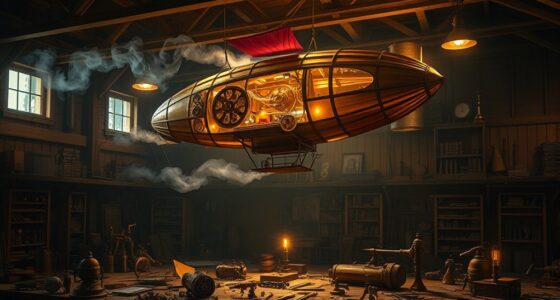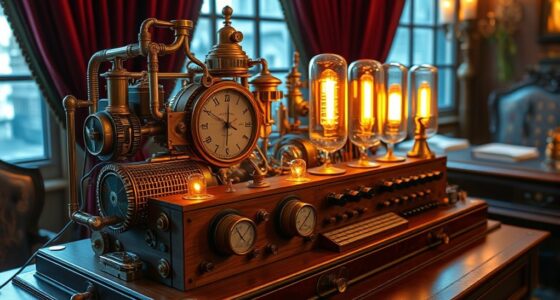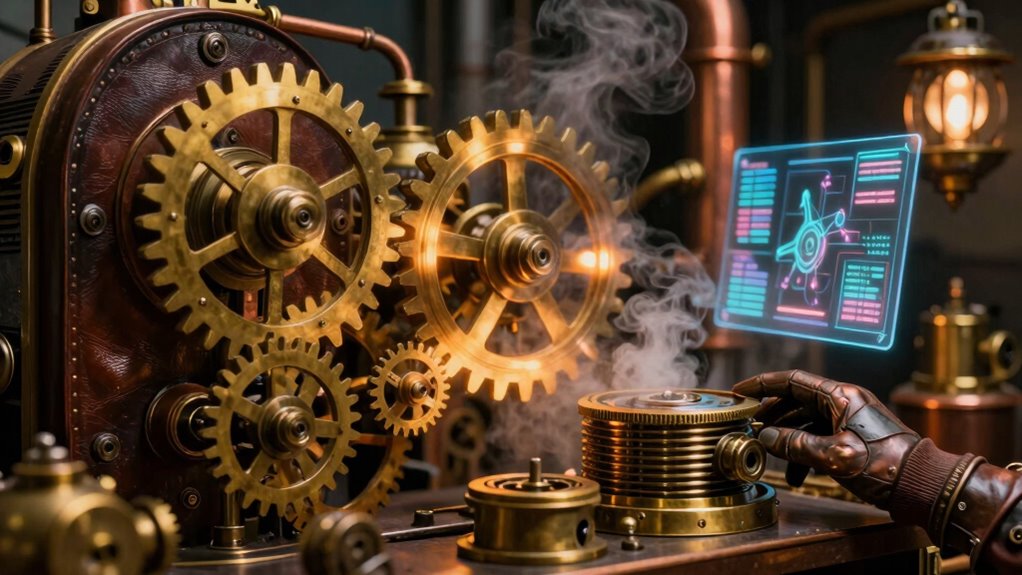

In steampunk, you’ll notice that analog tech focuses on handcrafted, mechanical devices with visible gears, cogs, and steam-powered parts, emphasizing craftsmanship and tactile ingenuity. Digital illusions, on the other hand, use electronic components and displays to create effects that mimic magic or digital functions, which can clash with the genre’s antique aesthetic. If you keep exploring, you’ll discover how this distinction shapes the unique charm and authenticity of steampunk worlds.

Get art and craft supplies delivered free with Prime
- Fast, free delivery on millions of items
- Prime Video, Amazon Music and more included
- Member-only deals all year
Key Takeaways
- Analog tech in steampunk emphasizes handcrafted, mechanical devices with visible gears and manual controls, embodying craftsmanship and tactile craftsmanship.
- Digital illusions rely on electronic displays and programming, which clash with steampunk’s emphasis on tangible, mechanical craftsmanship.
- Analog devices operate through steam-powered or clockwork mechanisms, showcasing mechanical ingenuity; digital illusions mimic functions without physical movement.
- Steampunk values visible, intricate mechanical systems, whereas digital illusions often conceal mechanisms behind electronic screens or minimal interfaces.
- The core distinction lies in analog tech’s focus on manual, artistic craftsmanship versus digital illusions’ reliance on electronic simulation.
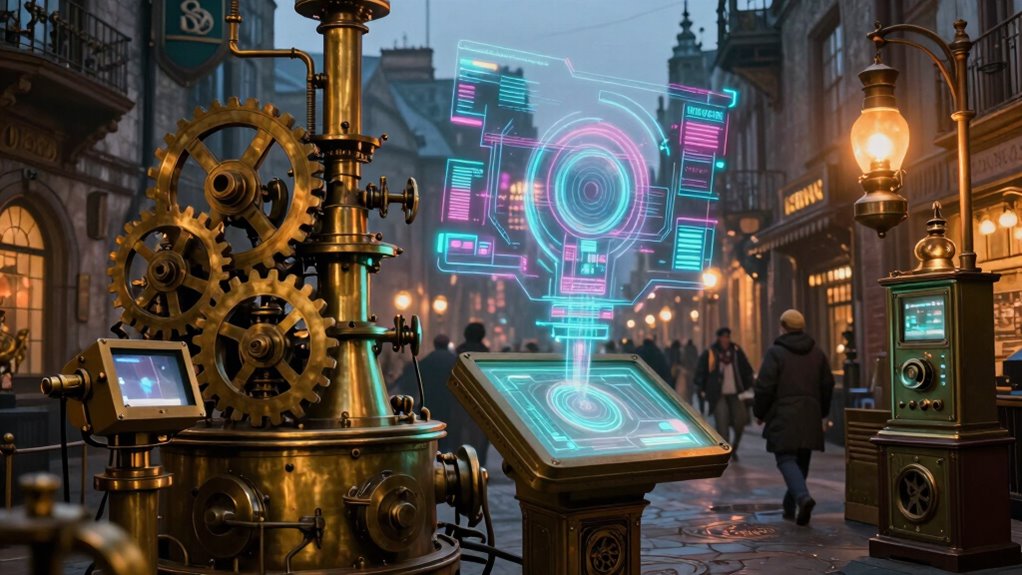
Steampunk blends a Victorian-era aesthetic with imaginative technology, creating a world where analog devices often take center stage. This genre is rooted in Victorian aesthetics, emphasizing intricate designs, ornate details, and the elegance of 19th-century craftsmanship. When you explore steampunk, you notice how mechanical engineering becomes a form of art. Gears, cogs, and steam-powered engines aren’t just functional—they serve as visual symbols of innovation and ingenuity. These elements create a tactile experience, where each device feels tangible, grounded in the craftsmanship of a bygone era.
In steampunk, analog tech dominates because it aligns with this Victorian sensibility. You see devices that are often handcrafted, with exposed mechanisms that highlight their mechanical nature. The beauty lies in their complexity and the visible movement of parts working together. It’s about celebrating the craftsmanship, the precise manual work that goes into designing and building these machines. You don’t need digital displays or electronic components; instead, you’re drawn to the beauty of mechanical engineering, where each gear, lever, and valve plays a role. It’s a world where the charm of physicality and the artistry of engineering come together, creating a sense of authenticity and nostalgia.
Digital illusions, on the other hand, are noticeably absent or minimized in traditional steampunk. Instead of relying on screens and electronic controls, everything operates through mechanical means. When you see a device in a steampunk setting, it’s often powered by steam or clockwork mechanisms, emphasizing the ingenuity of analog technology. These devices produce illusions of magic or futuristic capabilities through mechanical tricks rather than digital programming. You might encounter a device that appears to be a computer or a communication device, but it’s actually a carefully crafted mechanical contraption. The illusion is created through clever engineering and design, not through digital code. Mechanical ingenuity is a core aspect of steampunk, highlighting how complex mechanical systems can mimic or replace electronic functions.
This distinction is key in steampunk aesthetics. You’re invited to appreciate a world where the marvels of technology are visible and tangible. The analog approach emphasizes craftsmanship, manual control, and mechanical ingenuity, which reinforces the Victorian aesthetic’s appreciation for artistry and detail. Digital illusions, while sometimes incorporated, tend to clash with this tactile, craftsmanship-focused ethos. Instead, steampunk celebrates the ingenuity of mechanical engineering, creating a universe where technology feels like an extension of human creativity—solid, intricate, and beautifully tangible. Recognizing the distinction between analog and digital is fundamental to understanding and appreciating the authentic charm of steampunk design. Additionally, this focus on mechanical systems often underscores a broader appreciation for Victorian craftsmanship, which is central to the genre’s enduring appeal. This emphasis also highlights the importance of manual craftsmanship as a means of expressing artistic innovation within the genre.
steampunk mechanical gear jewelry
As an affiliate, we earn on qualifying purchases.
As an affiliate, we earn on qualifying purchases.
Frequently Asked Questions
How Do Steampunk Designers Choose Between Analog and Digital Elements?
You choose between analog and digital elements based on the vintage aesthetics and mechanical craftsmanship you want to highlight. If you prefer a more authentic, old-world feel, you’ll lean toward analog tech, with gears and brass details. For a touch of modernity, digital illusions add a sleek, futuristic twist. Your decision hinges on balancing nostalgic charm with innovative flair, creating a unique steampunk blend that reflects your artistic vision.
Are Digital Illusions Common in Traditional Steampunk Art?
Digital illusions are somewhat common in modern steampunk art, especially with the rise of virtual reality and augmented reality. You might see artists blending traditional steampunk aesthetics with digital effects, creating immersive experiences that combine old-world machinery with futuristic technology. These enhancements add depth and interactivity, allowing viewers to explore steampunk worlds in new ways. While not traditional, digital illusions are increasingly popular for expanding the creative boundaries of steampunk art.
What Materials Are Used for Analog Steampunk Technology?
Think of analog steampunk technology as a treasure chest filled with vintage brass gears, cogs, and intricate clockwork. You’ll also find leather components, like straps and coverings, adding a tactile feel to the design. These materials evoke a bygone era’s craftsmanship, giving your creations an authentic, handcrafted look. The combination of metallic gleam and rugged leather makes your steampunk pieces feel timeless, like uncovering a forgotten invention from a Victorian inventor’s workshop.
How Does User Interaction Differ Between Analog and Digital Steampunk Devices?
You find that user interaction in analog steampunk devices is tactile, relying on physical controls like dials, levers, and gears, which enhance user engagement through hands-on manipulation. In contrast, digital steampunk devices often feature more streamlined user interfaces, like touchscreens or buttons, offering quicker but less immersive interactions. Your experience varies: analog devices connect you more directly with the machinery, while digital ones provide convenience with a modern touch.
Can Digital Illusions Enhance the Authenticity of Steampunk Themes?
Digital illusions can profoundly boost the authenticity of steampunk themes by offering virtual realism that immerses you in a nostalgic world. With clever use of holograms and augmented reality, you feel like you’re stepping into a Victorian-inspired adventure, blending modern magic with vintage charm. These illusions enhance the experience, making it more engaging and believable, while still respecting the handcrafted aesthetic that defines steampunk’s nostalgic allure.
handcrafted steampunk clockwork devices
As an affiliate, we earn on qualifying purchases.
As an affiliate, we earn on qualifying purchases.
Conclusion
Ultimately, understanding the difference between analog tech and digital illusions in steampunk is like grasping the delicate gears within a clock—each piece a symbol of craftsmanship and imagination. Analog tech embodies the raw, tangible spirit of invention, while digital illusions reflect the shimmering mirage of progress. Both serve as symbols of human ingenuity, reminding you that whether grounded in brass or pixels, it’s your creativity that truly drives the steampunk universe forward.
As an affiliate, we earn on qualifying purchases.
As an affiliate, we earn on qualifying purchases.
Fall Picks
fall essentials
As an affiliate, we earn on qualifying purchases.