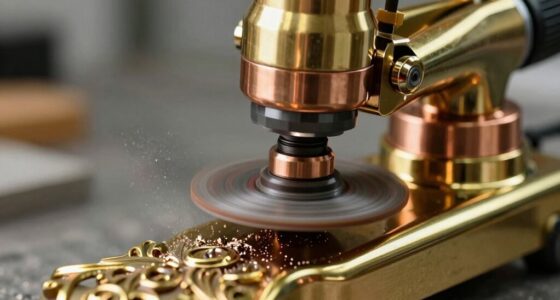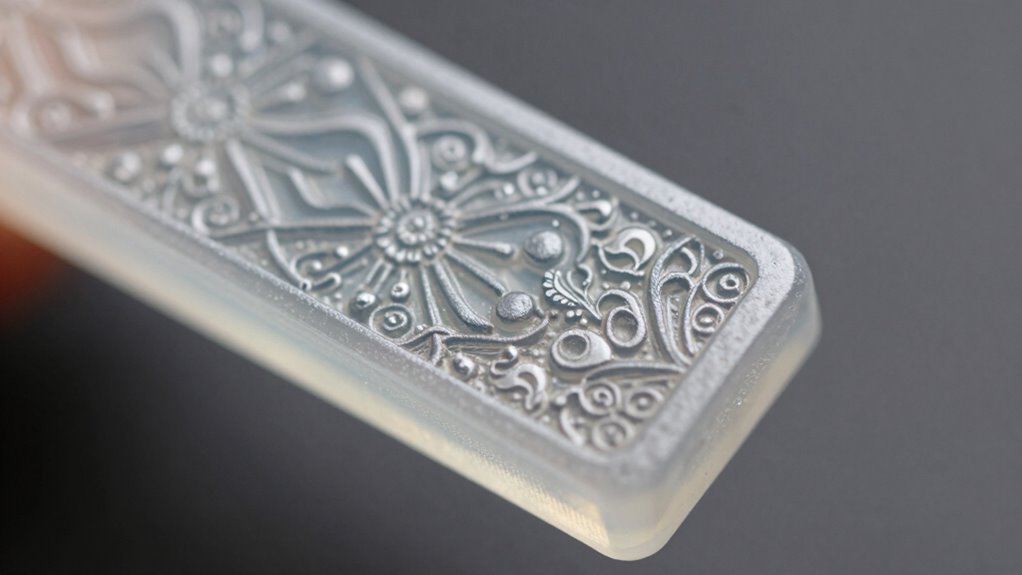

Resin printing helps you create highly detailed props by producing sharp, intricate features and fine textures that traditional methods struggle with. Its fine layer resolution ensures smooth surfaces and precise details, capturing tiny embellishments and subtle contours. The UV curing process offers control over hardness and flexibility, making your props both realistic and durable. With a variety of resin options, you can customize properties to suit your needs. Keep exploring to discover how to maximize these benefits for your projects.

Get art and craft supplies delivered free — and shop member deals
- Fast, free delivery on millions of items
- Access to Prime Big Deal Days deals on October 6–7
- Prime Video, Amazon Music and more included
Key Takeaways
- Produces intricate designs with sharp, precise features impossible with traditional methods.
- Offers extremely fine layer resolutions for smooth surfaces and detailed features.
- Captures textures and tiny embellishments, enhancing realism in props.
- Allows customization of resin properties for flexibility or rigidity as needed.
- Ensures rapid curing and bonding, reducing defects and enabling quick production.
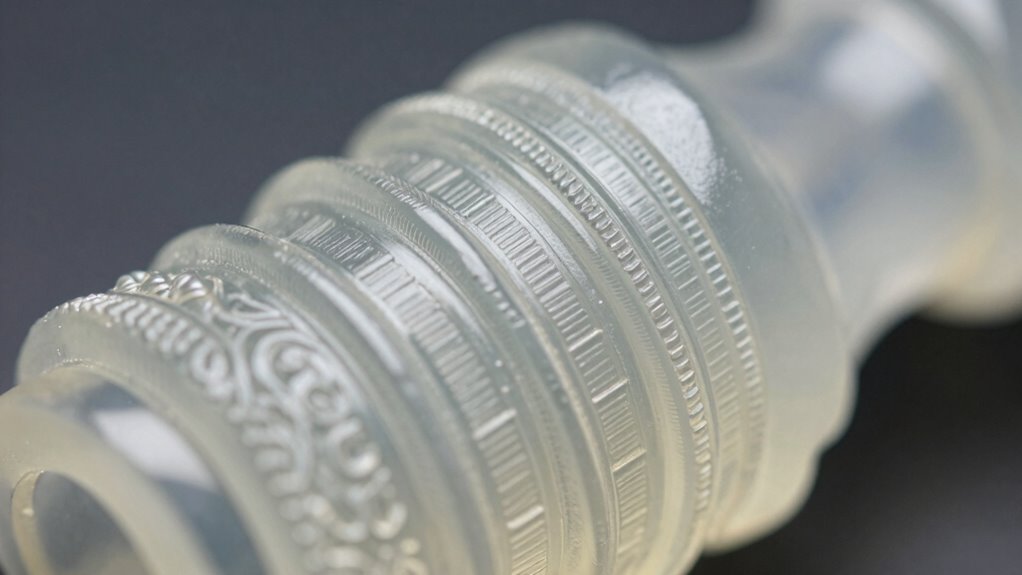
If you’re aiming to create highly detailed props, resin printing is a game-changer. Its ability to produce intricate designs with sharp, precise features sets it apart from traditional manufacturing methods. When you work with resin, you benefit from material flexibility, allowing you to craft complex shapes and fine details that might be impossible with other materials. Resin’s inherent properties enable you to capture textures, tiny embellishments, and subtle contours, giving your props a level of realism that’s hard to match. This material flexibility means you can push creative boundaries, designing elements that are both delicate and durable, all while maintaining a high level of precision.
The curing process is a critical aspect of resin printing that directly impacts the quality of your finished props. Unlike filament-based 3D printing, where layers are built up gradually, resin printing involves curing liquid resin with a light source, typically UV light, to solidify each layer. This process allows for extremely fine layer resolutions, often reaching 25 microns or less, which translates into smooth surfaces and highly detailed features. Proper control of the curing process ensures that your layers bond perfectly, reducing the risk of imperfections such as layer lines or weak spots. It also allows for quick turnaround times, as the resin hardens rapidly once exposed to the light, enabling you to produce complex, high-detail parts in a fraction of the time compared to other methods.
You’ll find that the curing process also offers versatility in post-processing. You can fine-tune the hardness and flexibility of your props by adjusting curing times or using different resin formulations. Some resins are designed to be more flexible, which is ideal if your props need to withstand handling or minor impacts without cracking. Others are formulated for rigid, highly detailed finishes. This ability to control the curing process gives you the power to customize your props to meet specific requirements, whether you need a delicate, lightweight accessory or a sturdy, durable piece. Additionally, understanding resin curing can help you optimize your workflow and achieve better results. Moreover, staying informed about resin chemistry can lead to improvements in material performance and compatibility with various post-processing techniques. Developing an understanding of resin properties is essential for maximizing the potential of your resin prints and ensuring consistent quality.
resin 3D printer for detailed props
As an affiliate, we earn on qualifying purchases.
As an affiliate, we earn on qualifying purchases.
Frequently Asked Questions
What Types of Resins Are Best for Highly Detailed Props?
For highly detailed props, you should choose resins specifically designed for fine detail, like standard or high-resolution resins. These resins cure well at thin layers, capturing intricate features. Pay attention to resin curing times and guarantee proper print orientation to minimize layer lines and support marks. Using the right resin with precise curing and optimizing print orientation will give you the sharp, detailed results you desire.
How Long Does a Typical Resin Print Take?
A typical resin print takes about 2 to 4 hours, depending on the size and complexity. Did you know that higher print resolution can markedly increase the time, sometimes doubling it? During resin curing, every layer is carefully built, so patience is key. If you want highly detailed props, be prepared for longer curing times, but the result will be incredibly crisp and precise, making every minute worth it.
Is Post-Processing Necessary After Resin Printing?
Yes, post-processing is necessary after resin printing to achieve the best results. You’ll want to use post-processing techniques like cleaning your print with isopropyl alcohol to remove residual resin and then resin curing to harden the material fully. Proper post-processing enhances the detail, durability, and overall finish of your prop. Skipping these steps can leave you with a fragile or sticky model that doesn’t look or perform as well.
What Safety Precautions Should I Follow When Resin Printing?
When resin printing, you should prioritize safety by wearing gloves and a mask to avoid resin toxicity. Always work in a well-ventilated area to disperse fumes and reduce inhalation risks. Keep the resin container closed when not in use, and wash your hands thoroughly afterward. Follow the manufacturer’s safety guidelines to prevent skin irritation or inhalation hazards, ensuring a safer and more enjoyable printing experience.
Can Resin Printers Produce Large-Scale Detailed Props?
Resin printers can produce large-scale detailed props, but material flexibility and print accuracy are key factors. While they excel at capturing fine details, printing large models may require multiple segments assembled later. You should consider the resin type and printer build size to guarantee your project’s success. With careful planning, resin printing can deliver highly detailed, large-scale props that meet your creative needs efficiently.
high-resolution resin printing resin
As an affiliate, we earn on qualifying purchases.
As an affiliate, we earn on qualifying purchases.
Conclusion
Resin printing is your secret weapon for bringing intricate props to life with stunning detail. Like a master sculptor chiseling away at a block of marble, it transforms your ideas into miniature masterpieces. With its ability to capture the finest textures and delicate features, resin printing turns your creative visions into reality faster and more precisely. So, plunge into it and let your imagination soar—because with resin printing, the only limit is how vividly you can dream.
As an affiliate, we earn on qualifying purchases.
flexible and rigid resin for props
As an affiliate, we earn on qualifying purchases.
As an affiliate, we earn on qualifying purchases.
Halloween Picks
halloween
As an affiliate, we earn on qualifying purchases.