
TL;DR

Get art and craft supplies delivered free with Prime
- Fast, free delivery on millions of items
- Prime Video, Amazon Music and more included
- Member-only deals all year
NYC Health + Hospitals completed conservation work on three New Deal-era murals and a John Rhoden sculpture at Harlem Hospital on October 14. The works include murals by Charles Alston and Vertis Hayes, created during a period when Black artists gained major public commissions through the WPA’s Federal Art Project.
NYC Health + Hospitals completed conservation work on three New Deal-era murals and a sculpture by John Rhoden at Harlem Hospital on Wednesday, October 14, preserving works made during the Works Progress Administration’s Federal Art Project. The restored pieces include murals by Charles Alston and Vertis Hayes, whose commissions reflect a significant period of public recognition for Black artists.
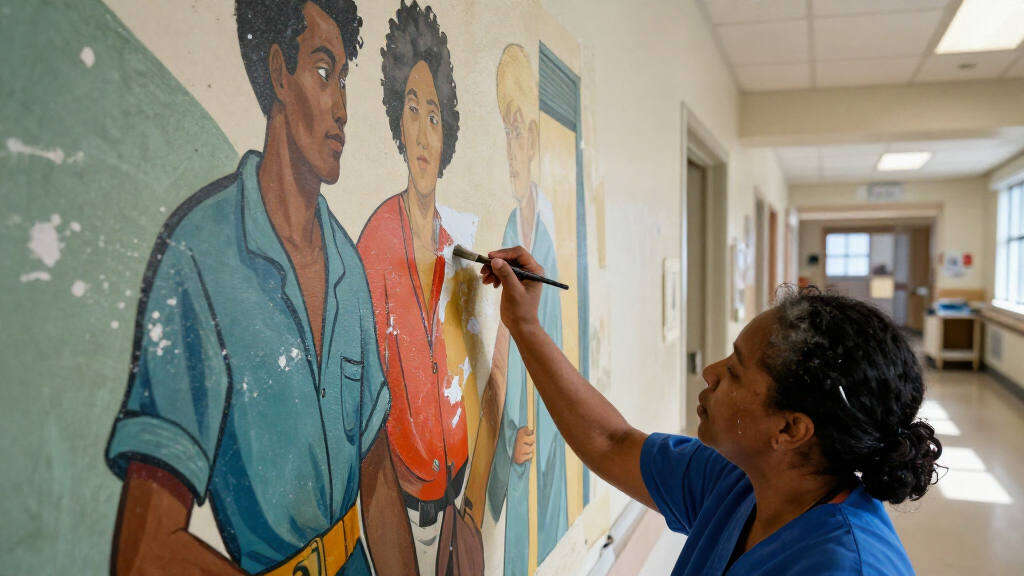
The murals are displayed in the hospital’s indoor mural pavilion. The project covered Alston’s companion works, Magic in Medicine and Modern Medicine, both dated 1940, and Hayes’s eight-panel mural Pursuit of Happiness, dated 1937. A sculpture by Rhoden was also included in the conservation effort, according to the report by Hyperallergic.
The work was undertaken by NYC Health + Hospitals’ Arts in Medicine department, which completed the conservation on October 14. The source report identifies the pieces and the completion date but does not provide a detailed account of the conservation methods, the condition of each work before treatment, or the project’s cost.
The murals were created during the Great Depression, when the WPA’s Federal Art Project supported public art commissions. Their subjects and history are tied to Black artists’ efforts to secure a place in major public projects. The preservation keeps these works within the hospital where they were commissioned and displayed.
Preserving Black Artists’ Public Commissions
The restoration preserves artworks that document both public health history and the history of Black artists working in the United States during the New Deal. Their presence in a hospital pavilion connects the images and their medical themes with a public institution serving Harlem, rather than separating them from the site for which they were created.
The story behind Hayes’s mural also shows that public commissions could be contested. According to Arts in Medicine head Larissa Trinder, administrators initially objected to the designs because they felt there was “too much black subject matter.” Artists protested publicly, and the hospital commissioner later reversed the decision. The restoration maintains works whose creation involved a dispute over representation in public art.
As an affiliate, we earn on qualifying purchases.
The Murals’ New Deal Origins
The Federal Art Project, part of the WPA, provided work and public commissions to artists during the Great Depression. At Harlem Hospital, that program resulted in works by Alston and Hayes, among others. The commissions came at a time when Black artists were advocating for access to major public projects, according to the source report.
In 1936, Hayes’s mural designs drew objections from hospital administrators. Trinder told Hyperallergic that the artists’ public protest led the hospital commissioner to reverse the decision. Hayes’s eight-panel work was completed in 1937; Alston’s two companion murals followed in 1940. The conservation project also included Rhoden’s sculpture, though the report does not give its title or date.
““Too much black subject matter.””
— Larissa Trinder, head of NYC Health + Hospitals’ Arts in Medicine program, speaking to Hyperallergic
museum-quality art restoration supplies
As an affiliate, we earn on qualifying purchases.
As an affiliate, we earn on qualifying purchases.
Conservation Details Not Reported
The available report confirms that the conservation work was completed on October 14, but does not state the year. It also does not describe the techniques used, the extent of damage treated, the cost, or whether the works were unavailable to visitors during the project. The sculpture’s title and date are not identified in the source material.
Although the headline describes the murals as restored to their “original glory,” the report does not provide a technical assessment of how closely their present appearance matches their original condition. No further project documentation or comments from conservators are included in the supplied material.
As an affiliate, we earn on qualifying purchases.
Future Access and Preservation Plans
The reported conservation project is complete. The source does not announce additional restoration work, a public unveiling, or a schedule for future maintenance. The murals remain identified as works in Harlem Hospital’s indoor pavilion, but details about visitor access and any public programming tied to the completed work are not provided.
Further information from NYC Health + Hospitals or the conservation team could clarify the methods used, the project’s scope and cost, and plans for ongoing care. Until such details are released, the confirmed development is the completion of work on the three murals and Rhoden sculpture.
As an affiliate, we earn on qualifying purchases.
Key Questions
Which Harlem Hospital artworks were conserved?
The project covered Charles Alston’s Magic in Medicine and Modern Medicine, both dated 1940; Vertis Hayes’s eight-panel Pursuit of Happiness, dated 1937; and a sculpture by John Rhoden.
Who carried out the conservation work?
NYC Health + Hospitals’ Arts in Medicine department completed the work, according to the report. The source does not name individual conservators.
When was the project completed?
The report says the work concluded on Wednesday, October 14, but does not specify the year.
Why is the history of Hayes’s mural significant?
Arts in Medicine head Larissa Trinder said administrators objected to the designs in 1936 because they believed there was “too much black subject matter.” Artists protested publicly, and the hospital commissioner reversed the decision.
What is known about the restoration process?
The source confirms that conservation was completed but does not detail the methods, cost, treatment findings, or future maintenance plans.
Source: rss
Halloween Picks
halloween
As an affiliate, we earn on qualifying purchases.