Build a practical first art kit by choosing one medium, buying a few dependable supplies, and setting up a place to work. This guide is for people who are new to drawing or painting and want to start making art without buying a large set of materials. Allow 30-60 minutes to compare options, shop, and organize your supplies.

Get art and craft supplies delivered free with Prime
- Fast, free delivery on millions of items
- Prime Video, Amazon Music and more included
- Member-only deals all year

Caliart 176PCS Art Supplies Sketching Kit, 100 Sheets 3-Color Sketch Book
- ✔ Total pieces: 176, including 76 art tools and accessories plus 100 sketchbook sheets
- ✔ Sketchbook: 6 × 9 inches, spiral bound, 100GSM, 100 sheets
- ✔ Paper colors: 72 white, 14 tan, and 14 black sheets
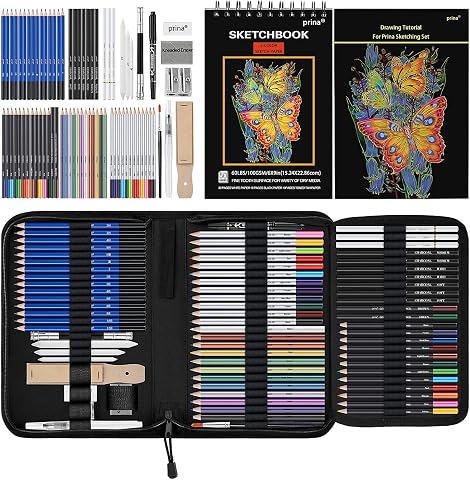
Prina 76 Pack Drawing Set Sketching Kit
- ✔ Total pieces: 76
- ✔ Graphite: 15 wooden sketching pencils and one 6B woodless graphite pencil
- ✔ Color and specialty pencils: 12 watercolor, 12 oil-based colored, and 12 metallic pencils

Soucolor Art Supplies, 192 Pack Deluxe Art Set Drawing Painting Supplies Kit
- ✔ Total pieces: 192
- ✔ Drawing and color media: 60 crayons, 24 colored pencils, and 24 oil pastels
- ✔ Paints: 24 watercolor paints and 24 acrylic paints
Difficulty: Beginner | Time: 30-60 minutes
What You’ll Need
Tools & Materials:
- A budget and a place to store supplies
- Paper suited to your chosen medium
- A pencil, eraser, and sharpener for drawing, or brushes and a palette for painting
Knowledge:
- No formal art training is required
- Choose whether you want to start with drawing, watercolor, or acrylic paint
Start with one medium. Supplies work best on compatible surfaces: watercolor needs heavier, absorbent paper, while pencils and colored pencils work on drawing paper. Check package labels before buying. You can add materials later after you learn which ones you use most.
Caliart 176PCS Art Supplies Sketching Kit, 100 Sheets 3-Color Sketch Book
The Caliart 176-piece kit earns the top spot because it gives a new artist a substantial place to practice alongside a broad, drawing-led selection of tools. Its 100-sheet, 6-by-9-inch spiral sketchbook includes white, tan, and black paper. That mix invites beginners to see how the same pencil or charcoal mark changes across surfaces, without having to source separate pads first. The 12 graphite pencils span hard grades from 5H through soft 8B, making it easier to explore pale construction lines, darker shading, and gradual tone changes.Compared with Prina, Caliart supplies more sketchbook paper and a clearly specified graphite range, which gives it an edge for structured drawing practice. Both kits include colored, watercolor, charcoal, and metallic pencils, plus blending tools and a travel case. Caliart adds useful accessories such as a pencil extender and sandpaper block, but its 176-piece count includes the 100 sketchbook sheets; it should not be read as 176 separate drawing implements. The set is still pencil-centered, so beginners hoping to learn acrylic painting will find Soucolor better matched to that goal.The three paper colors broaden practice, though the 100GSM sketchbook is a light surface. It suits drawing and testing marks better than heavy wet-media work, so we would use the included water brush sparingly and reserve fuller watercolor experiments for suitable paper. With a spiral pad, pre-sharpened pencils, and an organized case, this is a convenient all-in-one launch point for someone who wants to spend most of their early sessions sketching.
Pros:
- 100-sheet sketchbook includes white, tan, and black paper for varied drawing exercises.
- Graphite pencils range from 5H to 8B for practicing both light lines and deep shading.
- Includes colored, watercolor, charcoal, and metallic pencils for exploring different effects.
- Case and accessories help keep a broad drawing kit together and ready to carry.
Cons:
- The 100GSM sketchbook is a light surface and is not intended for heavy wet-media use.
- Its broad pencil selection may feel less focused to someone who wants only basic graphite tools.
- The piece count includes sketchbook sheets, so it overstates the number of separate tools.
Best for: Beginners who want to focus on pencil drawing, shading, and experimenting with marks on different paper colors.
Not ideal for: Artists whose main goal is painting or who need a sketchbook designed for repeated wet-media use.
Bottom line: We recommend Caliart for drawing-first beginners who want varied pencils and plenty of paper for practice.
“We recommend Caliart for drawing-first beginners who want varied pencils and plenty of paper for practice.”
Prina 76 Pack Drawing Set Sketching Kit
Prina is the compact choice for a beginner who wants to try several pencil-based techniques without committing to a large mixed-media collection. Its 76-piece kit includes graphite, black and white charcoal, colored charcoal, watercolor, oil-based colored, and metallic pencils. That gives new artists a way to compare how different tools layer, blend, and show up on paper. Individual color names and model markings also make it easier to identify what is in hand when practicing from a tutorial.Against Caliart, Prina keeps a similar spread of pencil types but comes with a smaller kit and fewer specified sketchbook sheets. Caliart is the stronger pick when sustained drawing practice and a wide graphite grade range are priorities; Prina makes more sense when a portable case and varied pencil effects matter more. The included three-color sketchbook provides a surface to begin on, and the refillable water brush, blending stumps, paintbrush, and two kinds of eraser add useful ways to experiment. For beginners wanting actual acrylic or watercolor paints and canvases, Soucolor covers those needs more directly.The variety is also the main learning challenge. A novice may find it harder to build fundamentals when switching among charcoal, metallic, colored, and watercolor pencils before getting comfortable with graphite. Prina’s set is therefore best used selectively: start with a few graphite grades and the sketchbook, then branch into other pencils as a project calls for them. Its compact dimensions support carrying the kit, though the supplied information does not specify the sketchbook’s page count or paper weight, so buyers should not assume it matches Caliart’s larger paper supply.
Pros:
- Combines graphite, charcoal, watercolor, oil-based colored, and metallic pencils.
- Includes a three-color sketchbook and tutorial to help beginners get started.
- Travel case, blending stumps, water brush, and erasers support portable practice.
- Pencil labels help users identify colors and models while learning.
Cons:
- The sketchbook page count and paper weight are not specified in the supplied details.
- It offers fewer total pieces and less specified paper than the Caliart set.
- The many pencil types may distract beginners who want to master basic drawing first.
Best for: Beginners who want a carryable drawing kit and are curious about comparing pencil and charcoal effects.
Not ideal for: Those who want a large supply of practice paper, a defined graphite grade range, or paint and canvases.
Bottom line: Prina suits beginners who value compact organization and want to explore pencil effects at their own pace.
“Prina suits beginners who value compact organization and want to explore pencil effects at their own pace.”
Soucolor Art Supplies, 192 Pack Deluxe Art Set Drawing Painting Supplies Kit
Soucolor serves a different kind of beginner from the two pencil-focused kits: someone who has not decided whether drawing, painting, or crafts will become their main interest. It brings together crayons, colored pencils, oil pastels, watercolor paints, and acrylic paints, with brushes, palette, sponge, three canvas boards, and three types of paper pads. That breadth gives a learner materials for trying several approaches in one organized set. The dedicated acrylic and watercolor pads are especially relevant because they offer surfaces intended for those media, rather than asking a beginner to work wet paint into a light sketchbook.Compared with Caliart and Prina, Soucolor has far more painting equipment but less emphasis on detailed graphite practice: it lists only one HB and one 2B pencil. Caliart is therefore the clearer choice for learning pencil shading, while Prina gives more options for charcoal and specialty pencils. Soucolor’s advantage is the chance to move from a sketch to an acrylic canvas or watercolor page using supplies from the same kit. Its 192-piece count reflects a collection across different categories, not a larger number of drawing tools.The wooden case with removable drawers helps separate the many materials, but the set is also the largest and heaviest option described here, at 4.32 kilograms. Beginners with limited storage or a preference for working outside the home may find Caliart or Prina easier to bring along. The kit’s variety can also encourage sampling rather than sustained practice in one medium. We would choose it for exploratory home use, and pick a focused drawing kit if the goal is to build sketching habits first.
Pros:
- Includes acrylic and watercolor paints, crayons, colored pencils, and oil pastels.
- Provides separate sketch, acrylic, and watercolor pads plus three canvas boards.
- Brushes, palette, sponge, and color wheel support basic painting practice.
- Wooden case with removable drawers organizes the many material types.
Cons:
- Only one HB and one 2B pencil are listed, limiting graphite grade choices.
- At 4.32 kilograms, the kit is less convenient to carry than the pencil sets.
- Its many media may be more than a beginner needs when learning one skill at a time.
Best for: Beginners who want to try acrylics, watercolors, pastels, and drawing without buying separate starter sets.
Not ideal for: Drawing-focused learners who need a wide graphite pencil range or a lightweight kit for frequent travel.
Bottom line: Soucolor is the best match for beginners who want to sample painting and drawing in one home-oriented kit.
“Soucolor is the best match for beginners who want to sample painting and drawing in one home-oriented kit.”
As an Amazon Associate we earn from qualifying purchases.
Before You Start
Set a spending limit before shopping, and leave room for paper or a sketchbook; these are used up faster than tools. If you are unsure which medium to choose, begin with graphite drawing. It needs few supplies and makes it easy to practice lines, shapes, and shading. For paint, pick watercolor for portable, water-based work or acrylic for opaque color that dries quickly. Follow product labels, protect your work surface, and use paint in a ventilated area.
Step-by-Step Instructions
Step 1: Choose one starting medium
Pick the kind of work you want to try first: graphite or colored pencil drawing, watercolor, or acrylic painting. Consider where you will work and how much setup you want. Drawing is simple to store; watercolor needs water and paper that can handle it; acrylic needs a protected surface and prompt brush cleanup.
Tip:Do not buy full starter kits for several mediums at once. A focused kit is easier to learn and costs less.
Check: You can name the medium you will use for your first few practice sessions.
Step 2: Set a budget and shopping list
Write down your maximum spend, then list only the basics for your chosen medium. Include the working surface, the main tools, and simple cleanup supplies. Compare the cost of individual items with a small beginner set, but check what each set contains before buying.
Tip:Skip specialty tools and large color collections until you know what you like. A small, usable selection is more valuable than many colors you rarely reach for.
Check: Your list covers the materials needed to begin, and its total fits your budget.
Step 3: Buy a suitable surface
Choose a sketchbook or paper labeled for your medium. For graphite or colored pencils, use drawing paper with a smooth or lightly textured surface. For watercolor, choose watercolor paper, preferably around 300 gsm (140 lb) if your budget allows; lighter paper can buckle when wet. For acrylic, use acrylic paper, canvas panels, or primed canvas.
Tip:Check that paper is not only the right size but also intended for the material you plan to use. Thin notebook paper is likely to wrinkle under wet paint.
Check: The surface package names your chosen medium or clearly describes a suitable weight and finish.
Step 4: Choose core drawing tools
If you are starting with graphite, get a small range such as HB, 2B, and 4B pencils, plus a soft white eraser and a handheld sharpener. If you choose colored pencils, begin with a modest set of basic hues and include a graphite pencil for light planning lines. Avoid buying many grades or colors before you know how you work.
Tip:A basic pencil can make light marks when you use a gentle touch. Pressing hard can indent the paper and make corrections difficult.
Check: You have a pencil or color set, a way to correct marks, and a sharpener if your pencils need one.
Step 5: Choose a small paint set and brushes
For watercolor, choose a small student-grade set and two or three brushes: one medium round brush for general work and a smaller round for details. For acrylic, start with a small set of student-grade colors and a few synthetic brushes in different sizes, including a flat and a round. Add a palette or washable mixing surface and a water container. Read labels for cleanup and use instructions.
Tip:You can mix many useful colors from a limited palette. Buy more colors after practice shows which shades you need often.
Check: Your painting supplies include paint, compatible brushes, a mixing surface, water access, and a surface suited to the paint.
Step 6: Add basic cleanup and storage items
Set aside a container for water, a cloth or paper towels, and a tray or box to keep supplies together. For acrylic, keep a separate rinse container and clean brushes promptly according to the paint label; dried acrylic can be difficult to remove. Protect the table with scrap paper or a reusable cover, and store materials away from small children or pets.
Tip:Use a container that will not tip easily. Keep drinking cups away from paint water.
Check: You have a clean, stable place for supplies and a plan for protecting and cleaning your work area.
Step 7: Set up and test the kit
Place the paper, tools, and cleanup items within reach, then make a short test page. Draw lines and shaded shapes with pencils, or make color swatches and practice brush marks with paint. Note any tool that scratches, sheds, leaks, or feels hard to control. Return only items that are faulty, and write down what you want to add after several sessions.
Tip:Test colors on the same kind of paper you will use for finished work; a color can look different on another surface.
Check: You can begin a simple drawing or painting without needing another essential supply, and you know how each tool behaves.
Common Mistakes to Avoid
- Buying a large variety of tools before choosing a medium. — Pick one medium and purchase only its basic tools. Expand the kit after a few practice sessions reveal what is missing.
- Using paper that is too thin for wet paint. — Choose paper labeled for watercolor or acrylic. For watercolor, heavier paper generally handles water with less buckling.
- Choosing the cheapest large set without checking quality or contents. — Read the labels and inspect what the set includes. Compare it with a short list of individual essentials before deciding.
- Leaving paint on brushes or pressing pencils too hard. — Rinse paint brushes promptly as directed on the label. Use light pencil strokes, then build darker values gradually.
Troubleshooting
Problem: Watercolor paper curls or buckles during painting.
Solution: Use heavier watercolor paper and apply less water at a time. Let the sheet dry flat; for future work, look up a paper stretching method suited to its weight and format.
Problem: Colors look dull or muddy when mixed.
Solution: Clean the brush between colors, use a fresh area of the palette, and mix fewer colors at once. Test the mixture on scrap paper before applying it to the artwork.
Problem: A pencil mark will not erase cleanly.
Solution: Press more lightly on the next attempt and use a soft eraser. For the current page, dab gently instead of rubbing hard, which can roughen or tear the paper.
Problem: A brush sheds hairs or loses its shape.
Solution: Rinse it gently and check whether hairs are loose near the ferrule. Return a faulty brush if possible; replace it with a brush intended for your medium and clean it according to its label.
What Success Looks Like
Your starter kit is ready when it contains a surface compatible with one medium, the few tools needed to work in that medium, and basic cleanup supplies. You should be able to make a test drawing or painting, put the materials away safely, and identify any additions based on actual use rather than guesswork.
Next Steps
Use the kit for three or four short practice sessions before shopping again. Keep a note of supplies you reach for often and problems that interrupt your work. Replace worn paper or faulty tools first; add colors, brush sizes, or specialty materials only when a specific project calls for them. Clean tools after each session and store paper flat and dry.
Frequently Asked Questions
What art supplies should a complete beginner buy first?
For drawing, start with a sketchbook or drawing paper, an HB pencil, a soft eraser, and a sharpener. For painting, add a small paint set, compatible paper or canvas, a few brushes, a palette, and basic cleanup supplies.
Is a beginner art set worth buying?
It can be useful if it contains materials suited to the medium you chose. Check the paper type, tool quality, and item list; a large set may include supplies you will not use. Compare its price with a short list of essentials.
Should I start with watercolor or acrylic?
Choose watercolor if you want portable supplies and transparent washes. Choose acrylic if you prefer opaque color and a paint that dries quickly. Both need suitable surfaces and brush cleanup, so select based on the kind of work you want to make.
Do beginner supplies need to be artist grade?
No. Student-grade supplies are usually sufficient for practice. Choose reliable paper and tools labeled for your medium; upgrade a specific item later if its performance limits your work.
How much should I spend on a first art kit?
There is no fixed amount. Set a limit you are comfortable with, prioritize paper and a few dependable tools, and avoid buying several mediums at once. Prices vary by brand, size, and location.
Black Friday Picks

Sony WH-1000XM4C (M4 2nd Gen) Wireless Noise-Cancelling Headphones, Black
As an affiliate, we earn on qualifying purchases.