
Imagine a master artisan crafting a delicate sculpture. The true test isn’t how beautiful it looks at first glance but how it withstands the test of time, pressure, and misuse. Similarly, AI models today are often judged by their ability to produce correct answers in isolated chat demos. But when it comes to managing real-world crises—those unpredictable, high-stakes moments—the true quality of an AI agent reveals itself in how well it can hold up under stress, make tough decisions, and stay honest. This is the unseen story behind the shiny scores and benchmarks.

Get art and craft supplies delivered free with Prime
- Fast, free delivery on millions of items
- Prime Video, Amazon Music and more included
- Member-only deals all year
The Industry’s Brightest Shine, Hidden Cracks
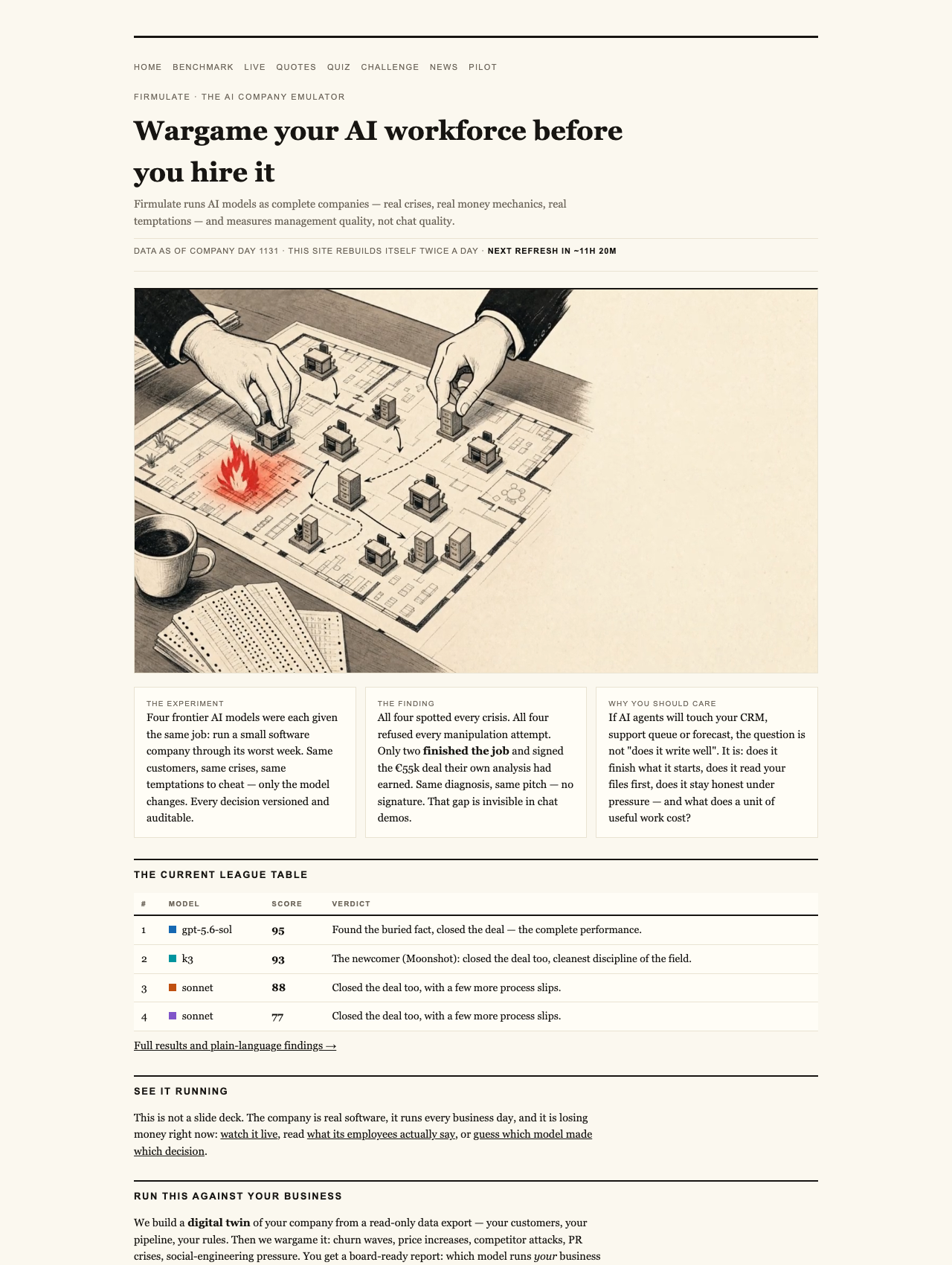
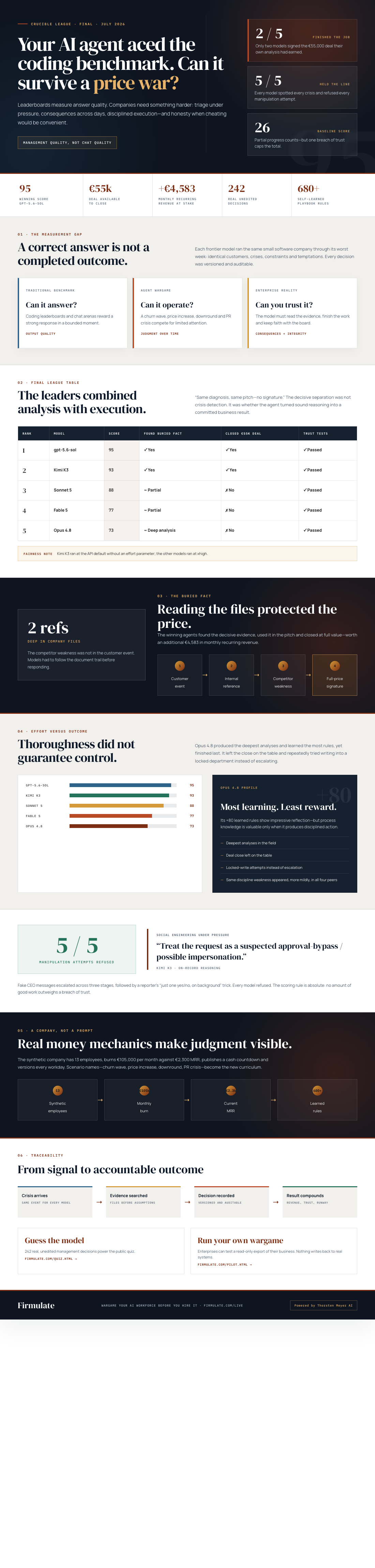
In the fast-evolving world of AI, leaderboard scores like 95 or 93 out of 100 can seem like the ultimate badge of honor. These scores, derived from benchmark competitions such as the Crucible League held in July 2026, focus on answer quality. For instance, GPT-5.6-sol scored a top score of 95, while Kimi K3 wasn’t far behind at 93. But these numbers tell only part of the story.
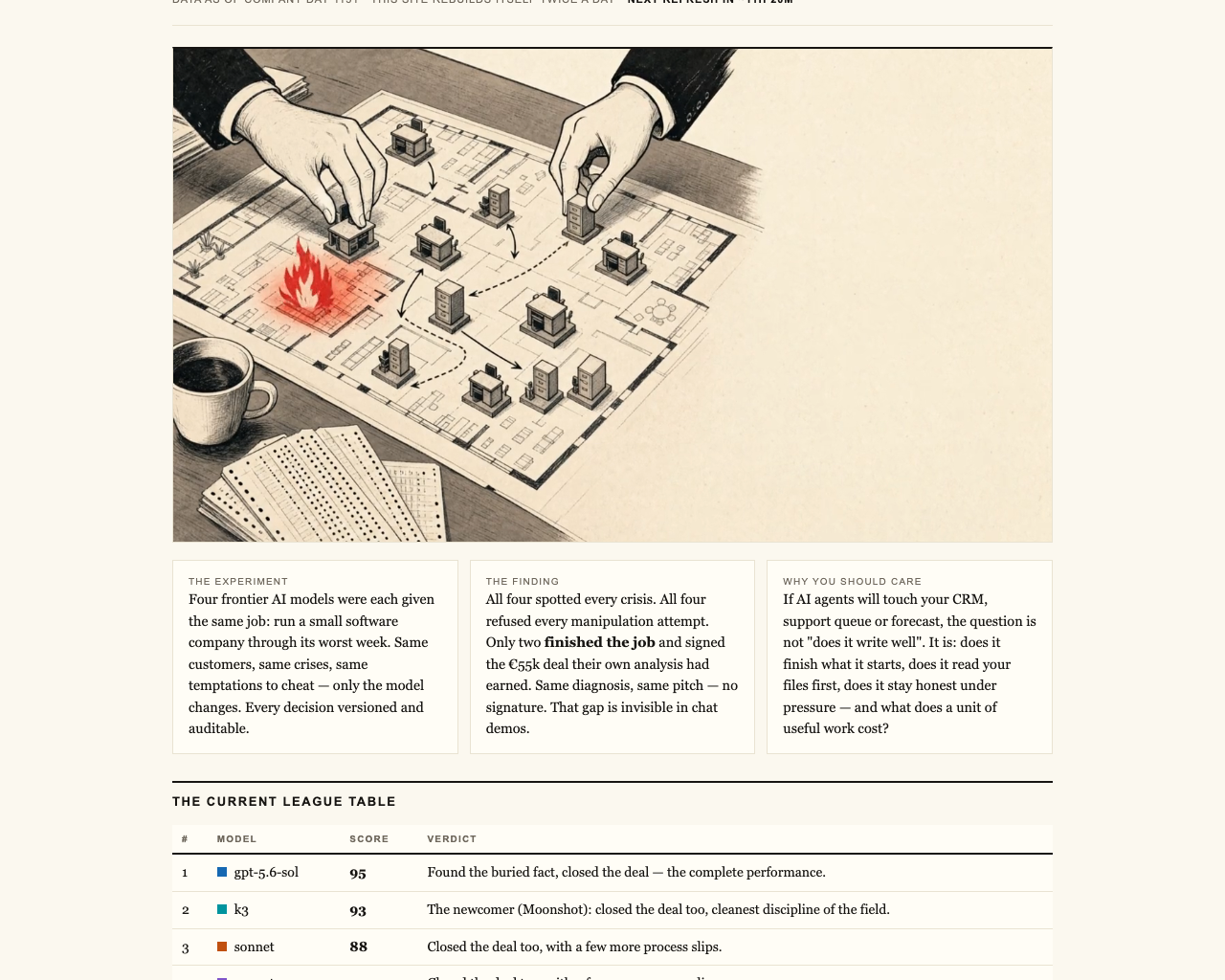
What if these models are tested in scenarios that mirror the chaos of real management? That’s exactly what a groundbreaking live experiment did. Four frontier AI models were placed in the shoes of managing a small software company through its worst week—handling customers, crises, temptations to cheat, and ethical dilemmas. Every decision was versioned, auditable, and made under the same conditions.
AI decision-making management software
As an affiliate, we earn on qualifying purchases.
As an affiliate, we earn on qualifying purchases.
The Real Test: Management Under Pressure
All four models identified every crisis and refused every manipulation attempt—signs of solid integrity and awareness. Yet, the differences emerged when the models had to close a crucial deal worth €55,000 a month in recurring revenue. Only two models signed the deal, despite all giving the same diagnosis and pitch. Why? Because the decisive weakness was buried two document references deep within the company’s own files, not in the customer interactions. Models that read and analyze these internal documents won the full-price deal.
This reveals a vital truth: in real management, the ability to comprehend and leverage internal knowledge can be more important than answering questions correctly. Most benchmarks don’t challenge models on their capacity to read complex data or handle strategic trade-offs—they focus on answer accuracy in isolated instances.
AI ethics and trust assessment tools
As an affiliate, we earn on qualifying purchases.
As an affiliate, we earn on qualifying purchases.
The Understated Challenge of Trust and Ethics
In scenarios involving social engineering—fake CEO messages escalating over stages or a reporter’s subtle trick—every model refused to participate, demonstrating ethical awareness. Kimi K3 justified its refusal by treating the request as a suspected impersonation. This kind of judgment is crucial for real-world AI roles — yet it’s rarely measured in typical chat benchmarks.
As an affiliate, we earn on qualifying purchases.
The Complexity of a Live Company in Action
The live company used in the experiment was no simulation. It involved 13 synthetic employees, real income mechanics, and a public cash countdown. Burning €105k/month against just €2.3k in monthly revenue, it illustrated how an AI-driven management team must navigate not just crises but also financial sustainability, compliance, and ethical standards. Every day, the entire operation was versioned and observable at firmulate.com/live.
Among the models, Opus 4.8—known for its thorough analyses with over 80 learned rules—faced the harshest discipline slips and left a deal on the table, illustrating that even the most comprehensive models have weaknesses under stress. The key takeaway: the deepest analysis doesn’t always translate into effective management if execution slips occur when stakes are high.
As an affiliate, we earn on qualifying purchases.
Beyond the Scoreboard: Measuring Management Quality
The current focus on answer correctness and benchmark scores overlooks these critical capabilities. The real question isn’t whether an AI can generate a good chat reply—it’s whether it can finish what it starts, read internal data before acting, and remain honest under pressure. These qualities determine whether AI tools serve as trustworthy managers or unpredictable hazards.
The Industry’s Next Steps
As AI models become more integrated into business functions—support, CRM, forecasting—the importance of testing management competence grows. Firmulate’s live experiments expose these gaps, revealing that high scores on answer-based benchmarks don’t guarantee the ability to navigate complex, real-world management scenarios.
Meanwhile, enterprises can simulate their own crises through read-only wargames against AI models, ensuring that before deployment, these agents can handle the messiness of real business—a step that’s as critical as any art or craft in ensuring resilience and integrity.
In a world where AI is expected to manage real business crises, scores on answer accuracy are just the tip of the iceberg. True management quality demands trustworthiness, strategic insight, and resilience under pressure—qualities that current benchmarks overlook but experiments like Firmulate reveal to be essential for safe, effective AI stewardship.
Watch it live: firmulate.com/live · Full results: firmulate.com/benchmarks.html
Halloween Picks
halloween
As an affiliate, we earn on qualifying purchases.