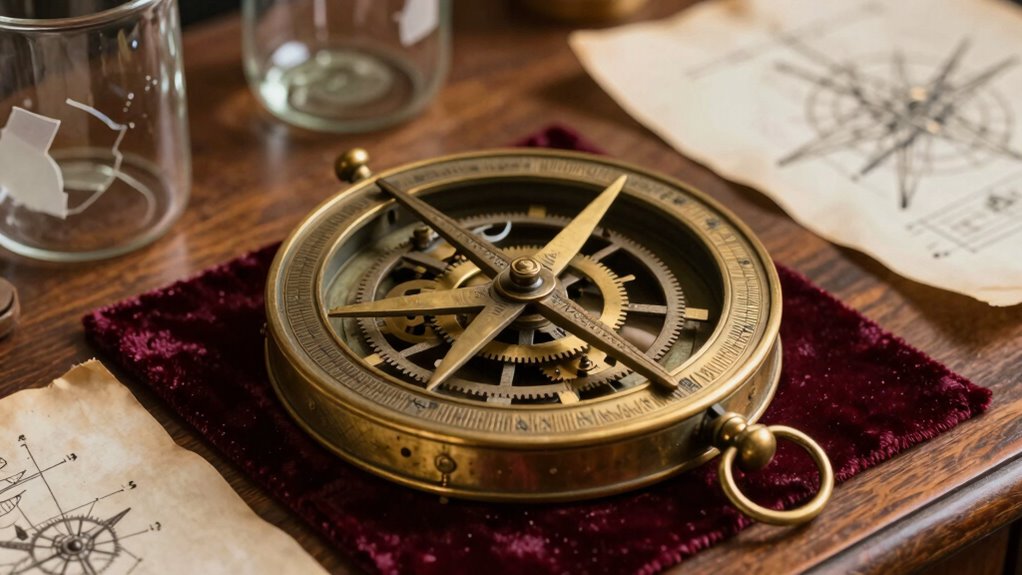

Antique scientific instruments inspire you by showcasing craftsmanship and ingenuity that highlight manual skills and precise design. They remind you of the importance of patience, attention to detail, and innovative problem-solving. By studying how these tools were built, you gain insights into craftsmanship and early scientific methods. Preserving and understanding these objects encourages you to value traditional techniques and the legacy of discovery. Keep exploring to uncover how these influences can fuel your own creative projects.

Get art and craft supplies delivered free with Prime
- Fast, free delivery on millions of items
- Prime Video, Amazon Music and more included
- Member-only deals all year
Key Takeaways
- Antique instruments showcase manual craftsmanship and attention to detail, inspiring makers to value skill and patience.
- They demonstrate fundamental scientific principles, encouraging innovative problem-solving based on simple, effective designs.
- Restoration techniques highlight the importance of historical accuracy, fostering respect for authenticity in modern creation.
- Studying original manufacturing methods deepens understanding of traditional techniques, informing contemporary craftsmanship.
- The legacy of curiosity and discovery embodied in antique tools motivates makers to pursue meaningful innovation.
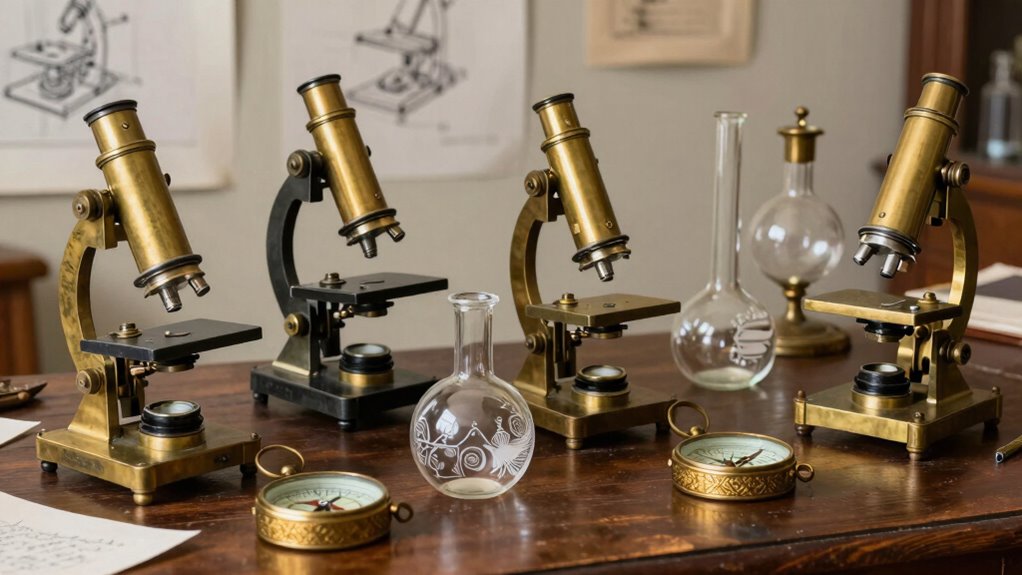
Restoration techniques play a crucial role in preserving these treasures, allowing you to maintain their integrity while making them accessible for study and display. When restoring antique scientific instruments, you learn to balance authenticity with preservation, ensuring that no detail is lost. Techniques such as careful cleaning, stabilization of fragile parts, and sometimes replacing missing components with historically accurate materials help maintain their historical significance. You might also find yourself researching original manufacturing methods to better understand how these instruments were built, which in turn informs your restoration process. Every step you take in restoring these objects deepens your appreciation for the craftsmanship and ingenuity involved. It reminds you that these tools were once state-of-the-art, and now they serve as inspiring relics for future innovation. Understanding historical manufacturing techniques enhances your ability to accurately restore and appreciate these artifacts. Seeing how these instruments were designed and used sparks your creativity as a maker. You recognize the importance of precision, patience, and ingenuity in your own projects. Many modern makers draw inspiration from the simplicity and effectiveness of early scientific tools, realizing that foundational principles often serve as the basis for innovative solutions. By studying their construction and function, you gain insights into problem-solving and resourcefulness—traits that are just as crucial today. These historical artifacts serve as a reminder that craftsmanship and curiosity are timeless drivers of progress. In a world increasingly driven by digital technology, antique scientific instruments challenge you to value manual skill, attention to detail, and the pursuit of knowledge. They motivate you to innovate with a sense of purpose rooted in the rich legacy of discovery. Preservation techniques and a careful approach to restoration help ensure these objects continue to inspire future generations. Additionally, understanding original manufacturing methods can also inform modern restoration practices, ensuring that efforts remain true to the artifact’s original context. Recognizing the importance of manual craftsmanship in their creation can inspire modern makers to incorporate similar dedication into their own work.
Popular right now

Dyson Ball Animal 3 Corded Upright Vacuum

KitchenAid Classic Series 4.5 Quart Tilt-Head Stand Mixer K45SS, Onyx Black

Ninja CREAMi Scoop & Swirl 13-in-1 Ice Cream and Soft Serve Maker, NC701
As an affiliate, we earn on qualifying purchases.
Frequently Asked Questions
How Do Antique Instruments Influence Modern Scientific Design?
Antique instruments influence your modern scientific design by emphasizing historical accuracy and inspiring technological innovation. You draw on their craftsmanship and precise details to create authentic replicas or updated tools. These artifacts remind you of foundational principles and spark ideas for new features, blending tradition with innovation. By studying their mechanics and aesthetics, you develop innovative solutions rooted in proven techniques, ensuring your designs honor history while pushing forward with cutting-edge advancements.
What Materials Were Commonly Used in Historic Scientific Tools?
You’ll be amazed by the materials evolution in historic scientific tools—think of glass, brass, and wood shaping discoveries. These instruments showcase craftsmanship techniques that transformed raw materials into precise devices. Brass, with its durability, was common for lenses and dials, while glass was essential for telescopes and microscopes. Wood provided sturdy frames, reflecting skillful craftsmanship. These timeless materials continue to inspire modern makers, reminding you that innovation often builds on tradition.
Are Antique Instruments Functional or Purely Decorative Today?
Antique scientific instruments are often more decorative than functional today, showcasing historical craftsmanship and artistic craftsmanship. You’ll find many preserved as beautiful collectibles or museum pieces, highlighting their intricate design and historical significance. While some remain operational or can be restored, most serve as inspiring artful objects that reflect the skill and ingenuity of past makers, reminding you of the craftsmanship that continues to influence modern design and innovation.
How Are Antique Scientific Instruments Preserved and Restored?
You preserve and restore antique scientific instruments using specialized restoration techniques like careful cleaning, gentle polishing, and sometimes replacing missing parts with authentic or custom-made components. You face preservation challenges such as corrosion, delicate materials, and maintaining historical integrity. By balancing careful conservation with modern methods, you guarantee these instruments remain functional and visually authentic, preserving their historical value while inspiring contemporary makers through their craftsmanship and enduring design.
Can Antique Instruments Be Used for Educational Demonstrations?
Yes, antique instruments can definitely be used for educational demonstrations. You’ll find that their historical craftsmanship offers a tangible connection to scientific history, helping students appreciate the evolution of technology. Using these instruments fosters modern appreciation for past innovations, making lessons more engaging. When handled carefully, they serve as valuable tools to illustrate scientific concepts while honoring their historical significance, inspiring curiosity and respect for craftsmanship and discovery.
Conclusion
So, seize the spirit of science, savor the stories of studying, and let the legacy of these luminous, legendary, and labyrinthine instruments ignite your imagination. By blending the beauty of the bygone with the boldness of the now, you can craft creations that captivate and inspire. Remember, the past’s precision paves the way for your brilliant breakthroughs—so don’t just observe history, let it ignite your inventive instincts!