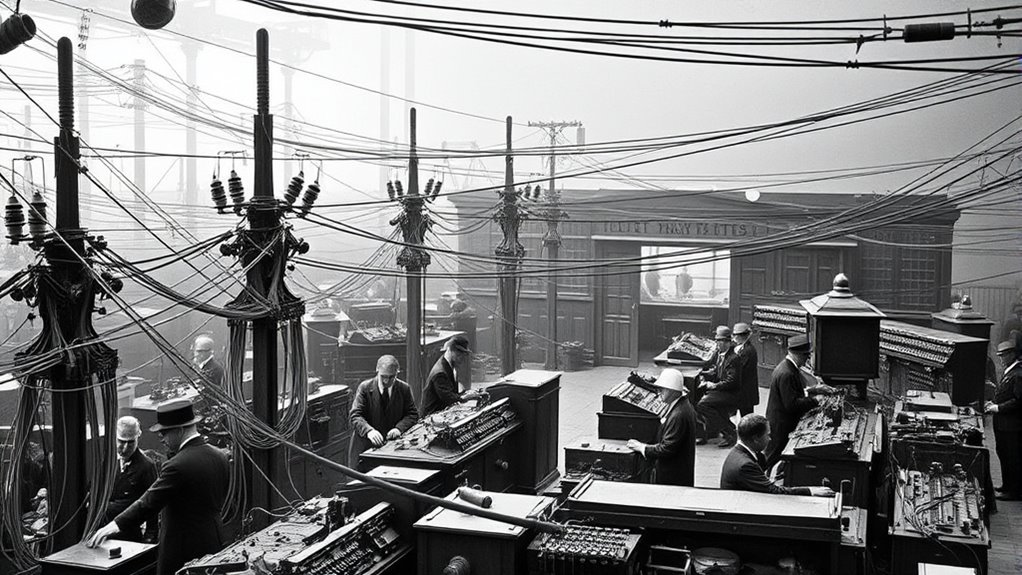

In the 1800s, telegraph networks transformed how you connect across long distances by enabling instant message transmission. This technology revolutionized communication, making it faster, more reliable, and accessible, which changed social, economic, and political life worldwide. Governments and businesses relied heavily on these networks for coordination and news dissemination. Their development laid the groundwork for today’s digital world, and exploring this history reveals how communication continues to evolve.
Open a free Amazon Business account
Business pricing, bulk buying and tax-exempt orders.
As an affiliate, we earn on qualifying purchases.
Key Takeaways
- Telegraph networks revolutionized long-distance communication by enabling instant message transmission across vast regions in the 1800s.
- Coding innovations like Morse code enhanced message clarity, reliability, and reduced errors in telegraph transmissions.
- These networks increased communication speed, facilitated global information dissemination, and laid the foundation for modern digital communication.
- Governments and businesses used telegraph systems for military coordination, news distribution, and economic activities.
- The development of telegraph networks broke regional barriers, fostering a sense of global community and influencing future technological advances.
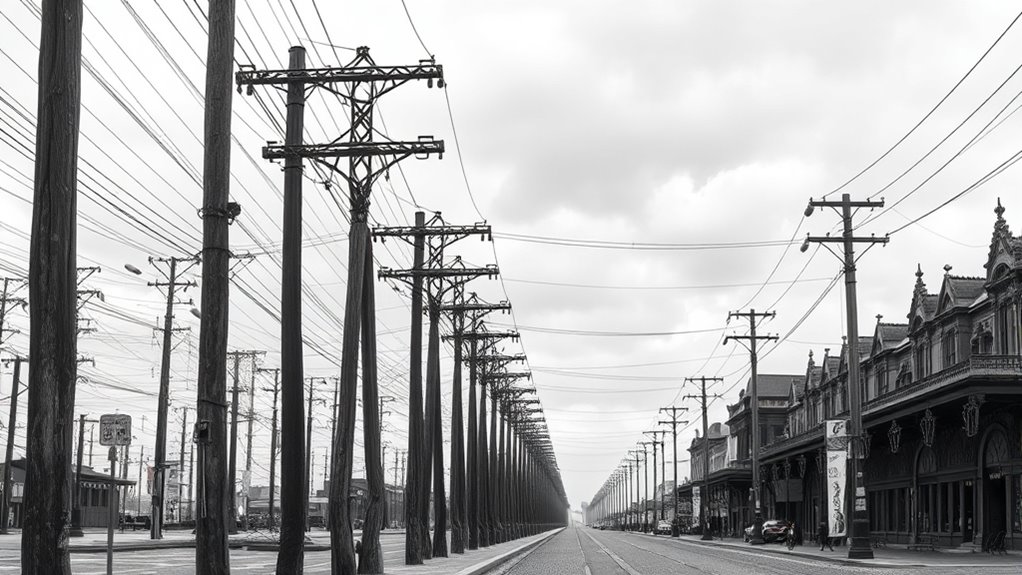
Telegraph networks revolutionized long-distance communication in the 19th century by enabling instant transmission of messages across vast distances. This breakthrough transformed how people connected, business operated, and governments managed their affairs. At the heart of this revolution were coding innovations that made transmitting messages quicker and more reliable. Early telegraph systems used simple Morse code, a series of dots and dashes, which allowed messages to be encoded efficiently. Over time, these coding innovations became more sophisticated, improving message clarity and reducing errors. You might not realize it, but these developments laid the groundwork for modern digital communication, where coding remains essential. The efficiency of Morse code and later innovations meant messages could be sent faster, often within minutes, no matter how remote the sender or receiver. This speed altered societal expectations and behaviors, fostering a sense of immediacy that hadn’t existed before. People began to anticipate rapid responses, and businesses could coordinate activities across cities and countries in real-time. The societal impacts of the telegraph weren’t just about speed; they reshaped social structures and economic patterns. Governments used telegraph networks to coordinate military operations, manage mail delivery, and broadcast important news quickly. News agencies could now distribute information globally almost instantaneously, creating a more interconnected world. These networks also influenced daily life, making communication more accessible, although initially limited to those who could afford the technology. As telegraphy spread, societal impacts extended further, breaking down regional barriers and fostering a sense of global community. You can see this influence in the way news travels even today, with instant updates replacing slower, traditional methods. The innovations in coding not only enhanced the functionality of telegraph networks but also inspired future technological advances. The shift from simple Morse signals to more complex coding systems showed how critical encoding techniques are in transmitting information accurately over long distances. This evolution had a profound societal impact, encouraging the development of later communication technologies, including the telephone and computers. Overall, telegraph networks wired the world in the 1800s, bridging continents and cultures, and setting the foundation for today’s interconnected digital landscape. The coding innovations introduced during this period didn’t just improve communication—they transformed society by making information flow faster, more reliable, and more accessible, shaping the modern world in ways that still resonate today. Additionally, these advancements in coding techniques underscored the importance of secure and efficient information transmission, which continues to be vital in our digital age.

DIY Morse Code Trainer Soldering Practice kit, Complete Soldering Project kit with Components, PCB & Enclosure, Perfect for Electronics Enthusiasts & Beginners,Advance Version
- Kit Contents: All necessary components included
- Learning Tool: Practice Morse code and soldering skills
- Project Components: Custom PCB, electronic parts, enclosure
As an affiliate, we earn on qualifying purchases.
As an affiliate, we earn on qualifying purchases.
Frequently Asked Questions
How Did Telegraph Technology Influence Global Politics?
You see, telegraph technology revolutionized global politics by enabling faster diplomatic communication, making governments respond quickly to international events. It also boosted espionage activities, allowing spies to send and receive sensitive information swiftly. This increased speed and secrecy in communication shaped diplomatic strategies and power dynamics. As a result, countries gained an advantage in negotiations and intelligence, fundamentally changing how nations interacted and maintained their influence worldwide.
What Were the Environmental Impacts of Telegraph Cable Laying?
When laying telegraph cables, you caused environmental degradation and habitat disruption, especially in marine ecosystems. The process involved digging trenches on the ocean floor, which disturbed seabed habitats and threatened marine life. Heavy equipment and cable materials sometimes led to pollution, further impacting ecosystems. While essential for communication, the environmental costs were significant, altering underwater environments and disrupting local habitats during the cable installation process.
Who Were the Key Inventors Behind Early Telegraph Systems?
You might be surprised to learn that Samuel Morse and Charles Wheatstone were key inventors behind early telegraph systems, transforming communication. In fact, Morse’s code revolutionized how messages traveled across vast distances. While wireless alternatives now dominate modern communication, these pioneers laid the groundwork for today’s instant connectivity, showing how innovation can bridge worlds and reshape society in ways that still influence us.
How Did Telegraph Networks Affect International Trade?
You see, telegraph networks greatly boosted international trade by increasing communication speed, allowing merchants and traders to make faster decisions. This rapid exchange of information led to trade expansion, as businesses could coordinate shipments, negotiate deals, and respond to market changes more efficiently across borders. Consequently, the telegraph transformed global commerce, making it more interconnected and responsive, which laid the foundation for today’s fast-paced international markets.
What Challenges Were Faced in Maintaining Telegraph Infrastructure?
Maintaining telegraph infrastructure felt like battling an unstoppable force of nature. Cable corrosion was a major challenge, quickly degrading signals and forcing frequent repairs. Maintenance difficulties arose from the vast and often remote cable routes, making it hard to quickly address issues. Harsh weather, deep-sea conditions, and technological limitations compounded these problems, requiring relentless effort and ingenuity to keep the network running smoothly across continents.

Armory Replicas Handcrafted Nautical Decor Solid Brass Titanic Engine Telegraph Keyring, 5", Brass
- Overall Length: 4.50 inches
- Chain Length: 1.25 inches
- Carabiner Length: 1.5 inches
As an affiliate, we earn on qualifying purchases.
As an affiliate, we earn on qualifying purchases.
Conclusion
Imagine you’re sending a message across continents in minutes, just like the first telegraph operators did. The 1800s network transformed communication, shrinking the world and connecting distant places instantly. For example, a trader in New York could confirm a deal with a partner in London overnight. This technology laid the groundwork for today’s global connectivity, proving how a simple wire and clever innovation can change history forever. You’re now part of that incredible story of progress.

JCRBILW Communication Classic Telegraph Prop Display Collectible Device Metal Construction Vintage Machine Radio Details, Olive Green, Optical, Electric, Realistic Simulation
- Realistic Vintage Design: Styled with authentic controls and gauges
- Collectible Decor: Recreates classic telegraph look for decor
- Sturdy Metal Construction: Provides a durable and substantial feel
As an affiliate, we earn on qualifying purchases.
As an affiliate, we earn on qualifying purchases.

SI4732 ATS-25 max-Decoder Full-Band Radio Receiver, Built-in Morse Code and Digital Communication decoder Support CW RTTY FT4 FT8 LSB SW(4.17 Version )
- Enhanced Mode Support: Adds DIGI, CWR, SYNC modes
- Built-in WIFI: No extra app needed for WiFi connection
- Wide Frequency Range: FM, LW, MW, SW, SSB supported
As an affiliate, we earn on qualifying purchases.
As an affiliate, we earn on qualifying purchases.
Pool season Picks
robotic pool cleaners
As an affiliate, we earn on qualifying purchases.