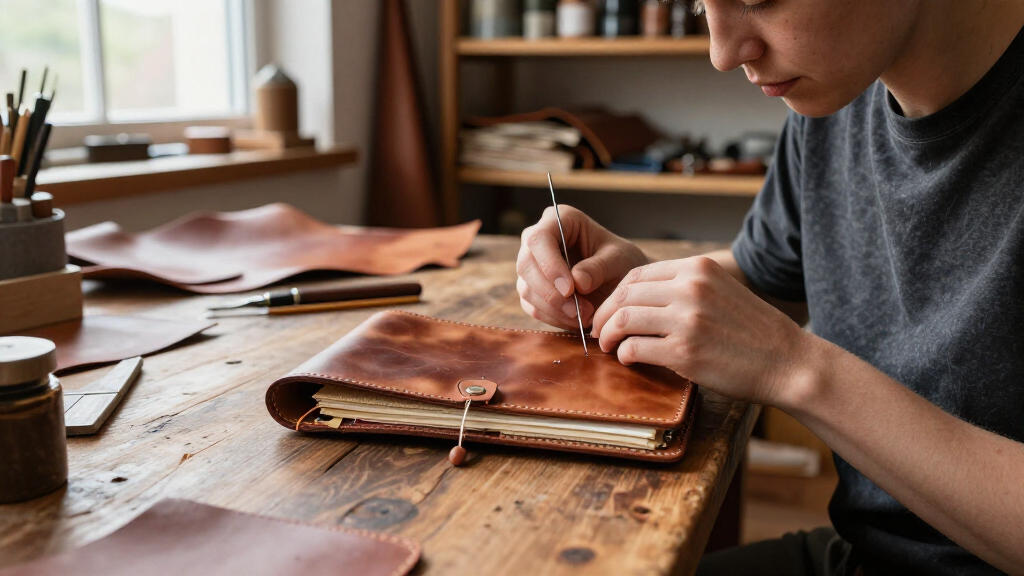

A handmade leather journal should feel like an heirloom, not a mass-produced notebook wrapped in thin leatherette — and the difference comes down to leather quality, paper type, and binding durability. After comparing 13 of the most popular options, the Sun & Moon Vintage Leather Journal stands out as the best overall pick for its generous 200 pages of antique-style paper and versatile cover that works for both writing and sketching. If capacity matters most, the Large Tree of Life Journal with 600 pages is the heavyweight of the group, while the RILIHO Genuine Leather Journal balances quality and everyday practicality better than anything else at its size. The main tradeoff you’ll face in this category is between rustic deckle-edge cotton paper (beautiful, but unlined and textured) and practical lined pages (easier to write on, less romantic). Keep reading for the full breakdown of which journal fits your writing style, budget, and gifting intentions.

Get art and craft supplies delivered free with Prime
- Fast, free delivery on millions of items
- Prime Video, Amazon Music and more included
- Member-only deals all year
Key Takeaways
- Deckle-edge antique paper appeared in five of the thirteen journals — it looks stunning but limits Fountain pen users, since the textured cotton pages bleed and feather far more than lined or kraft stock.
- Page count varied enormously, from 100 pages in the Leather Scroll Journal to 600 in the Large Tree of Life — buyers should match capacity to how often they actually write, since thick journals become unwieldy when half-filled.
- The vintage-key closure, shared by four journals in the lineup, is decorative charm versus genuine function: it adds character for gifting but does little to protect pages compared with a proper strap closure.
- The 6×4 Tree of Life and the 7×10 600-page option sit at opposite extremes — small journals suit travel and pocket carry, while large formats only make sense for studio use, grimoires, or dedicated journaling practice.
- Genuine full-grain leather (RILIHO, KomalC, Leather Village) ages and patinas far better than the distressed bonded leather on cheaper decorative journals, which is the single biggest durability differentiator in this comparison.


| handmade leather journal | Size | Closure | Material | Pages |
|---|---|---|---|---|
| Leather Travel Journal for Men | — | C-lock | Genuine buffalo leather | — |
| Leather Journal with Deckle Ed | 8 x 6 inches | Vintage key | Buffalo leather | Unlined |
| Sun & Moon Vintage Leather Jou | — | — | — | 200 |
| Leather Village Leather Bound | 7 x 5 inches | — | Genuine leather | 220 pages |
| Handmade Leather Scroll Journa | 9 x 6 inches | Leather strap | — | 100 pages (50 sheets) |
| Leather Journal with Deckle Ed | 8 x 6 inches | Vintage key | Buffalo leather | — |
| RILIHO Leather Journal Noteboo | 5 x 7.1 inches | — | — | — |
| Vintage Leather Journal with K | — | Leather wraparound with key | Leather, antique paper | 240 lined pages |
| Leather Journal with Deckle Ed | 8 x 6 inches | Vintage key | Buffalo leather | Unlined, non-refillable |
| Tree Of Life Leather Journal | 6 x 4 inches | Belt wrap-around | Genuine buffalo leather | — |
| CooLeathor Leather Journal Wri | 5 x 7 inches | — | — | 240 lined kraft pages (120 sheets) |
| KomalC Handmade Leather Travel | 8 x 6 inches | String tie | — | — |
| Large Tree of Life Leather Jou | 7 x 10 inches | None | — | — |
More Details on Our Top Picks
Leather Travel Journal for Men & Women, 7 x 5 inches, Brown
This option stands out for its genuine buffalo leather cover paired with a secure C-lock closure, a combination that suits frequent travelers who toss a journal into a backpack without babying it. Compared with the Leather Village Leather Bound Journal, which shares the same 7 x 5 inch footprint, the C-lock here does a better job of keeping pages flat and protected in transit. The recycled paper adds an eco-friendly angle that matters to buyers who care about sourcing. The tradeoff: at 410 grams, it is noticeably heavier than slimmer competitors like the Tree Of Life Leather Journal, and the non-refillable design means the leather outlives the paper by years.
Pros:- Genuine buffalo leather cover is durable and ages attractively
- C-lock closure keeps pages protected and flat in a bag
- Eco-friendly recycled paper appeals to sustainability-minded buyers
- Compact 7 x 5 inch size fits easily in carry-ons and daypacks
Cons:- Non-refillable, so the journal cannot be reused once full
- At 410 g it is heavier than most similarly sized options
- Only unlined paper, which frustrates neat handwriting or structured note-takers
Best for: Backpackers and frequent travelers who want a rugged, securely closing journal that survives rough handling
Not ideal for: Ultralight travelers and minimalists — 410 g is heavy for a compact notebook, and anyone needing lined pages should skip it
- Material:Genuine buffalo leather
- Paper Type:Recycled paper
- Closure:C-lock
- Dimensions:7 x 5 inches
- Weight:410 g
- Page Style:Unlined
- Unit Count:1 journal
Our verdict“A tough, travel-ready pick for adventurers who value durability and a locking closure over low weight.”
Leather Journal with Deckle Edge Paper 8×6 inch and Vintage Key
Between the vintage key closure and the deckle-edge recycled cotton paper, this journal leans fully into old-world character, which makes it the strongest gift candidate in this lineup. Where the Leather Travel Journal prioritizes practicality with its C-lock, this one prioritizes romance — the key-and-lock detail is the kind of flourish that lands well when unwrapped. The 8 x 6 inch size offers more writing room than the Leather Village journal without becoming unwieldy. The one-year warranty is unusual for handmade leather goods and signals confidence in the binding. Buyers should know the price sits at the higher end, and like most handmade options here, the pages cannot be refilled.
Pros:- Distinctive vintage key closure enhances both security and gift appeal
- Deckle-edge recycled cotton paper gives every page an artisanal look
- One-year warranty, rare among handmade leather journals
- Roomy 8 x 6 inch format suits sketching and longer entries
Cons:- Priced higher than comparable buffalo leather journals in this guide
- Non-refillable paper limits long-term value
- Unlined pages only, ruling out structured note-taking
Best for: Gift buyers shopping for artists, writers, or travelers who want a journal with maximum presentation impact
Not ideal for: Budget-conscious buyers and practical daily journalers — the premium styling adds cost without adding function
- Material:Buffalo leather
- Size:8 x 6 inches
- Paper Type:Deckle-edge, recycled cotton
- Pages:Unlined
- Closure:Vintage key
- Handmade:Yes
- Recyclable:Yes
- Warranty:1 year
Our verdict“The pick when the journal is a gift first and a writing tool second — the key closure and deckle edges make a memorable impression.”
Sun & Moon Vintage Leather Journal, 200 Pages Handmade Antique Paper
This model is better suited to artists and mixed-media creators than any other entry here, thanks to 150 GSM handmade antique paper — roughly 50 percent thicker than the 100gsm sheets in the Leather Village journal — which resists bleed-through from ink and light washes. The stitched binding with brass clasp holds up to repeated opening and closing, and the sun and moon embossing gives it a spiritual, hand-crafted identity that plain brown journals lack. Compared with the Handmade Leather Scroll Journal, the doubled page count means fewer refills-by-replacement. The honest drawbacks: no published dimensions make size planning a guess, and handmade variance means the copy you receive will differ slightly from photos.
Pros:- 150 GSM handmade paper handles ink, sketching, and light washes without bleed-through
- 200-page count is generous for a handmade journal
- Stitched binding with brass clasp is durable and secure
- Sun and moon design plus distressed leather suits spiritual and fantasy themes
Cons:- No listed dimensions, making it hard to judge portability before buying
- Only available in brown leather
- Handmade production means each copy varies slightly in appearance
Best for: Artists and ink-heavy journalers who need thick, bleed-resistant paper and want a decorative cover
Not ideal for: Buyers who need exact sizing for a bag or desk setup — dimensions are unspecified — or anyone wanting color choices beyond brown
- Pages:200
- Paper GSM:150 GSM
- Cover Material:Genuine leather
- Design:Sun & Moon print
- Binding:Stitched with brass clasp
- Thickness:1.25 inches
- Color:Brown (distressed)
Our verdict“The strongest choice here for sketching and ink work, provided the missing size specs don’t matter to you.”
Leather Village Leather Bound Journal – 7″ x 5″ – Rustic Brown
This pick makes the most sense for everyday journalers who want genuine leather at an accessible price point without decorative extras driving up cost. With 220 acid-free pages at 100gsm, it out-pages the Handmade Leather Scroll Journal by more than double while skipping that model’s pricier goat leather and scroll styling. The acid-free paper means entries will not yellow over the years — a real advantage for anyone building a long-term journaling habit. Compared with the Leather Travel Journal, it trades the C-lock closure for a simpler wrap design, so it is better suited to desk and daily-carry use than rough travel. Note that unlined pages only and occasional leather conditioning are part of the ownership tradeoff.
Pros:- 220 acid-free pages preserve writing long-term without yellowing
- 100gsm paper handles most pens and pencils without bleed-through
- Genuine leather cover with rustic finish at a modest price for the category
- Compact 7 x 5 inch size works for daily carry
Cons:- Unlined pages only, limiting structured note-takers
- Leather cover needs periodic conditioning to stay supple
- No closure mechanism to protect pages in a bag
Best for: Daily journalers and students who want genuine leather and archival paper without paying for ornamental features
Not ideal for: Travelers who need a locking closure, and anyone who requires lined pages for neat structured writing
- Material:Genuine leather
- Size:7 x 5 inches
- Pages:220 pages
- Page Type:Unlined
- Paper Weight:100gsm
- Color:Rustic Brown
Our verdict“The sensible workhorse of this lineup — maximum pages and archival paper per dollar, if you can live without a clasp or lines.”
Handmade Leather Scroll Journal – 100 Pages Vintage Style Deckle Edge
The crushed goat leather cover and leather strap closure give this journal a grimoire-like presence that fits Book of Shadows, fantasy, and cosplay uses better than anything else in this batch. Its larger 9 x 6 inch format offers more room per page than the Leather Village journal, which suits decorative writing, spell pages, or full-page sketches. The handmade acid-free deckle edge paper reinforces the antique aesthetic while keeping contents archivally stable. Tradeoffs are real, though: at just 100 pages it holds the fewest entries of the reviewed models, the strap closure is less secure than the Sun & Moon journal’s brass clasp, and the soft goat leather shows scratches with use — some buyers will see that as character, others as wear.
Pros:- Crushed goat leather and strap closure create an authentic grimoire look
- Handmade acid-free deckle edge paper matches the antique theme and preserves contents
- Larger 9 x 6 inch pages suit full-page art and decorative writing
- Eco-friendly materials throughout
Cons:- Only 100 pages, the smallest capacity of the journals reviewed here
- Leather strap closure is less secure than a lock or brass clasp
- Soft goat leather develops scratches and scuffs over time
Best for: Fantasy fans, Wiccan practitioners, and cosplayers who want an authentic grimoire-style book for themed writing
Not ideal for: High-volume journalers — 100 pages fills fast — and anyone who wants a pristine cover, since goat leather scratches visibly
- Cover Material:Crushed goat leather
- Size:9 x 6 inches
- Pages:100 pages (50 sheets)
- Paper Type:Handmade, acid-free, deckle edge
- Closure:Leather strap
- Page Style:Unlined
- Use Cases:Writing, sketching, grimoire, Book of Shadows
Our verdict“A themed, aesthetic-first journal built for fantasy and ritual use rather than heavy daily writing.”
Leather Journal with Deckle Edge Paper 8×6 inch and Vintage Key | Handmade Writing Notebook Diary for Men & Women
This journal stands out for its recycled cotton deckle-edge paper, which handles pencil, ink, and light washes far better than the kraft pages inside the RILIHO Leather Journal Notebook. At 8×6 inches, it offers more drawing room than the palm-sized Tree Of Life Leather Journal 6×4, making it a stronger canvas for sketching on the go. The hand-stitched binding keeps pages secure through heavy handling, and the vintage key closure adds a tactile, keepsake quality. The tradeoff is permanence: unlike refillable notebooks, once the deckle pages are filled, the book is done. Compared with the nearly identical Deckle Edge journal (B0DFCPJZGJ), this version shares the same build, so choosing between them comes down to listing details rather than substance.
Pros:- Recycled cotton deckle-edge paper suits sketching and writing alike
- Hand-stitched binding keeps pages secure under travel wear
- Vintage key closure adds security and old-world charm
- Compact 8×6 size fits easily in a bag
Cons:- Non-refillable — the journal can’t be extended once filled
- Single size and style with no variations
- Handcrafted quality pushes the cost above mass-produced notebooks
Best for: Artists and travelers who want unlined, characterful paper in a portable handmade format
Not ideal for: Buyers who want a long-term reusable journal, since the paper is non-refillable
- Material:Buffalo leather
- Size:8 x 6 inches
- Paper Type:Deckle-edge, recycled cotton
- Binding:Hand-stitched
- Closure:Vintage key
- Weight:340 g
- Warranty:1 year
- Unit Count:1
Our verdict“A strong pick for anyone who prioritizes artistic paper quality and vintage character over refillability.”
RILIHO Leather Journal Notebook – Genuine Leather, 260 Pages, Vintage Style, Brown
Where most handmade leather journals lean ornate, the RILIHO wins on sheer practicality: 260 pages of vintage kraft paper means weeks more writing than the Vintage Leather Journal with Key (B08PQJCPK2) and its 240 pages, let alone the compact Tree Of Life 6×4. The soft hand-stitched genuine leather cover feels lived-in from day one, and the 5 x 7.1 inch format slips into a jacket pocket — something the bulkier 8×6 Deckle Edge journals can’t manage. The downside is plainness: there’s no key closure, no pen loop, no pocket, and brown is the only color story. For writers who care about page count over pageantry, that trade is easy to make; gift-givers wanting drama should look elsewhere.
Pros:- Generous 260-page count outlasts most competitors
- Soft genuine leather cover with hand-stitching
- Pocketable 5 x 7.1 inch size ideal for everyday carry
- Versatile enough for writing, sketching, or gifting
Cons:- No extras — no pockets, pen loops, or closures
- Single brown colorway limits personalization
- Kraft paper is plain compared with deckle-edge or antique alternatives
Best for: Daily journalers and note-takers who want maximum writing capacity in a pocketable leather cover
Not ideal for: Gift buyers seeking a decorative keepsake with closures or embellishments
- Page Count:260 pages
- Size:5 x 7.1 inches
- Cover Material:Genuine leather
- Inner Paper:Vintage kraft paper
- Style:Vintage, brown
- Warranty:One year
Our verdict“The workhorse of the lineup — best for writers who measure value in pages, not frills.”
Vintage Leather Journal with Key – Handmade Antique Style Notebook with Lined Pages
This is the rare handmade journal in this roundup that commits to lined, antique-style pages — a real advantage for neat handwriting, and the paper is suitable for all pen types, including fountain pens, something the kraft-filled RILIHO can’t claim with confidence. The leather wraparound and key give it more security than an open-bound notebook, and the stitched spine holds up to daily opening and closing. The tradeoffs are structural: lined-only pages rule out sketching (the 8×6 Deckle Edge journals are better for that), and the deliberately aged, rustic look won’t suit anyone wanting a clean, modern desk accessory. Because each piece is handmade, expect small variations between copies — part of the charm, but worth knowing before gifting.
Pros:- Antique-style paper handles fountain pens and all ink types
- 240 lined pages keep handwriting neat and consistent
- Leather wraparound with key protects contents
- Handmade stitched construction built to last
Cons:- Lined-only format excludes sketching and freeform layouts
- Vintage aged appearance may not suit modern tastes
- Handmade variation means slight inconsistencies between units
Best for: Writers who use fountain pens or prefer lined pages in a rustic, secure format
Not ideal for: Sketch artists and minimalists — no blank pages, and the aged aesthetic reads traditional
- Pages:240 lined pages
- Material:Leather, antique paper
- Binding:Stitched
- Closure:Leather wraparound with key
- Craft:Handmade
- Pen Compatibility:All pen types, including fountain pens
Our verdict“The best choice here for lined-page devotees and fountain pen users who still want handmade character.”
Leather Journal with Deckle Edge Paper 8×6 inch and Vintage Key | Handmade Writing Notebook Diary
Functionally, this journal mirrors the 8×6 Deckle Edge journal (B0DFCMHWBJ) almost exactly — premium buffalo leather, hand-stitched binding, recycled cotton deckle paper, key closure — but its positioning makes it the more gift-ready of the pair: a durable, unapologetically handsome object that photographs beautifully and suits nearly any recipient. The unlined pages welcome both writers and sketchers, where the Vintage Leather Journal with Key locks you into lines. Its weaknesses mirror its twin, too: non-refillable paper caps its lifespan, and the single 8×6 format leaves no smaller or larger option. Compared with the Large Tree of Life Journal (600 pages, 7×10), it trades raw capacity for portability and a more polished presentation.
Pros:- Premium buffalo leather with high-quality handmade craftsmanship
- Unlined deckle-edge paper suits both writing and sketching
- Secure key closure keeps contents protected
- Striking gift-worthy presentation
Cons:- Non-refillable paper limits long-term reuse
- Available only in one 8×6 size
- Nearly identical to a sibling listing, which complicates comparison shopping
Best for: Gift-givers who want a distinctive handmade present that works for writers and artists alike
Not ideal for: Heavy-volume journalers who will exhaust the non-refillable pages quickly
- Size:8 x 6 inches
- Material:Buffalo leather
- Paper Type:Deckle-edge, recycled cotton
- Pages:Unlined, non-refillable
- Binding:Hand-stitched
- Closure:Vintage key
- Warranty:1 year
Our verdict“A safe, handsome gift choice for anyone who values craftsmanship over refillable practicality.”
Tree Of Life Leather Journal, Distressed Brown 6×4
At 6×4 inches, this is the most pocketable journal in the batch, and it’s the only one specified with watercolor paper — a genuine differentiator if you paint, since the 8×6 Deckle Edge journals’ recycled cotton pages and the RILIHO’s kraft stock will buckle under wet media. The distressed buffalo leather and Tree of Life tooling give each piece a one-of-a-kind look, and the belt wrap-around closure is sturdier in practice than a dangling key. The compromises are real, though: the page count is unspecified, so capacity is a gamble, and natural tanning means the leather you receive may look quite different from the listing photos. For plein-air painters and pocket-journal fans, those risks are worth it; desk journalists should size up.
Pros:- Watercolor paper supports wet media, ink, and mixed mediums
- Ultra-compact 6×4 size fits a pocket or small bag
- Distressed buffalo leather makes every copy unique
- Belt wrap-around closure is secure and low-profile
Cons:- No stated page count, so capacity is uncertain
- Natural tanning means leather appearance varies unit to unit
- Small format limits larger sketches or long-form writing
Best for: Watercolorists and urban sketchers who need wet-media paper in a pocket-sized book
Not ideal for: Writers who need a known page count or a larger writing surface
- Material:Genuine buffalo leather
- Size:6 x 4 inches
- Paper Type:Watercolor paper
- Closure:Belt wrap-around
- Binding:Stitched
- Finish:Distressed brown, Tree of Life design
- Page Count:Not specified
Our verdict“The only true pocket watercolor journal in this lineup — ideal for painters, risky for page-count planners.”
CooLeathor Leather Journal Writing Notebook – Genuine Leather Bound Daily Notepad, 240 Kraft Pages, Handmade, Rustic Brown, 5 x 7 in
This CooLeathor journal earns its spot as the most travel-friendly pick in the lineup. At 5 x 7 inches and under a pound, it slips into a bag far more easily than the Large Tree of Life journal, which is nearly double the footprint. The 240 lined kraft pages give it a practical edge over the KomalC travel journal too — those who want ruled lines for daily planning or meeting notes will appreciate the structure, since the KomalC offers only blank pages. The genuine leather cover develops an appealing patina over time. The tradeoff is capacity: heavy writers will burn through 120 sheets quickly, and the stiffer cover makes it less comfortable to fold flat while writing on the go compared with softer-bound options like the Leather Village journal.
Pros:- Genuine leather cover with an attractive rustic finish that ages well
- 240 lined kraft pages suit structured writing, planning, and note-taking
- Compact 5 x 7 size is genuinely portable for daily carry
- Versatile enough for writing, sketching, or travel diary use
Cons:- Only 120 sheets, which limits longevity for frequent writers
- Hardcover binding is less flexible and harder to write in one-handed
- Availability can be inconsistent
Best for: Commuters and travelers who want a lined, pocket-sized journal for structured daily writing
Not ideal for: Heavy journalers or prolific sketchers — 120 sheets fills up fast compared with the 600-page Tree of Life option
- Brand:CooLeathor
- Cover Material:Genuine leather
- Pages:240 lined kraft pages (120 sheets)
- Size:5 x 7 inches
- Weight:14.88 ounces
- Binding:Hardcover leather bound
- Color:Rustic Brown
- Manufacturer:POROMO
Our verdict“A smart pick for anyone who wants a lined, carry-anywhere leather journal rather than a decorative keepsake.”
KomalC Handmade Leather Travel Journal, Unlined Paper Writing Notebook
Where the CooLeathor journal is built for lined, structured writing, the KomalC goes the opposite direction: blank handmade paper made from recycled cotton, acid-free and wood-free, which is exactly what artists and bullet journalists want. The premium buffalo leather feels more substantial than typical genuine-leather covers in this roundup, and the rustic string closure adds character that plain-bound options like the Leather Village journal lack. The key tradeoff is the paper itself — handmade cotton pages have texture, so fountain pen users and fans of ultra-smooth writing surfaces may find them frustrating. It is also non-refillable, so once the pages are filled, the journal becomes a keepsake rather than a long-term system, unlike refillable competitors.
Pros:- Premium buffalo leather cover that is thicker and more durable than typical genuine leather
- Eco-friendly handmade paper made from recycled cotton, acid-free and wood-free
- Blank pages suit sketching, doodling, and freeform layouts
- Distinctive rustic design with a string closure
Cons:- Non-refillable, so the journal cannot be reused once full
- Handmade cotton paper has a rough texture that some pens struggle with
- 8 x 6 inch size is modest for artists wanting a larger canvas
Best for: Artists, sketchers, and freeform journalers who prefer blank textured pages over lined ones
Not ideal for: Fountain pen users or writers who want smooth, refillable paper for long-term daily use
- Brand:KomalC
- Cover Material:Buffalo leather
- Paper:Handmade recycled cotton, acid-free, wood-free, unlined
- Size:8 x 6 inches
- Closure:String tie
- Style:Handmade rustic travel journal
- Uses:Sketching, journaling, note-taking, travel diary
Our verdict“The best choice here for creators who value character and blank textured paper over lined practicality.”
Large Tree of Life Leather Journal, 600 Pages, 7×10 Inches
With 600 pages, this Tree of Life journal outlasts the CooLeathor by two and a half times, making it the clear choice for anyone committed to a long writing project or a multi-year diary. The embossed Tree of Life cover gives it a decorative presence that plainer rustic options like the Leather Village journal can’t match — this is a journal meant to sit on a shelf as a keepsake, not get tossed in a tote. The tradeoff is portability: at 7 x 10 inches with that much paper inside, it is the bulkiest option in this roundup and poorly suited to travel, where the 5 x 7 CooLeathor excels. Buyers should also note it lacks a closure or pockets, unlike the string-tied KomalC, so pages are exposed to wear at the edges.
Pros:- 600 pages provide exceptional capacity for long-term journaling or sketching
- Handmade leather cover offers durability and a premium look
- Elegant embossed Tree of Life design stands out as a display piece
- Large pages give more room per entry than compact 5 x 7 alternatives
Cons:- Large size makes it one of the least portable options available
- No closure, pocket, or strap to protect the page edges
- Heavier and bulkier than travel-focused journals in this roundup
Best for: Dedicated daily journalers and gift-givers who want a large, long-lasting keepsake volume
Not ideal for: Travelers and commuters — the 7 x 10 footprint and 600-page bulk make it awkward to carry daily
- Cover Material:Leather
- Page Count:600 pages
- Size:7 x 10 inches
- Cover Design:Embossed Tree of Life
- Binding:Handmade leather bound
- Uses:Journaling, sketching, keepsake diary
- Closure:None
Our verdict“Ideal for someone starting a serious long-term journal or gifting a keepsake, provided it lives at home rather than in a backpack.”
How We Picked
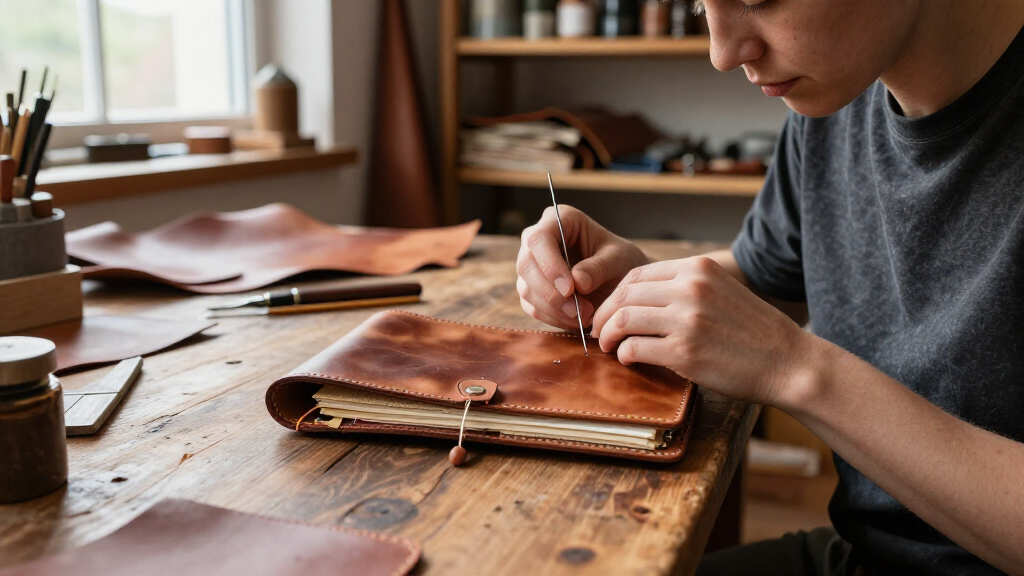
I evaluated each journal against five buyer-relevant criteria. Leather quality came first: full-grain and top-grain hides that develop patina scored higher than bonded or heavily coated leather that looks distressed out of the box but cracks within a year. Paper stock mattered equally — I looked at page count, whether the paper was lined, unlined, or deckle-edge antique cotton, and how well each type handles ink versus pencil. Binding durability separated real handmade construction from glue-and-pray assembly, since a journal that sheds pages after two months fails at its one job. Finally, I weighed size practicality and value for the intended use, because a 6×4 pocket journal and a 600-page grimoire serve completely different buyers and were judged accordingly.
The ranking logic follows versatility: journals that perform well across writing, sketching, and gifting placed higher than single-purpose options. The Sun & Moon earned the top spot for balancing capacity, paper quality, and broad appeal, while specialist picks like the Scroll Journal and Large Tree of Life were ranked for the narrower audiences they serve exceptionally well. Decorative features such as vintage keys were treated as charm bonuses, never as substitutes for build quality.
| handmade leather journal | Material | Binding |
|---|---|---|
| Leather Travel Journal for Men | Genuine buffalo leather | — |
| Leather Journal with Deckle Ed | Buffalo leather | — |
| Sun & Moon Vintage Leather Jou | — | Stitched with brass clasp |
| Leather Village Leather Bound | Genuine leather | — |
| Handmade Leather Scroll Journa | — | — |
| Leather Journal with Deckle Ed | Buffalo leather | Hand-stitched |
| RILIHO Leather Journal Noteboo | — | — |
| Vintage Leather Journal with K | Leather, antique paper | Stitched |
| Leather Journal with Deckle Ed | Buffalo leather | Hand-stitched |
| Tree Of Life Leather Journal | Genuine buffalo leather | Stitched |
| CooLeathor Leather Journal Wri | — | Hardcover leather bound |
| KomalC Handmade Leather Travel | — | — |
| Large Tree of Life Leather Jou | — | Handmade leather bound |
Factors to Consider When Choosing Handmade Leather Journal
Before choosing a handmade leather journal, it helps to understand what actually separates a genuine artisan product from factory-made leather-look alternatives — and which tradeoffs matter for how you plan to use it.Leather Type and Grade
The word leather on a listing tells you almost nothing — full-grain, top-grain, genuine, and bonded leather are wildly different materials. Full-grain hide (used by brands like RILIHO and KomalC) retains the natural surface, develops rich patina over years, and can last decades; bonded leather is essentially leather fibers glued to a backing, and it peels within a few years of regular handling. A common mistake is paying artisan prices for bonded leather that was merely distressed in a factory to look handmade. Check whether the seller specifies the leather grade at all — vague listings usually mean the lowest grade. Also note that thicker leather (around 2mm) holds its shape as a wraparound cover, while thin leather feels floppy and offers no page protection. If longevity matters more than a soft, broken-in feel from day one, prioritize firm full-grain construction.
Paper Type: Deckle Edge vs. Lined vs. Kraft
Paper choice shapes your entire writing experience more than the cover does. Deckle-edge antique paper — found in several journals here — has torn, feathered edges and a textured cotton feel that looks magical but performs poorly with fountain pens and most gel inks, which feather and bleed through the porous pages. Lined pages, like those in the Vintage Journal with Key, suit daily journaling and note-taking where legibility matters. Kraft paper, as in the CooLeathor, sits between the two: sturdier than cotton antique stock and friendly to pencil and ballpoint. A frequent buyer mistake is choosing the most photogenic paper and then fighting it every day. Match the paper to your actual tool of choice — pencil and ballpoint users can enjoy any of the three, while fountain pen users should avoid unlined cotton entirely.
Binding and Construction Quality
Hand-stitched binding (usually visible Coptic or longstitch stitching along the spine) is what allows a journal to lay flat and keeps pages anchored for decades. Glued spines, common in cheaper decorative journals, crack when the journal is flexed open repeatedly, and pages start falling out within months of daily use. Look for product photos showing the spine stitching clearly; sellers proud of their binding always photograph it. Stitching that penetrates through the leather cover rather than just the paper block is another sign of genuine construction. The long-term test is simple: a well-bound journal should open fully without resistance at the gutter, letting you use every inch of the page. This is one area where spending slightly more pays off disproportionately, because binding failure cannot be repaired at home.
Size and Page Count: Match Format to Habit
Buyers routinely overestimate how much journal they need. A 600-page 7×10 journal sounds impressive but is heavy, slow to fill, and impractical for anything beyond desk use — ideal for a grimoire or sketchbook archive, wrong for daily reflections. At the other end, 6×4 pocket journals get carried everywhere but fill up in weeks, so frequent writers should expect to buy replacements often. The 7×5 and 8×6 formats hit the practical sweet spot: large enough for comfortable writing, small enough for a bag. A good rule of thumb is one filled page per day — so a 200-page journal represents roughly six months of daily practice. Choose capacity based on your honest writing frequency, not the version that photographs best.
Closures, Keys, and Decorative Features
Leather straps, brass clasps, and hanging vintage keys are the signature aesthetic of this category, but they vary in usefulness. A leather strap closure genuinely keeps the journal shut in a bag and compresses pages flat; a decorative key, by contrast, does almost nothing functionally — it’s a charm that dangles from a thin cord and can snag or break off. Deckle edges and embossed motifs (sun and moon, tree of life) add character but also add cost without affecting performance. The smart approach is to pay for decorative elements only when gifting, where presentation drives half the value, and to prioritize function when buying for yourself. None of these features should outweigh leather grade and binding quality in your decision.
Gifting vs. Personal Use
Roughly half of handmade leather journal purchases are gifts, and the evaluation criteria shift when they are. For gifting, visual impact, included packaging, and thematic motifs (celestial, tree of life, vintage key) matter more than paper performance, because the recipient’s writing preferences are unknown — unlined paper is the safer default since it works for writing, sketching, and lists alike. For personal use, invert that priority entirely: your own ink preferences and writing habits should drive the choice. Also consider pairing a gifted journal with a ballpoint or pencil, since fancy cotton paper frustrates ink enthusiasts who receive only the book. Finally, avoid extremely large formats as gifts; the 7×5 to 8×6 range is universally manageable, while a 600-page tome is a commitment few recipients want.
Frequently Asked Questions
Can I use a fountain pen in a handmade leather journal with antique paper?
In most cases, no — and this is the single most common disappointment with this category. The deckle-edge antique cotton paper used in journals like the Scroll Journal and the Deckle Edge Vintage Key models is soft, porous, and uncoated, so fountain pen ink feathers across fibers and bleeds through to the next page. Gel pens behave almost as badly. If you write with a fountain pen, choose a journal with kraft or lined paper instead, such as the CooLeathor or the Vintage Journal with Key, and even then test the first page before committing. Ballpoint pens and pencils work on every paper type in this lineup. The antique paper is genuinely lovely for pencil sketching and calligraphy with quick-drying inks, so it’s a paper limitation rather than a quality flaw.
Are the vintage keys on these journals functional locks?
No — the keys on the Sun & Moon, Deckle Edge, and Vintage Key journals are decorative charms, not locks. They typically hang from a leather cord or sit in a small clasp slot purely for aesthetic effect, and they won’t stop anyone from opening the journal. If privacy actually matters to you, no journal in this category offers real security; a lockable diary is a different product entirely. The practical function the keys do serve is gifting appeal — they photograph beautifully and instantly signal the vintage aesthetic most buyers associate with handmade journals. Just know going in that the key can dangle, snag on bag linings, or eventually detach, which is why I treated it as a charm bonus rather than a feature in the rankings.
Is a larger journal like the 600-page Tree of Life worth it for daily journaling?
For most daily writers, no — it’s better suited to specific heavy-use scenarios. A 600-page, 7×10 journal is physically heavy, doesn’t travel well, and takes real commitment to fill; at one page per day you’re looking at close to two years in a single book, which some writers love and many abandon. Where this format genuinely shines is as a grimoire, sketchbook archive, travel scrapbook, or a dedicated project journal where bulk is a feature. For daily reflections, a 200-page journal like the Sun & Moon hits a better rhythm — it fills in roughly six months, giving you the satisfaction of finishing and starting fresh twice a year. Choose the large format only if you already know you want a single, long-running volume.
How do I tell if a handmade leather journal is actually handmade?
Look for three honest signals in listings and photos. First, visible hand-stitching along the spine — machine-made journals use glued or perfect-bound spines with no exposed thread. Second, natural leather variation: real handmade covers show slight grain differences, minor scars, and imperfect dye edges, while factory versions look uniformly distressed. Third, slight irregularities in the paper and binding, such as uneven deckle edges or a spine that isn’t perfectly square. That said, some factory-made journals mimic all of these cues, and some handmade ones are made poorly — so craftsmanship is a spectrum, not a binary. In this lineup, KomalC and Leather Village are the most transparent about artisan construction, while the more decorative options are best judged on the finished product regardless of origin.
What size handmade leather journal is best for travel?
The 7×5 inch class is the travel sweet spot, and it’s no accident that most journals in this roundup cluster there. At that size — the Leather Travel Journal, RILIHO, CooLeathor, and Leather Village — the journal fits in any bag or large pocket, holds enough pages for a multi-week trip, and still gives you room to write comfortably. The 6×4 Tree of Life is even more portable and suits minimalist carry or hikers counting grams, but its small pages frustrate longer entries and it fills quickly. Anything 8×6 or larger stays home for most travelers. Also consider closure type for travel: a leather strap keeps pages flat and protected in a packed bag far better than a decorative key. Pair the size with unlined paper if you’ll sketch on the road, since you won’t have a desk.
Conclusion
The right pick depends less on quality differences — most of these journals are genuinely well-made — and more on matching format and paper to your habits. Best overall goes to the Sun & Moon Vintage Journal for its balance of 200 antique pages, versatile cover design, and strong gifting appeal. Best value is the RILIHO, which delivers genuine leather, 260 pages, and an everyday-friendly 5×7.1 size without premium pricing. Best premium/large-capacity is the Large Tree of Life with 600 pages — unmatched for grimoires, sketch archives, and long-term projects, though overkill for casual writers. Best for beginners is the CooLeathor, whose lined-friendly kraft paper and manageable size make it forgiving for a first handmade journal. Best compact pick is the 6×4 Tree of Life for pocket carry, while the Leather Scroll Journal suits fantasy and ritual-focused buyers, the lined Vintage Journal with Key serves practical daily writers, and KomalC or Leather Village fit purists who want artisan construction with minimal decoration. Choose by how you’ll actually fill the pages, and you won’t go wrong with any of them.
Halloween Picks
halloween
As an affiliate, we earn on qualifying purchases.