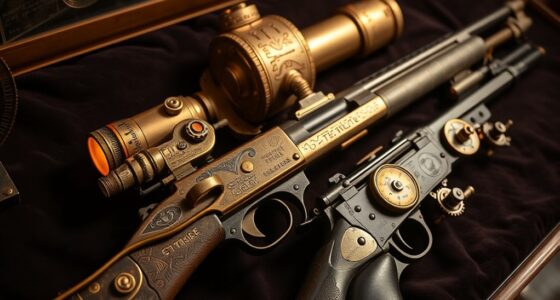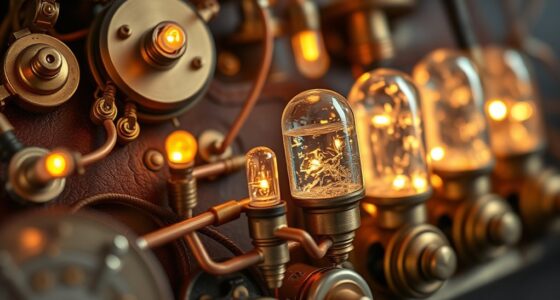
Steampunk loves gears because they showcase intricate craftsmanship and mechanical precision, symbolizing innovation and ingenuity. Gears are visually enthralling, acting as both functional parts and decorative elements that emphasize artistry. Their complex arrangement reflects a fascination with engineering and the beauty of mechanical harmony. Gears also symbolize Victorian-era craftsmanship, blending elegance with industrial grit. If you want to uncover how these elements combine to create the iconic steampunk aesthetic, there’s more to explore ahead.
Key Takeaways
- Gears symbolize meticulous craftsmanship, showcasing the complexity and beauty of mechanical harmony in steampunk design.
- Visible gears emphasize transparency, highlighting engineering ingenuity and the intricate functionality of steampunk machinery.
- Gears serve as both functional components and decorative elements, blending form and engineering artistry.
- The use of gears reflects Victorian ideals of detailed craftsmanship, symbolizing innovation and technological progress.
- Gears embody the marriage of aesthetics and engineering, elevating machinery to symbols of ingenuity and artistic expression.
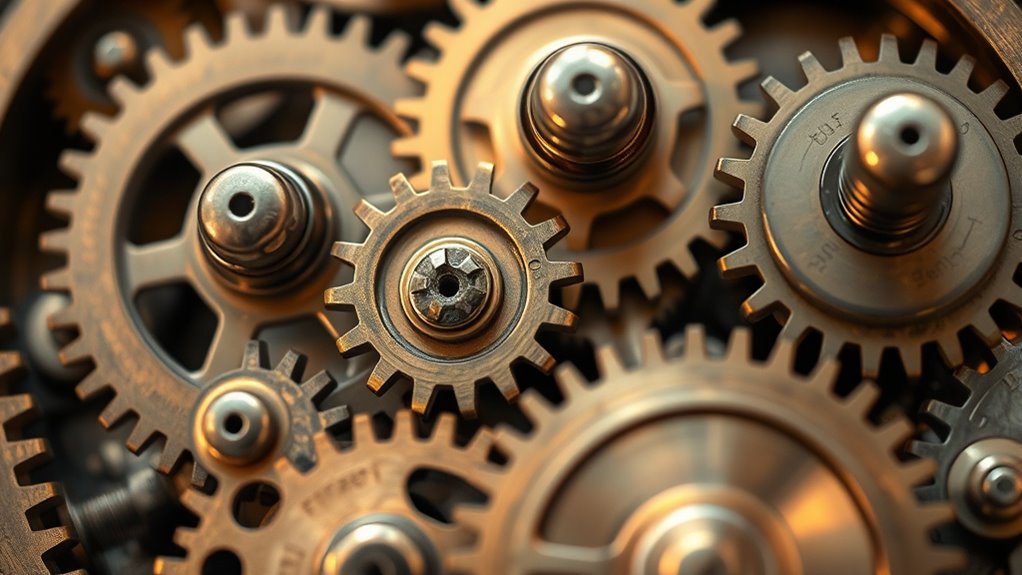
Have you ever wondered how intricate gears and complex machinery define the steampunk aesthetic? It’s all about the fascinating interplay of clockwork mechanisms and Victorian craftsmanship that bring this unique style to life. Steampunk isn’t just about fashion or fantasy; it’s a celebration of engineering ingenuity, where every gear, lever, and valve tells a story of innovation rooted in history. Clockwork mechanisms are at the heart of this universe, embodying a meticulous precision that draws you in. These tiny, interlocking parts move in harmony, creating a mesmerizing dance of mechanical elegance. They’re a nod to a bygone era when craftsmanship was a mark of artistry and ingenuity. Victorian craftsmanship, with its attention to detail and ornate design, influences every piece of steampunk machinery. You can see it in the decorative embellishments, the brass fittings, and the intricate engravings that adorn gadgets and accessories. It’s this marriage of form and function that makes steampunk so captivating—each item is both a work of art and a testament to engineering prowess. The appeal lies in how these mechanisms are visibly showcased, revealing their complexity and beauty rather than hiding behind sleek, modern shells. When you look at a steampunk piece, you’re seeing a carefully assembled puzzle of gears and cogs, each playing a crucial role in the overall function. This transparency invites you to appreciate the craftsmanship involved. The Victorian era’s focus on detailed metalwork and precision engineering naturally lends itself to the steampunk aesthetic, blending Victorian elegance with industrial grit. This style elevates machinery from mere tools to symbols of ingenuity, embodying a romanticized vision of technological progress. As you explore steampunk worlds, you notice how these clockwork mechanisms often serve as the core of their technology—whether in automaton figures or intricate watches. They symbolize a fascination with mechanics, a respect for the artisans who built them, and a desire to keep a sense of wonder alive. Ultimately, the love for gears in steampunk reflects a broader appreciation for craftsmanship, engineering, and the beauty of mechanical design. It’s about celebrating the skill and artistry that transformed simple materials into extraordinary machines. This appreciation assures that gears aren’t just functional parts—they’re the heart and soul of the steampunk aesthetic, connecting you to a rich history of Victorian ingenuity and the timeless allure of clockwork marvels.

LightInTheBox Rustic Industrial Tube Pipe Chandeliers, Steampunk Pendant Light Fixture 5-Light Edison Farmhouse Ceiling Lamp for Dining Room Living Room Bar
Steampunk Design: This industrial light fixture features a unique pipe design, complemented by a rustic paint finish. Its...
As an affiliate, we earn on qualifying purchases.
Frequently Asked Questions
How Do Gears Influence Steampunk Fashion and Accessories?
Gears influence your steampunk fashion and accessories by serving as gear symbolism, representing innovation and industrial revolution. You’ll notice gear embellishments on jewelry, clothing, and goggles, adding a mechanical charm. These elements give your look a distinct, vintage-industrial vibe, emphasizing craftsmanship and ingenuity. Incorporating gears makes your style more authentic and visually compelling, highlighting your appreciation for the steampunk aesthetic’s blend of Victorian elegance and steampunk engineering.
What Materials Are Commonly Used for Steampunk Gear Craftsmanship?
Did you know that over 60% of steampunk gear pieces feature a mix of metal alloys and wood craftsmanship? You’ll find these materials in gears, cogs, and intricate accessories, giving each piece durability and vintage charm. Metal alloys like brass and copper are popular for their aesthetic appeal, while wood adds warmth and craftsmanship. Combining these materials helps you create authentic, eye-catching steampunk designs that stand out.
Are Real Gears Ever Functional in Steampunk Inventions?
Yes, real gears are often functional in steampunk inventions. You might see clock mechanisms and steam-powered devices where gears operate to create movement or power. These gears aren’t just decorative; they serve practical purposes, mimicking Victorian-era technology. When you explore steampunk creations, you’ll notice how these gears enhance both the authenticity and functionality of the designs, blending engineering with a unique aesthetic that celebrates mechanical ingenuity.
How Do Steampunk Gears Differ From Those in Traditional Engineering?
You’ll notice that steampunk gears focus more on gear aesthetics and symbolism rather than strict functionality. Unlike traditional engineering gears designed for efficiency and precision, steampunk gears emphasize intricate designs, vintage charm, and a sense of craftsmanship. They often serve as decorative elements that evoke a sense of adventure and creativity, blending industrial-era technology with fantasy. The emphasis is on visual storytelling, making gear symbolism central to the steampunk aesthetic.
What Are the Historical Origins of Gear Use in Steampunk Culture?
Did you know that steampunk culture traces its roots back to the Victorian era, where machinery was rapidly evolving? The use of gears in steampunk draws heavily from Victorian machinery and clockwork origins, blending industrial innovation with fantasy. This historical influence shapes the aesthetic, emphasizing intricate cogs and mechanical detail that evoke a sense of nostalgia and craftsmanship from the 19th century.

Industrial Table Lamp, Vintage Bedside Lamp with USB C and USB A Charging Ports, Dimmable Steampunk Office Lamp Metal Pipe Edison Reading Lamps for Bedroom, Dorm, Farmhouse Decor 6W LED Bulb Included
Dimension: 5.59''(L)*5.59''(W)*16.14''(H) in total, sturdy rust metal base with 59'' wiring. Please read more size information on the...
As an affiliate, we earn on qualifying purchases.
Conclusion
So, next time you see a steampunk gadget, imagine yourself wielding a giant gear like a medieval knight’s shield—because really, who needs sleek modern tech when you can have a labyrinth of cogs turning in perfect chaos? Embrace the gears, the clanking, the steam-powered symphony. After all, nothing says “futuristic” like a mechanical heart wrapped in Victorian flair, ready to grind its way into your imagination—one gear at a time.

PIPRE Steampunk Table Lamp, Industrial Water Pipe Lamp Retro Iron Piping Desk Lamp Vintage Nightstand Lamps for Bedroom Living Room Kitchen Café Dorm Pub Brown1
✔️ 【Industrial Water Pipe Lamp】The industrial table lamp with metal and retro water pipe look, dresses up your...
As an affiliate, we earn on qualifying purchases.

Haian Support 𝗦𝗺𝗮𝗹𝗹 𝗧𝗼𝘂𝗰𝗵 𝗧𝗮𝗯𝗹𝗲 𝗟𝗮𝗺𝗽 for Small Spaces - 3 Way Dimmable Industrial Bedside Lamp - Steampunk Antique Nightstand Desk for Bedroom, Living Room (Bulb Included)
Dimmable and Touch Control:The dimmable Touch lamp bedside has 3 level brightness (Low, Medium, High, Off).Just simply tap...
As an affiliate, we earn on qualifying purchases.