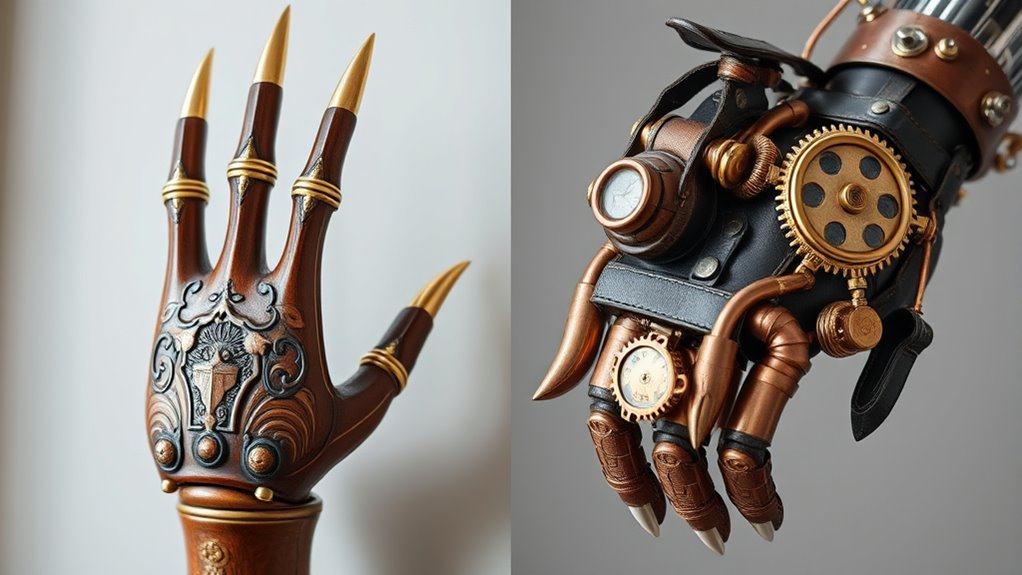

Steampunk prosthetics combine Victorian craftsmanship with fantasy elements like gears and decorative metal parts, creating an ornate, imaginative look. In contrast, real Victorian devices focused on functionality, made from wood, metal, and leather, with detailed craftsmanship but prioritizing mobility over comfort or realism. If you’re curious about how these styles differ in design, materials, and cultural significance, there’s more to explore behind these fascinating aesthetics.
Key Takeaways
- Victorian prosthetics prioritized functionality and ornate craftsmanship using materials like wood, metal, and leather, while steampunk designs emphasize decorative gears and fantasy elements.
- Victorian devices focused on basic mobility with limited technological advancements, whereas modern prosthetics incorporate advanced materials and technology for better utility and realism.
- Steampunk prosthetics blend Victorian aesthetics with imaginative, gear-filled, decorative features, reflecting a fantasy-inspired reinterpretation rather than functional accuracy.
- Victorian prosthetics served as both functional tools and fashion statements, showcasing craftsmanship; steampunk designs are more artistic, emphasizing aesthetic appeal and fantasy.
- Technological progress from Victorian to modern prosthetics demonstrates increased sophistication, while steampunk remains rooted in Victorian-inspired fantasy and decorative innovation.

Have you ever wondered how prosthetics evolved from the intricate designs of the Victorian era to the ornate, gear-filled steampunk versions? The journey is a fascinating blend of fantasy aesthetics and technological innovation. Victorian prosthetics were primarily practical, crafted with meticulous attention to detail, yet they often carried an air of elegance, reflecting the era’s fascination with craftsmanship. These early devices were made from materials like wood, metal, and leather, designed more for function than form, but still showcasing the artistic sensibilities of the time. They embodied the Victorian love for ornate details—buttons, carvings, and polished finishes—making them as much a statement of style as a tool for mobility. As you explore these early devices, you can see how craftsmanship and aesthetics intertwined, though technological progress was slow. The focus was on restoring basic function, often at the expense of comfort or realism. Today, advancements in prosthetic technology continue to blend utility with increasingly realistic and personalized designs, pushing the boundaries of both art and engineering.
Frequently Asked Questions
How Do Steampunk Prosthetics Impact User Mobility Compared to Victorian Models?
Steampunk prosthetics often enhance your mobility through innovative designs that incorporate modern technology, while Victorian models focus on historical accuracy, sometimes limiting movement. With steampunk options, you get better user customization, allowing adjustments for comfort and function. Victorian prosthetics may prioritize aesthetics over performance, so your mobility might be more restricted. Overall, steampunk prosthetics tend to support greater freedom of movement compared to their Victorian counterparts.
What Materials Are Commonly Used in Steampunk Prosthetic Design?
You’re drawn to steampunk prosthetics with their antique materials, decorative elements, and intricate gears. Brass and copper form the core, offering durability and an authentic vintage look. Leather accents add flexibility, while rivets and ornate cogs serve as decorative elements, creating a mesmerizing blend of form and function. These materials combine to craft a prosthetic that’s not just practical but a striking piece of artistic craftsmanship.
Are Steampunk Prosthetics More Durable Than Victorian-Era Prosthetics?
Steampunk prosthetics aren’t necessarily more durable than Victorian-era ones, as historical accuracy often prioritizes authenticity over modern resilience. Victorian prosthetics used sturdy materials like wood and metal, which provided decent durability, but steampunk designs focus more on aesthetic appeal and cultural symbolism. While they may incorporate durable modern elements, they usually sacrifice some longevity for the intricate, imaginative details that define their unique style.
How Do Aesthetic Choices Influence Functionality in Steampunk Prosthetics?
Aesthetic choices in steampunk prosthetics are like choosing a costume for a grand parade—they shape how you feel and function. Your aesthetic customization, blending gears and Victorian elegance, can enhance familiarity and comfort, but it might compromise some historical accuracy or durability. By balancing these elements, you create a prosthetic that’s both a statement piece and a practical tool, making your unique style work seamlessly with your needs.
What Are the Cost Differences Between Creating Steampunk and Victorian Prosthetics?
You’ll find that creating steampunk prosthetics generally costs more due to intricate craftsmanship and custom detailing, which involve unique materials and artistic work. Victorian prosthetics, on the other hand, tend to be less expensive because they focus on practicality and basic materials. Cost considerations include the level of ornamentation, technology integration, and craftsmanship differences, with steampunk designs often requiring more time and specialized skills, increasing their overall expense.
Conclusion
So, whether you’re drawn to the fantastical steampunk prosthetics or the genuine Victorian innovations, remember that both domains push the boundaries of human ingenuity. Steampunk dazzles with its elaborate, gear-filled fantasy, while Victorian prosthetics laid the groundwork for modern breakthroughs. You’re witnessing a clash of imagination versus science—each incredible in its own right. Ultimately, these creations remind you that human creativity is an unstoppable force, capable of transforming despair into awe-inspiring art that can change lives forever.