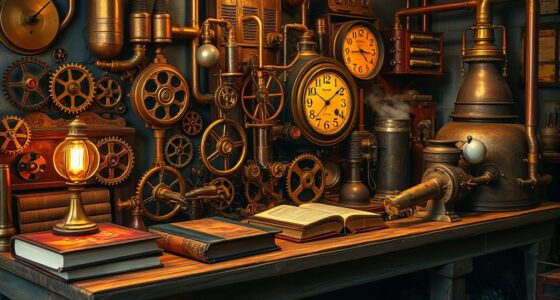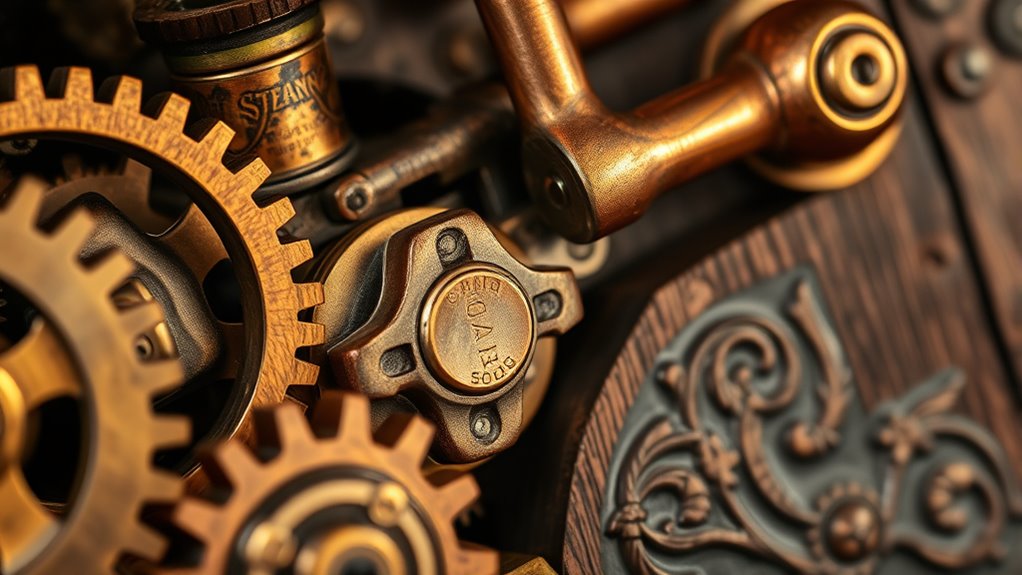

In steampunk design, brass, copper, and wood stand out because they blend industrial materials with craftsmanship, evoking a sense of history and innovation. Brass and copper’s warm tones and durability give machines and details a vintage, handcrafted feel, while wood adds tactile warmth and resourcefulness. These materials age beautifully, developing authentic patinas and textures that tell stories of resourcefulness and craftsmanship—if you keep exploring, you’ll discover more about how these elements shape that unique aesthetic.
Key Takeaways
- Brass and copper’s warm tones evoke Victorian industrial machinery, emphasizing craftsmanship and vintage appeal in steampunk design.
- These metals are malleable, allowing detailed craftsmanship and intricate metalwork characteristic of steampunk aesthetics.
- Brass and copper develop unique patinas over time, adding authenticity, texture, and a sense of history to steampunk pieces.
- Wood introduces organic contrast, balancing metallic elements with tactile, aged finishes that highlight craftsmanship and resourcefulness.
- The combination of brass, copper, and wood reflects steampunk’s ethos of sustainability, reuse, and technological nostalgia.
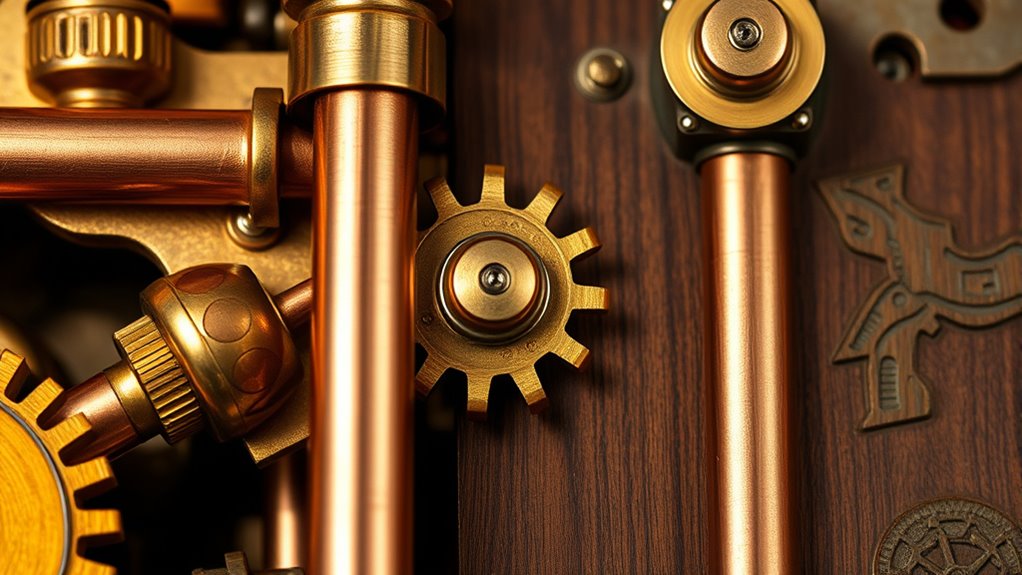
Steampunk style relies on a distinctive blend of materials that evoke the Victorian era’s industrial innovation. When you immerse yourself in steampunk design, you immediately notice the emphasis on vintage craftsmanship and industrial aesthetics. These elements come together through materials like brass, copper, and wood, each chosen for their unique ability to reflect the era’s technological optimism and handcrafted appeal. Brass, with its warm golden hue and malleable quality, became a symbol of the period’s intricate machinery. Its durability and ability to patina over time give steampunk pieces an authentic, aged look that appeals to collectors and enthusiasts alike. Copper, with its rich reddish tone, adds a touch of warmth and vibrancy, reinforcing the vintage feel. Its natural oxidation process develops a greenish patina, which enhances the piece’s character and history. You’ll find copper used in everything from decorative accents to functional components, blending form and function seamlessly. Wood, on the other hand, introduces a tactile, organic element that balances the metallic shine. Its versatility allows you to craft furniture, accessories, and decor that feel both sturdy and refined. The aged finish of distressed or reclaimed wood complements the industrial aesthetics of steampunk, emphasizing craftsmanship and a sense of history. These materials don’t just look good—they tell stories of craftsmanship, innovation, and resourcefulness from a bygone era. When you combine brass, copper, and wood, you create a visual harmony that echoes the Victorian fascination with steampunk’s mechanical marvels. The vintage craftsmanship is evident in the detailed metalwork and hand-finished wood surfaces, showcasing skill and attention to detail. This approach celebrates the idea of reusing and repurposing materials, aligning well with steampunk’s ethos of innovation and sustainability. You might notice how these materials age beautifully, developing unique textures and patinas that add depth and personality to each piece. They evoke a sense of nostalgia while also highlighting the era’s technological advancements, making every item feel like a piece of history brought to life. Overall, the choice of brass, copper, and wood isn’t arbitrary; it’s a deliberate effort to recreate the industrial aesthetics of the Victorian age. These materials help you craft designs that are timeless, intricate, and rich with character, perfectly embodying the spirit of steampunk. Whether you’re building a costume, decorating a space, or designing accessories, understanding the significance of these materials allows you to truly embrace the essence of steampunk style.
Frequently Asked Questions
How Do Steampunk Materials Influence the Genre’s Aesthetic?
You notice how steampunk materials shape its vintage industrial aesthetic by adding warmth and character. Brass, copper, and wood create antique finishes that evoke the charm of a bygone era. Their aged look and textured surfaces give your designs a unique, handcrafted feel, blending Victorian elegance with industrial grit. These materials enhance the genre’s nostalgic, steampunk vibe, making each piece feel like a piece of history come alive through their rich, vintage appeal.
Are Eco-Friendly Alternatives Used in Steampunk Materials?
Did you know 65% of steampunk enthusiasts prefer eco-friendly materials? You’ll find recycled metals and biodegradable woods increasingly used to craft gear and décor, reflecting a sustainable twist. These alternatives help maintain the vintage aesthetic while reducing environmental impact. By choosing recycled metals and biodegradable woods, you can enjoy the steampunk vibe responsibly, blending innovation with tradition. It’s a stylish way to embrace eco-consciousness without sacrificing creativity.
How Do Material Choices Affect the Durability of Steampunk Gadgets?
Your choice of materials directly impacts the durability of steampunk gadgets. Brass and copper resist material corrosion, guaranteeing longevity, while wood adds aesthetic appeal but may require extra treatment to maintain structural strength. By selecting materials with good corrosion resistance and sufficient structural strength, you ensure your gadgets withstand wear and tear, maintaining their functionality and vintage charm over time. Proper material choices make your creations both durable and visually authentic.
What Are Common Techniques for Working With Brass and Copper?
Did you know that brass and copper have been used for centuries due to their workability? When working with these metals, you’ll often use etching techniques to add intricate designs and soldering methods to join pieces securely. You might also polish or patina surfaces to achieve a vintage look. Mastering these techniques allows you to craft authentic steampunk gadgets that are both durable and visually stunning.
Can Modern Materials Be Integrated Into Traditional Steampunk Designs?
Yes, you can definitely integrate modern materials into traditional steampunk designs. You might incorporate innovative material blends, like resin or carbon fiber, to add futuristic steampunk elements while keeping the classic aesthetic. Experimenting with these materials allows you to create unique, durable pieces that blend old-world charm with modern innovation. Just be mindful of maintaining the steampunk vibe, balancing tradition with the fresh, futuristic touch modern materials bring.
Conclusion
So, you see, brass, copper, and wood aren’t just materials; they’re the essence of steampunk’s charm. They evoke a sense of history, craftsmanship, and imagination. They tell stories of innovation and adventure. They invite you to explore a world where past meets future, where metal and wood come alive with possibility. Embrace these materials, and you embrace the spirit of steampunk—bold, creative, timeless. Because, in the end, they’re what make this world truly extraordinary.