Steampunk gadgets look impressive with their Victorian-inspired designs, but making them work in real life is a challenge. Many rely on outdated or fictional technology like intricate clockwork and steam engines, which often lack efficiency and reliability today. Modern adaptations can help, blending vintage aesthetics with current tech, but true functionality remains difficult without modifications. If you’re curious about how these creative devices might become practical, exploring further reveals fascinating insights into their technological possibilities.
Key Takeaways
- Many steampunk gadgets rely on outdated or fictional technology, making full practicality challenging with real-world engineering.
- Complex mechanisms like steam engines and clockwork can be unreliable and difficult to miniaturize for modern use.
- Modern designers blend vintage aesthetics with current tech, creating hybrid devices that are both visually authentic and practically functional.
- Strict historical accuracy often limits technological feasibility, but modern adaptations help bridge the gap between form and function.
- Advances in engineering may eventually turn some fictional steampunk concepts into real, workable gadgets.

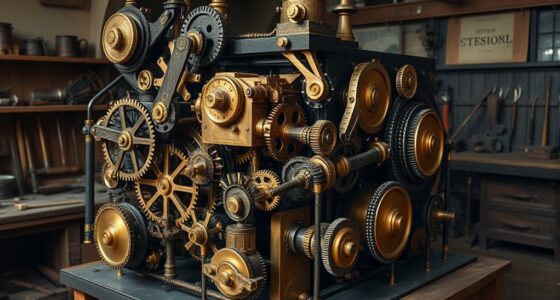
Steampunk gadgets capture the imagination with their retro-futuristic designs and Victorian-inspired aesthetics, but their practical feasibility often raises questions. When you look at these devices, you might wonder whether they could truly function with the technology available during the Victorian era or if they only exist as creative fantasies. Achieving historical accuracy in steampunk design is a challenge because many features rely on outdated or fictional technology, which can make practical implementation difficult. For example, some gadgets incorporate complex clockwork mechanisms or steam-powered engines that, while visually impressive, may not be as reliable or efficient as their modern counterparts. If you’re interested in building or using steampunk-inspired devices, understanding the limits of historical accuracy is essential. It helps you gauge what could have been realistically made in the past versus what is purely speculative or artistic license.
However, modern adaptations are changing the game. Today’s engineers and designers often combine steampunk aesthetics with contemporary technology, creating hybrid devices that look authentic but work with modern components. This approach allows for practical functionality while preserving the vintage charm that defines the genre. For instance, a “steam-powered” device might use a small electric motor hidden inside a Victorian-style casing, giving it the look of a true steampunk gadget but with the reliability and efficiency of modern engineering. These adaptations make it easier to develop functional gadgets that honor the steampunk aesthetic without being limited by the technological constraints of the past.
If you’re considering designing or using steampunk gadgets, you should weigh the importance of authenticity against practicality. Aspiring for strict historical accuracy can limit what’s feasible, but it also deepens the immersive experience for enthusiasts who value fidelity to the era. On the other hand, modern adaptations provide a way to enjoy the aesthetic without sacrificing functionality. They also open opportunities for innovation—combining old-world style with new-world tech can produce gadgets that are both beautiful and practical. Ultimately, whether you lean toward strict historical accuracy or embrace modern adaptations, understanding these distinctions helps you appreciate the ingenuity behind steampunk gadgets and assess their real-world feasibility. With ongoing advancements, what once seemed impossible may soon become a reality, blending the charm of Victorian design with the power of contemporary technology.
Frequently Asked Questions
Can Steampunk Gadgets Be Powered by Modern Energy Sources?
Yes, you can power steampunk gadgets with modern energy sources. You might use small steam-powered engines or Victorian-inspired batteries to keep the aesthetic intact while benefiting from current technology. These energy sources can provide the necessary power, blending old-world charm with today’s efficiency. By integrating modern energy systems, your steampunk gadgets become both functional and authentic, making your creations innovative yet true to the vintage-inspired style.
Are There Existing Materials That Mimic Steampunk Aesthetic Durability?
Yes, you can find antique materials that mimic steampunk aesthetic durability. You might consider using aged brass, copper, or weathered leather, which naturally offer a vintage look and strong durability. These materials are both authentic and resilient, making them perfect for creating steampunk gadgets that look stylish and last. By blending modern techniques with antique-inspired materials, you can craft functional items that exude classic steampunk charm and durability.
How Feasible Is Miniaturization of Complex Steampunk Mechanisms?
Miniaturizing complex steampunk mechanisms is like fitting a grand cathedral into a thimble; it’s incredibly challenging. You face miniaturization challenges because intricate mechanical complexity demands precise, tiny parts that still function reliably. Advances in microfabrication help, but pushing these designs into tiny scales tests the limits of current technology. While not impossible, achieving fully functional, miniature steampunk gadgets requires overcoming significant engineering hurdles and innovating beyond existing methods.
Can Steampunk Technology Integrate With Contemporary Electronics?
Yes, you can integrate steampunk technology with contemporary electronics by blending Victorian aesthetics with mechanical integration. You might incorporate vintage-looking gears, brass fittings, and Victorian design elements into modern circuits, creating a seamless fusion. While challenging, this approach allows you to maintain the steampunk charm while leveraging the functionality of modern electronics. With careful design, your gadgets will look authentically Victorian yet perform with today’s tech capabilities.
What Safety Challenges Do Steampunk Gadgets Face in Real-World Use?
You face serious safety challenges with steampunk gadgets, where mechanical failures could cause unpredictable malfunctions, risking injury. Biological hazards also loom if materials degrade or aren’t properly maintained, leading to potential health issues. These risks demand rigorous testing and protective measures. If overlooked, a seemingly charming device could turn dangerous in an instant, leaving you vulnerable to harm from unforeseen mechanical breakdowns or exposure to hazardous substances.
Conclusion
So, while steampunk gadgets might seem like fanciful dreams, they’re more feasible than you’d think—kind of like trying to fix a vintage clock with modern tools. Imagine tinkering in a workshop, blending brass gears with tiny motors, just like inventors of the past. If they could dream up intricate machines without today’s tech, maybe your next DIY project could bring some steampunk magic to life. Who knows? The gears of innovation might be turning even now.