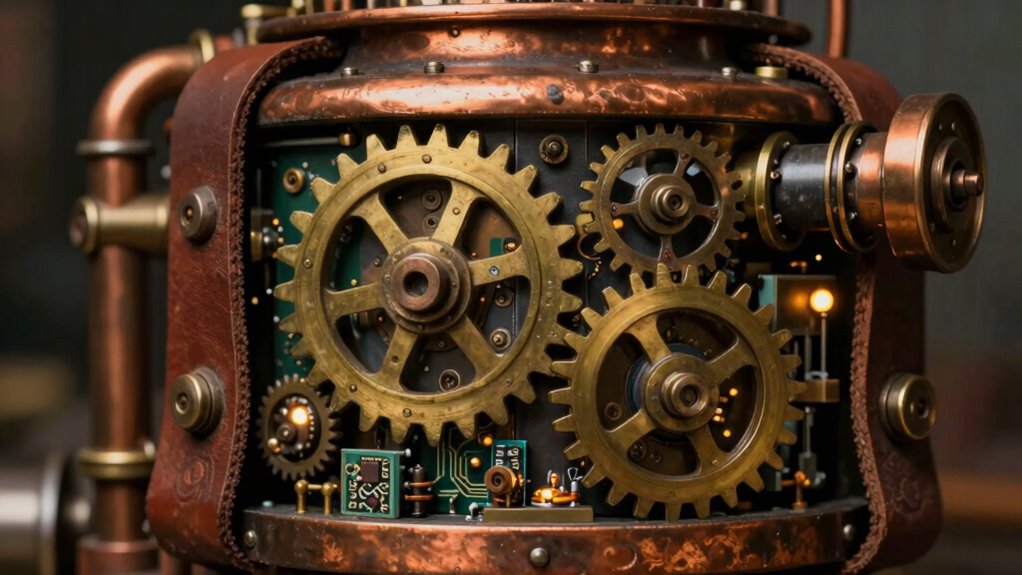

To add hidden electronics to your steampunk build, carefully conceal wires behind vintage mechanical parts like gears or clock faces, ensuring they stay out of sight but accessible for maintenance. Use brass brackets and vintage-style switches for discreet controls, and integrate small, concealed compartments within antique accessories for power sources. Keep everything neatly organized with thin cables, and hide LEDs or motors behind decorative elements. Continuing will reveal more tips to seamlessly fuse modern tech with your steampunk aesthetic.

Get art and craft supplies delivered free with Prime
- Fast, free delivery on millions of items
- Prime Video, Amazon Music and more included
- Member-only deals all year
Key Takeaways
- Integrate electronics behind vintage mechanical parts like gears or clock faces to conceal wiring and components.
- Use hidden compartments within antique items, such as clock cases or camera bodies, for discreet electronics placement.
- Keep wiring organized and hidden behind mechanical elements using flexible cables and vintage-style brackets.
- Conceal controls like switches and buttons inside hollowed mechanical parts or removable panels for seamless access.
- Select miniature electronic components that blend with the steampunk aesthetic for a cohesive vintage look.
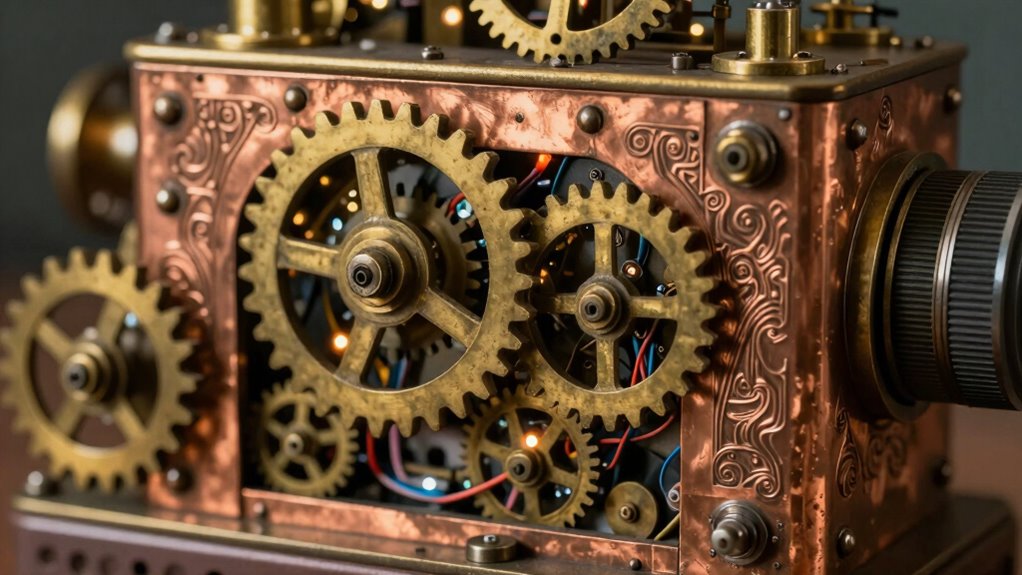
Steampunk builds are all about blending vintage aesthetics with modern ingenuity, but adding hidden electronics takes that craftsmanship to the next level. You already have your collection of vintage accessories—think brass gears, leather straps, and ornate clock faces—that give your project its authentic look. Now, imagine seamlessly integrating subtle electronic features that enhance functionality without disrupting that old-world charm. The key is to hide your electronics behind or within these vintage elements, making the technology feel like a natural extension of your design.
Start by selecting small, discreet mechanical components that can house your electronics. For example, tiny enclosures or compartments crafted from brass or distressed wood can conceal circuit boards, batteries, or wiring. You can repurpose old clock cases, pocket watches, or vintage camera bodies for this purpose. When integrating your electronic components, aim for placement behind larger mechanical parts, such as gears or cogs, so they remain invisible to the casual observer. Use the mechanical components as a visual shield, ensuring your wires and circuit boards are hidden but still accessible for maintenance. Incorporating concealed compartments that blend seamlessly into your design can further enhance your ability to hide these elements effectively.
Hidden compartments in vintage pieces conceal electronics while maintaining steampunk charm and easy access for maintenance.
Wiring should be neat and organized. Use flexible, flat ribbon cables or thin gauge wires that can be tucked away behind mechanical elements. Secure everything with hot glue, double-sided tape, or small brackets designed to blend with your vintage accessories. When adding lights or movement, opt for small LEDs or servo motors that can be hidden behind a gear or beneath a decorative panel. These can be wired to a concealed power source, like a vintage-style battery pack or a rechargeable cell hidden inside a hollowed-out accessory. Thoughtful cable management ensures your setup remains clean and discreet, preserving the aesthetic integrity of your build.
Control switches and power buttons should also be discreet. Consider using vintage-looking switches that blend with your aesthetic, or hide push buttons beneath removable panels or inside hollowed-out mechanical parts. This way, you can activate your electronics without compromising your build’s vintage appeal. When planning your layout, keep accessibility in mind—your hidden electronics should be easy to reach for maintenance but not obvious during display.
Ultimately, the secret to successful concealed electronics in steampunk builds is thoughtful integration. Use your vintage accessories and mechanical components to mask modern technology, creating a seamless fusion of past and present. Incorporating miniature electronic components that are compatible with your vintage aesthetic ensures a cohesive and authentic look. With careful planning and precise execution, you’ll craft a stunning piece that surprises and delights viewers with its hidden technological magic, all while maintaining that mesmerizing steampunk charm.
As an affiliate, we earn on qualifying purchases.
Frequently Asked Questions
How Do I Power Hidden Electronics Discreetly?
You can power hidden electronics discreetly by using wireless power options, like wireless chargers or inductive pads, to eliminate visible wiring. Incorporate invisible switches, such as capacitive touch or pressure-sensitive buttons, to activate your devices seamlessly. These methods keep your steampunk build‘s aesthetic intact while providing reliable power and control. Just make certain your components are compatible and concealed within the design to maintain the mysterious, vintage look.
What Tools Are Best for Installing Concealed Wiring?
You’ll want precision tools like needle-nose pliers, fine screwdrivers, and wire strippers for installing concealed wiring. A multimeter helps check connections, ensuring safety. Use installation techniques such as drilling small holes and hiding wires behind panels or inside hollow structures. Gentle pulling and careful routing prevent damage, while adhesive clips or conduit keep wires secure. These tools and techniques help you achieve clean, discreet wiring that blends seamlessly into your steampunk design.
How Do I Prevent Electronic Noise Interference?
Oh, the thrill of battling electromagnetic interference! To prevent noise, you should use proper grounding techniques—think of it as giving your electronics a cozy, interference-free home. Keep wires shielded and twisted, and avoid running signal cables parallel to power lines. Shielded cables and ferrite beads are your allies. With these steps, your hidden steampunk gadgets will operate smoothly, free from pesky electromagnetic interference, ensuring your masterpiece remains a marvel, not a mess.
Are There Safety Concerns With Hidden Electronics?
Yes, there are safety concerns with hidden electronics. You should always use a hidden battery designed for your device to prevent overheating or leaks. Follow safety precautions like insulating all wiring properly, avoiding overloading circuits, and securing components to prevent short circuits. Also, guarantee easy access for maintenance or emergencies. Being cautious helps protect you and keeps your steampunk build safe and functional.
How Can I Make Electronics Waterproof in Steampunk Designs?
You can make electronics waterproof in steampunk designs by applying thick waterproof coatings and sealing techniques that defy water itself! Imagine your hidden gadgets becoming invincible against rain, splashes, or even a flood. Use durable sealants, rubber gaskets, and waterproof casings to lock out water completely. These techniques transform your electronics into unstoppable, steampunk masterpieces, ensuring they remain safe and functional no matter what nature throws at them!
hidden electronic compartments for steampunk projects
As an affiliate, we earn on qualifying purchases.
As an affiliate, we earn on qualifying purchases.
Conclusion
By seamlessly blending hidden electronics into your steampunk creations, you’re giving life to your imagination’s wildest dreams. It’s like planting tiny, secret gears beneath the surface—hidden yet essential—transforming your build into a mesmerizing marvel. With patience and creativity, you become the master of a mechanical symphony, where every hidden circuit whispers stories of innovation. Embrace the challenge, and watch your steampunk world come alive with a heartbeat of hidden wonder.
vintage-style switches for electronics
As an affiliate, we earn on qualifying purchases.
As an affiliate, we earn on qualifying purchases.
miniature electronic components for steampunk
As an affiliate, we earn on qualifying purchases.
As an affiliate, we earn on qualifying purchases.
Columbus Day / Indigenous Peoples' Day Picks
long weekend sales
As an affiliate, we earn on qualifying purchases.