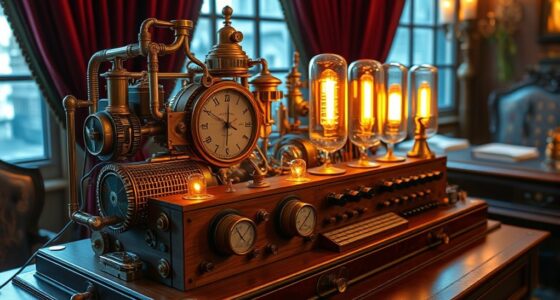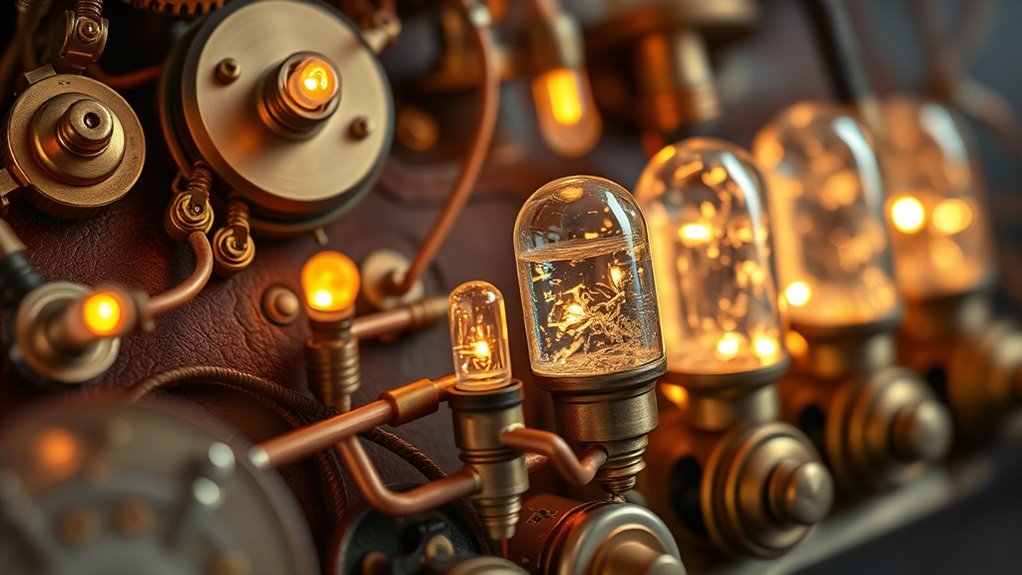

To add lights and motion to your steampunk creations, start by designing simple circuits with batteries, switches, LEDs, and motors. Use resistors to protect LEDs and match components’ voltage and current requirements. Testing on a breadboard helps you troubleshoot and refine your setup before permanent assembly. Incorporate vintage-style power sources or generators for authenticity. If you want to learn more about creating seamless, reliable electronics for your steampunk projects, keep exploring these foundational concepts.
Key Takeaways
- Design separate circuits for lighting and moving parts, then connect them thoughtfully to ensure reliable operation.
- Use LEDs with resistors to control brightness and prevent burnout; match their voltage and current requirements.
- Incorporate small motors or servos compatible with your power source to create motion effects.
- Test circuits on a breadboard to troubleshoot and make adjustments before final assembly.
- Integrate sensors or switches to activate lights and motion interactively, enhancing your steampunk device’s functionality.

Have you ever wondered how to fuse modern electronics with your steampunk creations? Bringing lights and motion into your projects requires understanding some fundamental electronics concepts, especially circuit design and component selection. These elements are your starting point for creating functional, reliable, and visually impressive effects that blend seamlessly with the vintage aesthetic.
When you explore circuit design, you’re essentially planning how electrical signals will flow through your device. For steampunk applications, simplicity often works best—you want circuits that are easy to troubleshoot and integrate into your aesthetic. Start by sketching out your idea, noting where you want lights or moving parts, and then figure out how power will reach each component. Opt for breadboarding first; it allows you to test your circuit without soldering, so you can make adjustments easily. Keep in mind that your circuit design should match your project’s scale and complexity. For example, if you’re adding flickering LED candles or a rotating gear mechanism, design separate circuits for each feature and connect them thoughtfully.
Component selection is equally crucial. Choose components that suit your project’s style and functionality. For lighting, LEDs are your best bet—they’re energy-efficient, durable, and come in various shapes and colors to match your steampunk vibe. When selecting LEDs, consider their voltage and current requirements to avoid burning them out. Resistors are essential to control current flow, so pick the right resistor values based on your LED specifications. For motion, small motors or servos can bring gears, cogs, or diabolical contraptions to life. Make sure the motors you select are compatible with your power source and can deliver the torque needed for your moving parts. Incorporate switches, relays, or sensors to control when lights turn on or motion activates; these allow for interactive and dynamic elements.
Choose LEDs, motors, and switches that match your style and power needs for reliable steampunk electronics.
Power supply choices also matter—most steampunk projects run on batteries, but you might also incorporate vintage-looking power sources or hand-crank generators for authenticity. When selecting components, prioritize those with proven reliability and compatibility to prevent frustration down the line. Keep your workspace organized, label your wires, and double-check connections before powering up to avoid shorts or damage. As you become more confident, you can experiment with more complex circuits, integrating microcontrollers or vintage-style gauges that respond to sensors or user input.
Ultimately, understanding circuit design and making wise component choices empower you to craft steampunk devices that not only look fantastic but also function smoothly. Your blend of modern electronics with Victorian-era aesthetics creates a enthralling fusion—proof that technology and art can go hand in hand when you know the basics.

12 Bulk Electric Circuit Kit for Kids Age 8-12, Basic Circuits Science Light Bulb Experiments for Beginners, Class STEM Projects STEAM Activities, Classroom Educational Circuit Board Building Kits
Requires 2 AA batteries (not included) to power the circuits.
As an affiliate, we earn on qualifying purchases.
As an affiliate, we earn on qualifying purchases.
Frequently Asked Questions
What Safety Precautions Should I Take When Working With Electronics?
When working with electronics, always prioritize electronic safety by wearing insulated gloves and working in a dry area. Double-check voltage regulation to prevent overloads or shorts that could cause sparks or damage. Use a multimeter to test circuits before powering up. Keep your workspace tidy, unplug devices when not in use, and never work on live circuits. These precautions help protect you and guarantee your project remains safe.
How Do I Choose the Right Power Source for My Project?
When choosing a power source, you should consider battery selection and voltage regulation. Pick a battery with enough capacity to power your project without overloading components. Make certain the voltage matches your device’s requirements, and use voltage regulation if needed to maintain consistent power. Test your power source thoroughly, guaranteeing it’s reliable and safe. Properly securing the batteries and regulating voltage helps prevent damage and ensures smooth operation.
Can I Integrate Wireless Controls Into My Steampunk Electronics?
You can absolutely integrate wireless control into your steampunk electronics—it’s like giving your project a heart that beats with remote integration. Using simple modules like Bluetooth or Wi-Fi, you can control lights, motors, or other effects wirelessly. This makes your creation more dynamic and interactive, all while maintaining that authentic steampunk aesthetic. Just guarantee your power source can handle the added wireless components, and you’ll have a stunning, modern-meets-vintage masterpiece.
What Tools Are Essential for Troubleshooting Electronic Circuits?
You need a multimeter for troubleshooting electronic circuits; it’s vital for testing voltage, current, and resistance. Soldering techniques are also fundamental for fixing and modifying connections. Use your multimeter to identify faulty components or broken circuits, and rely on steady soldering to guarantee solid, reliable connections. Combining these tools helps you quickly diagnose issues, saving time and preventing damage, so always have a quality multimeter and practice good soldering skills.
How Do I Ensure My Lights and Motion Work Reliably Over Time?
To guarantee your lights and motion work reliably over time, focus on circuit durability by choosing quality components and secure connections. Regularly inspect and maintain your wiring, looking for loose or corroded connections, and tighten or replace them as needed. Use protective enclosures to shield your electronics from dust and moisture, and avoid overloading circuits. Consistent maintenance and durable parts keep your steampunk creations glowing and moving smoothly for years.

Electric DC TT Motors Kit Plastic Gears AA Battery Holder Case with Mini RC Motor 1.5-3V 15000RPM Electronic Wire Shaft Propeller 9V Battery Clip and Rocker Switch for DIY Science Projects
55pcs colorful gears set, style different colors shaft propellers, can meet your different needs, let you make science…
As an affiliate, we earn on qualifying purchases.
As an affiliate, we earn on qualifying purchases.
Conclusion
Just like a master alchemist transforms base metals into gold, you can now bring your steampunk creations to life with lights and motion. Remember, every circuit you build is a secret spell, turning inanimate objects into mesmerizing marvels. So, keep experimenting and embracing the magic of electronics—your steampunk universe is only limited by your imagination. As Tesla once sparked a new era, let your innovations illuminate your world and inspire others to dream beyond the ordinary.

Ranvo Steampunk Lamp Parts, Steampunk Light Switch 1/2in Vintage Style for Bedroom for Home for Plumbing Lights for Table Pipe Lights
Vintage 1/2in stop valve light switch, unique valve appearance design, simple and practical to use, adding retro charm.
As an affiliate, we earn on qualifying purchases.
As an affiliate, we earn on qualifying purchases.
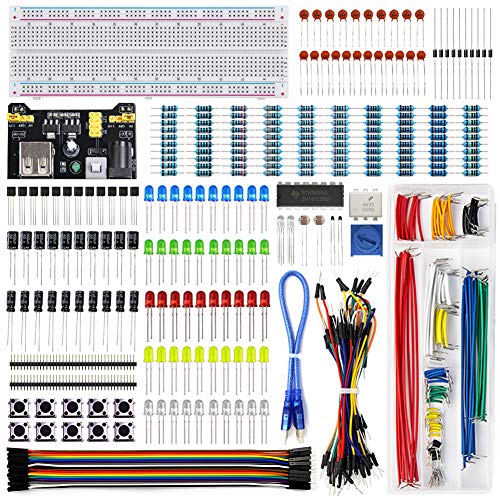
REXQualis Electronics Component Fun Kit w/Power Supply Module, Jumper Wire, 830 tie-Points Breadboard, Precision Potentiometer,Resistor Compatible with Arduino, Raspberry Pi, STM32
Highest Cost Components Kit: It comes with more than 400pcs sensors and components for fun and simple electronic…
As an affiliate, we earn on qualifying purchases.
As an affiliate, we earn on qualifying purchases.