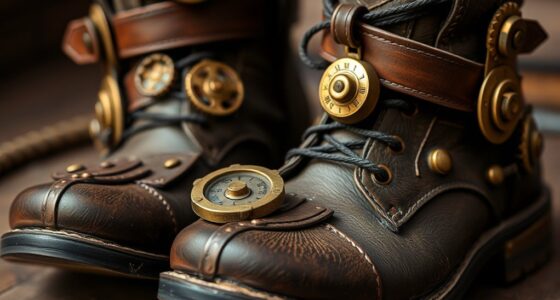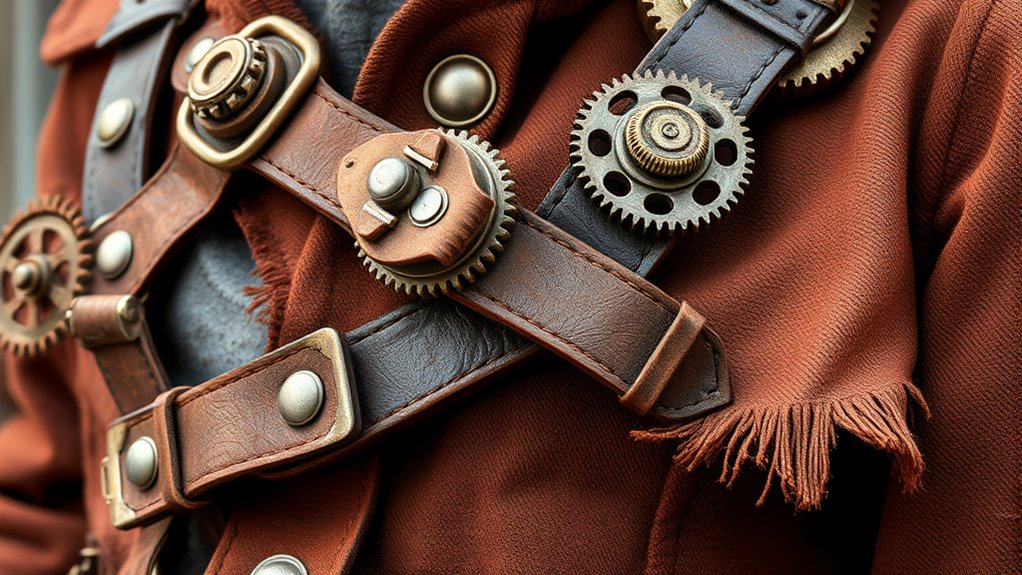

To weather and distress steampunk clothing, focus on creating a worn, vintage look by adding subtle tears, scratches, and stains. Use techniques like chemical patinas on metal parts, rubbing leather to develop natural scuffs, or applying diluted dyes for age spots. Layer your effects gradually for a realistic, authentic appearance that tells a story of adventure and craftsmanship. Keep imperfections subtle for a convincing finish—if you want to master these techniques, there’s more to explore.
Key Takeaways
- Use chemical solutions like vinegar or lemon juice to create authentic metal patinas, adding tarnished, aged effects.
- Gently distress leather with scratches, scuffs, and staining to mimic long-term wear and natural aging.
- Apply layered techniques gradually, focusing on natural wear points for a realistic vintage appearance.
- Embrace imperfections and subtle variations to develop depth and character in clothing and accessories.
- Prioritize patience and layering to achieve an authentic, rugged, and well-worn steampunk aesthetic.
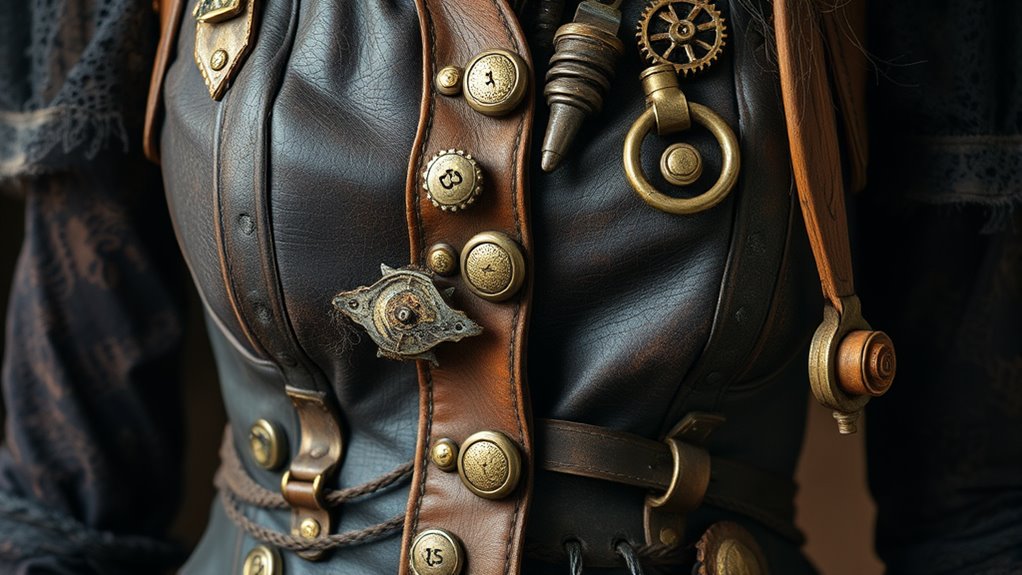
Weathering and distressing are essential techniques for achieving authentic steampunk clothing that looks well-worn and vintage. When you want your outfit to exude a sense of history and craftsmanship, focusing on metal patinas and leather aging is key. Metal patinas give your accessories and hardware that aged, tarnished appearance, transforming shiny brass or silver into pieces that look like they’ve traveled through time. To create this effect, you can use simple methods like applying a chemical patina solution, or even experimenting with household items like vinegar or lemon juice to speed up oxidation. These processes help you develop rich, layered colors—ranging from deep browns to verdant greens—that mimic years of exposure and wear. It’s about making your metal components look integrated into the vintage aesthetic, rather than pristine or new.
Leather aging, on the other hand, is equally vital. When you wear or distress leather garments, you want them to look like they’ve been through adventures. You can achieve this by gently rubbing or scratching the surface to create natural-looking scuffs and creases. Applying some leather conditioner or dye can enhance the aged effect, softening the material and giving it a patina that suggests long use. For a more dramatic vintage look, you might deliberately stain or darken certain areas with diluted dye or coffee, emphasizing natural wear points like elbows, knees, or straps. The goal is to develop variations in color and texture, making your leather pieces appear seasoned and authentic.
Incorporating these techniques requires patience and a keen eye. You want to avoid overdoing it—subtle imperfections often look more convincing than heavily distressed surfaces. The key is to build layers gradually, allowing the materials to develop their character over time. As you work on metal patinas and leather aging, remember that each piece is unique, so embrace imperfections that add to the overall story of your costume. Weathering and distressing aren’t just about appearance; they’re about creating an immersive, lived-in look that tells a story of adventure and craftsmanship. When done thoughtfully, your steampunk ensemble will evoke the charm of a bygone era—authentic, rugged, and full of character.

TIGKHAE Water Pipe Wall Lights Vintage Steampunk Wall Light Fixture with Plug in Cord Wall Sconce for Barn Stair Small Wall Lamps E26 Industrial Farmhouse Cafe Garage Wall Mounted Lighting with Switch
【Plug In Wall Mounted Pipe Lights 】Retro industrial wall lamp, with great industrial steam punk characteristics, can supplement...
As an affiliate, we earn on qualifying purchases.
Frequently Asked Questions
What Are the Best Tools for Weathering Steampunk Garments?
To weather steampunk garments, you should use fabric distressing tools like razors, sandpaper, and wire brushes to create wear and tear. Vintage paint techniques such as dry brushing and staining add authentic aging effects. These tools help you achieve a rugged, vintage look that’s perfect for steampunk style. Be patient and experiment with different methods to find the best combination for achieving your desired weathered appearance.
How Can I Age Faux Leather Without Damaging It?
To age faux leather without damaging it, you should focus on gentle aging techniques that preserve the material. Use a slightly damp cloth to wipe the surface, then apply a small amount of rubbing alcohol or acetone for a distressed look, but test first to avoid over-bleaching. For faux leather preservation, avoid harsh chemicals and excessive moisture. Light sanding or applying dark stains can also create authentic aging effects safely.
Are There Eco-Friendly Methods for Distressing Clothing?
You can use eco-friendly methods like natural dyes and biodegradable paints to distress clothing. Simply apply natural dyes to create a worn, vintage look, or use biodegradable paints for subtle fading and scuffs. These options are gentle on the environment and safe for your clothes. You’ll achieve a distressed, aged appearance without harmful chemicals, making your steampunk wardrobe both stylish and eco-conscious.
How Long Does Weathering Typically Last on Clothing?
Weathering on your clothing acts like a gentle tide, gradually wearing down fabric deterioration and color fading over time. Usually, it lasts several months to a few years, depending on wear and care. As you wear and wash, the fabric’s story unfolds, revealing a vintage charm. Keep in mind, frequent washing or exposure accelerates this process, turning your steampunk masterpiece into a well-loved relic of adventure and time.
Can Weathered Steampunk Outfits Be Restored to Original Condition?
Yes, you can restore weathered steampunk outfits to their original condition. Use restoration techniques like fabric rejuvenation to clean and refresh the material, removing dirt and stains. Gentle washing or specialized treatments can revive faded fabrics, while patching or re-dyeing can repair damage. Be careful to follow care instructions to avoid further wear. With patience and the right techniques, your steampunk clothing can look as good as new.

TIGKHAE Water Pipe Wall Lights Vintage Steampunk Wall Light Fixture with Plug in Cord Wall Sconce for Barn Stair Small Wall Lamps E26 Industrial Farmhouse Cafe Garage Wall Mounted Lighting with Switch
【Plug In Wall Mounted Pipe Lights 】Retro industrial wall lamp, with great industrial steam punk characteristics, can supplement...
As an affiliate, we earn on qualifying purchases.
Conclusion
Think of weathering and distressing your steampunk clothing as sculpting a treasure you’ve uncovered. Each scratch, stain, and faded edge tells a story, turning your outfit into a wearable adventure. With a little patience and creativity, you craft a piece that’s uniquely yours—full of character and history. Embrace the process, and soon you’ll wear a garment as rich and layered as the stories you want it to tell. Your steampunk journey is just beginning.

Lovefindahome Industrial Plug in Wall Light E26 Base Edison Wire Retro Style Vintage Wall Lights with 5.9Ft Adjustable Plug in Cord Rustic Wall Sconce Fixture for Headboard Bedroom Porch - Cage
As an affiliate, we earn on qualifying purchases.
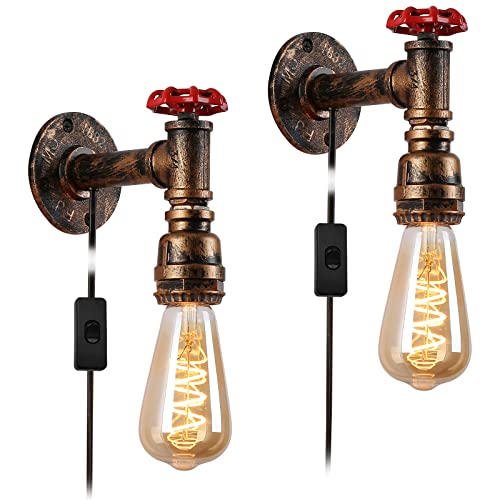
Industrial Set of 2 Wall Lamps with Plug in Cord for Bedroom Bedside Lighting Brass Brush Gold Water Pipe Steampunk Decor Sconces with Mounted Fixtures E26 Socket with Switch Farmhouse Wall Lamps
【Industrial Steampunk Pipe with Red Valve Design】The industrial wall sconces made of authentic plumbing pipe our Pipe Décor...
As an affiliate, we earn on qualifying purchases.