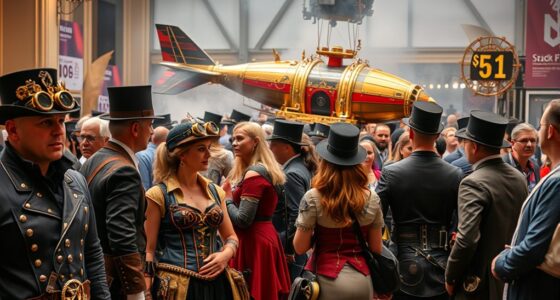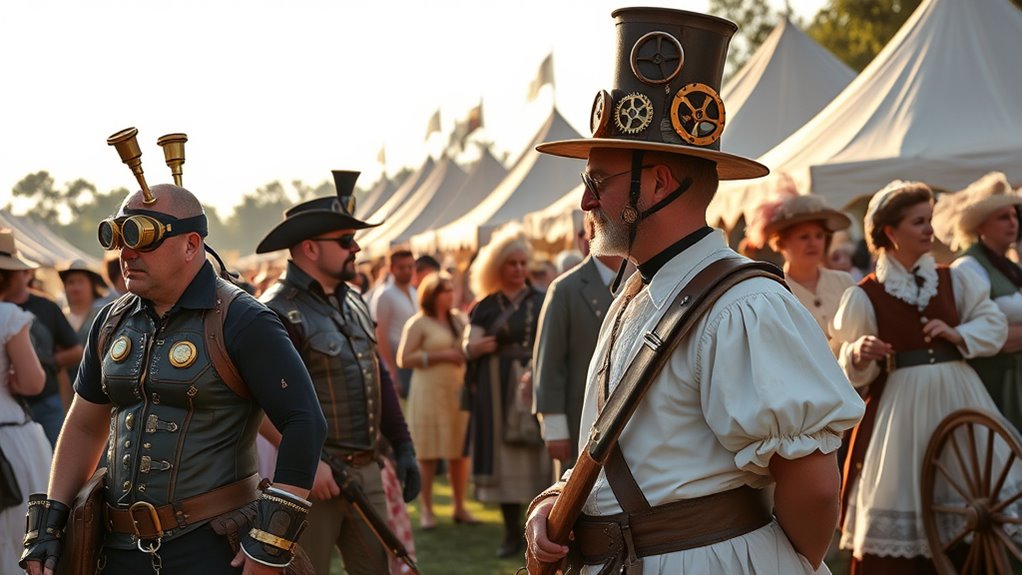

Steampunk and historical reenactment let you explore the past, but in different ways. Steampunk mixes Victorian fashion with futuristic gadgets, emphasizing fantasy, invention, and personal expression. Reenactment focuses on accuracy, recreating history with authentic costumes and strict guidelines for educational purposes. If you prefer creative experimentation or want to see a blend of history and imagination, steampunk might appeal to you. To discover more about what sets these communities apart and how they shape their worlds, keep exploring.
Key Takeaways
- Steampunk combines Victorian fashion with futuristic, fantastical elements, emphasizing creativity; reenactment focuses on historically accurate costumes and details.
- Steampunk values imagination, innovation, and personal expression, while reenactment prioritizes authenticity, fidelity, and educational accuracy.
- Steampunk communities promote invention, workshops, and artistic exploration; reenactment groups focus on research, preservation, and historical skills.
- Steampunk offers a playful, boundary-pushing environment; reenactment provides structured, immersive experiences rooted in the past.
- AI technology is increasingly used in reenactment for enhanced accuracy, whereas steampunk emphasizes creative interpretation without strict historical constraints.
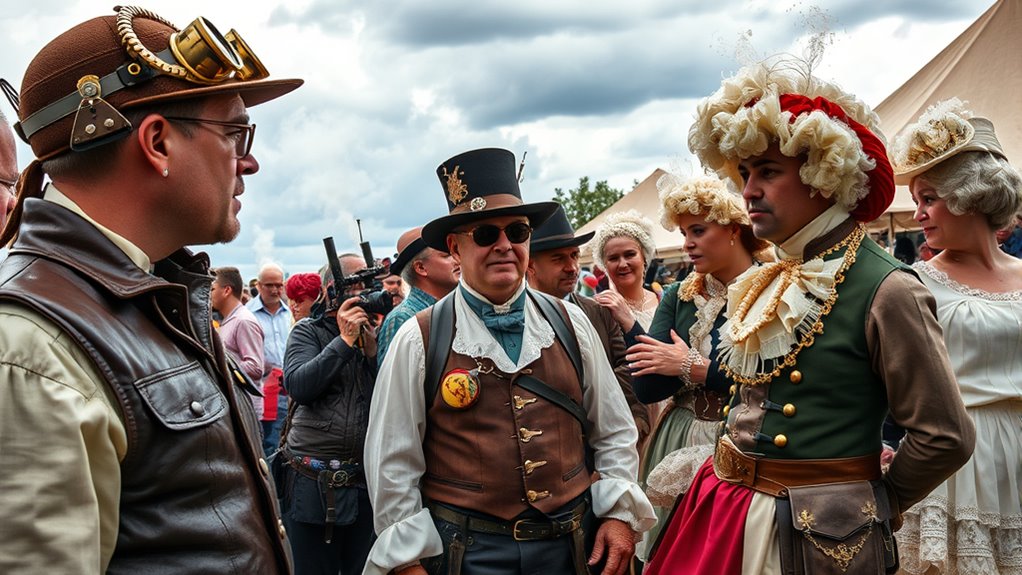
Steampunk and historical reenactment both celebrate the past, but they approach it in fundamentally different ways. When you look at their aesthetic differences, you’ll notice that steampunk combines Victorian-era fashion with futuristic and fantastical elements. Think brass goggles, clockwork gadgets, and leather corsets mixed with modern creativity. It’s an imaginative blend that emphasizes innovation, even within its vintage-inspired style. Conversely, historical reenactment endeavors for accuracy, aiming to faithfully recreate specific moments in history. The costumes you wear in reenactments are carefully researched to match the period’s fabrics, colors, and styles, aiming for authenticity rather than artistic interpretation. This stark contrast in aesthetic choices reflects each community’s core values: steampunk values fantasy and personal expression, while reenactment prioritizes historical fidelity.
Community engagement is another significant difference. In steampunk circles, you often find a vibrant, creative community that encourages personal invention. People come together at conventions, craft workshops, and online forums to share their custom-made costumes, gadgets, and stories. The focus is on self-expression and collective creativity, which fosters a sense of belonging through shared enthusiasm for the genre’s imaginative universe. Meanwhile, historical reenactment communities are typically centered around education and preservation. Participants often join reenactments to honor history, improve understanding of the past, and keep traditions alive. These groups tend to be more structured, with strict guidelines to guarantee accuracy, and their events often serve as immersive educational experiences for both participants and spectators. While both communities thrive on shared passion, the ways they engage with each other differ: steampunk communities often emphasize innovation and artistic freedom, whereas reenactment groups prioritize authenticity and historical integrity.
Both approaches offer unique opportunities for you to connect with others who share your interests. If you’re drawn to creating elaborate costumes and exploring a fantastical version of the past, steampunk provides a playful, inventive environment. You get to push boundaries, incorporate your own ideas, and participate in a community that celebrates imagination. On the other hand, if you want to learn about history firsthand, reenactment offers a structured, educational experience rooted in authenticity. Here, your engagement involves meticulous research, practicing historical skills, and contributing to a collective effort to preserve and educate. Additionally, the integration of AI technology in some reenactment projects is beginning to enhance historical accuracy and immersive storytelling. In essence, your choice between steampunk and reenactment depends on what kind of connection you seek—whether it’s through creative expression and community innovation or through historical accuracy and educational immersion. Both invite you into communities that honor the past, but they do so in ways that reflect vastly different visions of history’s place in the present.
Frequently Asked Questions
How Do Steampunk Events Influence Modern Fashion Trends?
Steampunk events influence your modern fashion trends by inspiring alternative fashion choices that blend vintage inspiration with futuristic elements. You’ll notice a rise in accessories like goggles, gears, and corsets, which add a unique, retro-futuristic vibe to everyday wear. These events encourage you to experiment with textures, metals, and Victorian styles, making vintage-inspired pieces more mainstream and pushing the boundaries of conventional fashion with creative, innovative looks.
What Are the Environmental Impacts of Historical Reenactments?
You might not realize it, but historical reenactments can impact the environment through increased waste, resource use, and transportation emissions. However, many organizers now prioritize environmental conservation by adopting sustainable practices like using eco-friendly materials, reducing waste, and encouraging local participation. By being conscious of these efforts, you can enjoy reenactments while supporting initiatives that minimize ecological footprints and promote a greener, more sustainable approach to preserving history.
Can Steampunk and Reenactment Communities Collaborate?
Imagine two vibrant ships sailing side by side, sharing their treasures and tales. You can see steampunk and reenactment communities collaborate by blending costume craftsmanship and event logistics, creating immersive experiences that celebrate history and innovation. By working together, they forge a stronger, more inclusive voyage that honors the past while fueling creative future adventures. This alliance enriches both worlds, inspiring enthusiasts to explore new horizons with passion and unity.
How Do Participants Authenticate Their Costumes Authentically?
You authenticate your costumes by carefully following authenticity standards and engaging in costume verification processes. This involves researching period-appropriate materials, construction techniques, and details that match historical or steampunk styles. You may also seek advice from experts or participate in community verification events to guarantee your outfit meets established standards. By paying close attention to these elements, you confidently showcase authentic costumes that honor the history or steampunk aesthetic.
What Safety Precautions Are Necessary for Reenactment Activities?
You should prioritize costume safety by ensuring your costumes fit well and avoid sharp or loose parts that could cause injury. Always follow fire precautions, especially if your costume includes flammable materials or if you’ll be near open flames or candles. Carry a small fire extinguisher or fire blanket if possible, and stay aware of your surroundings. Regularly inspect your gear to prevent accidents and keep everyone safe during reenactment activities.
Conclusion
Whether you’re drawn to the imaginative world of steampunk or the authentic charm of historical reenactment, both let you step into the past in your own way. While steampunk sparks your creativity with a twist of fantasy, reenactment grounds you in reality, honoring history’s true colors. Ultimately, it’s about finding what speaks to you—your passion, your story. After all, you’re the one holding the reins, so pick what feels right and go full steam ahead.