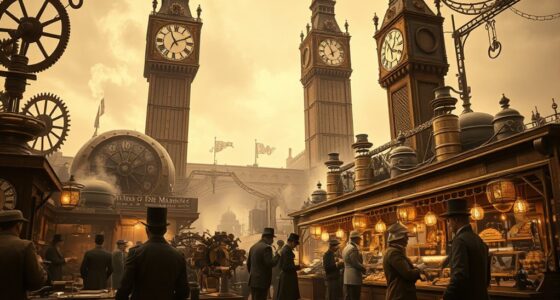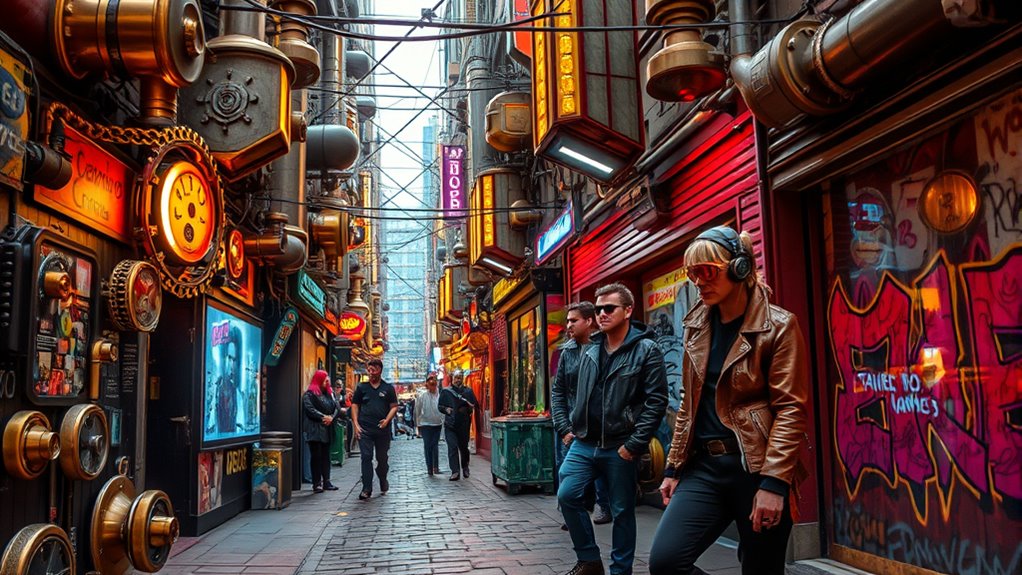

Beyond steampunk, you can explore subgenres like cyberpunk and post-apocalyptic fiction that expand the “punk” universe into dystopian, digital, and shattered worlds. Cyberpunk features gritty cities, neon lights, and themes of control and rebellion, while post-apocalyptic stories focus on resilience amid chaos and collapse. These genres challenge traditional boundaries, offering fresh perspectives on society and technology. Keep exploring to discover how these bold worlds continue to challenge and inspire your imagination.
Key Takeaways
- Cyberpunk features dystopian futures with high-tech urban landscapes, emphasizing societal control and rebellion.
- Post-apocalyptic punk explores worlds reshaped by disasters, focusing on resilience, resourcefulness, and human perseverance.
- These subgenres expand beyond Victorian aesthetics, reflecting diverse themes like environmental collapse and digital dystopia.
- They critique societal issues, explore ethical dilemmas, and envision varied human responses to technological and ecological crises.
- Both continue the “punk” tradition of challenging norms and imagining alternative futures beyond traditional steampunk boundaries.

Have you ever wondered how the inventive spirit of steampunk has inspired a whole universe of “punk” subgenres? It’s a reflection of how imagination pushes boundaries, creating worlds that challenge norms and explore alternative futures. Among these, cyberpunk stands out with its distinctive aesthetics rooted in gritty urban landscapes, neon-lit streets, and a fusion of high-tech and low-life. If you’ve ever been captivated by dystopian visions, cyberpunk offers a compelling lens into futures where corporations dominate, technology is deeply embedded in daily life, and society grapples with the consequences of unchecked innovation. Its visual style is vibrant and chaotic, often featuring towering skyscrapers, holographic advertisements, and a sense of decay that underscores the socio-economic disparities. Cyberpunk isn’t just about aesthetics; it explores themes of control, identity, and rebellion, making it a natural evolution from the inventive, handcrafted ethos of steampunk to a digital, cybernetic frontier.
Moving from the high-tech world of cyberpunk, post-apocalyptic narratives take a different route, plunging you into worlds reshaped by catastrophe. These stories depict societies struggling to survive in the aftermath of nuclear war, environmental collapse, or pandemics. Unlike steampunk’s Victorian-inspired inventiveness, post-apocalyptic settings often focus on resilience and adaptation amid chaos. You might find yourself charting ruined cities, battling harsh climates, or forging new communities from the remnants of the old world. The themes here resonate with a sense of loss but also hope, emphasizing human ingenuity and perseverance. Visually, post-apocalyptic worlds can be stark, gritty, and resourceful—think scavenged technology, makeshift shelters, and a landscape scarred by destruction. These narratives probe questions about what it means to rebuild, the fragile nature of civilization, and how humanity responds when everything they know is shattered.
Both cyberpunk aesthetics and post-apocalyptic narratives expand the “punk” universe beyond the Victorian steam-driven fantasies of steampunk. They challenge you to think about the future—whether it’s a dystopian digital age or a broken world desperately clinging to survival. These subgenres push the envelope, blending technology, societal critique, and resilience into compelling stories. They’re not just about visual style or narrative, but about questioning the direction humanity is headed. When you explore these worlds, you’re invited to reflect on issues of power, ethics, and adaptation, making each story a vivid mirror of potential futures. This diversity of themes and aesthetics showcases how “punk” subgenres continue to evolve, driven by imagination and a desire to explore new horizons beyond the boundaries of traditional steampunk.

LightInTheBox Rustic Industrial Tube Pipe Chandeliers, Steampunk Pendant Light Fixture 5-Light Edison Farmhouse Ceiling Lamp for Dining Room Living Room Bar
Steampunk Design: This industrial light fixture features a unique pipe design, complemented by a rustic paint finish. Its...
As an affiliate, we earn on qualifying purchases.
Frequently Asked Questions
What Are the Origins of Punk Subgenres Beyond Steampunk?
You’ll find that punk subgenres beyond steampunk originated from diverse historical influences and cultural adaptations. For example, cyberpunk draws from digital fears and technological advances, influenced by 20th-century cybernetics and dystopian fiction. Dieselpunk and atompunk reflect the aesthetics and anxieties of the early 20th century’s wars and technological leaps. These subgenres adapt historical periods into futuristic or alternative worlds, allowing creators to explore societal issues through unique, genre-blending lenses.
How Do Aesthetic Elements Differ Among Punk Subgenres?
You notice that each punk subgenre has distinct aesthetic elements. Cyberpunk fashion features neon colors, high-tech accessories, and a gritty, dystopian vibe, emphasizing a futuristic yet rebellious look. Dystopian imagery in genres like dieselpunk or biopunk often includes decayed cities, authoritarian symbols, and a sense of chaos. These styles reflect their themes—cyberpunk’s tech obsession and dystopian’s societal collapse—creating unique visual identities that set each subgenre apart.
Are There Common Themes Across All Punk-Related Genres?
You’ll find common themes across all punk-related genres, like challenging authority and questioning societal norms. In futuristic dystopias, you often see characters fighting oppressive systems, while cybernetic rebellion features tech-enhanced individuals resisting control. These genres share a rebellious spirit, emphasizing individualism and anti-establishment ideals. Whether through dystopian worlds or cybernetic upgrades, punk subgenres unite in their desire to critique and transform the world around them.
How Do These Subgenres Influence Modern Pop Culture?
Think of punk subgenres as vibrant graffiti on the canvas of pop culture. They influence modern trends by inspiring cyberpunk fashion, with its neon-lit, edgy styles, and dystopian narratives that fuel blockbuster films and TV series. You see their impact in rebellious music, art, and fashion, shaping society’s outlook on technology and authority. These subgenres act as a mirror, reflecting and challenging our world’s evolving values and fears.
Can Punk Subgenres Overlap or Combine With Each Other?
Yes, punk subgenres often overlap and combine through fusion aesthetics and genre blending. You’ll find steampunk mixed with cyberpunk or dieselpunk, creating unique visual and thematic styles. These overlaps allow for creative experimentation, giving each subgenre new dimensions. When you explore these hybrid worlds, you’ll see how artists and fans embrace diversity, pushing boundaries and enriching the punk landscape with innovative ideas and aesthetics that challenge traditional genre limits.

TFCFL Industrial Chandelier, 7-Light Vintage Steampunk Style Rustic Pendant Lamp Gear Metal Ceiling Hanging Lighting Fixture for Restaurant Bar Coffee Room
【Industrial Rustic Style】The wheel and gears paired well with bulb to offer a unique industrial flair, 7 condensed...
As an affiliate, we earn on qualifying purchases.
Conclusion
As you delve into these diverse “punk” subgenres, you realize they’re more than just stylish worlds—they’re vibrant rebellions against convention. Each offers a unique lens into alternative futures and pasts, challenging your imagination and beliefs. Exploring these domains feels like uncovering hidden gems in a universe bursting with creativity—so vast, it could swallow whole galaxies. Keep exploring, and you’ll find that the boundaries of reality and fiction blur into an exhilarating tapestry of endless possibility.

BECOKOME Tall Bookshelf with Lights, 2 Pack Ladder Bookcase, 7 Tier Arched Home Office Storage Book Collectibles Shelves, 64" Modern Corner Display Shelf for Bedroom Living Room Balcony, Rustic Brown
Bookshelf with LED Lights – This bookcase comes equipped with LED lights that feature adjustable brightness and a...
As an affiliate, we earn on qualifying purchases.

DOFURNILIM Industrial Pipe Corner Bookshelf, Wall Wooden Bookcase with Open Shelves, L Shaped Ladder Pipe Pantry Shelving for Living Room, Bedroom, Home, Office, 4 Tiers
1. Maximize Corner Spaces: This industrial pipe corner bookshelf features an L-shaped design that fits flush against walls,...
As an affiliate, we earn on qualifying purchases.