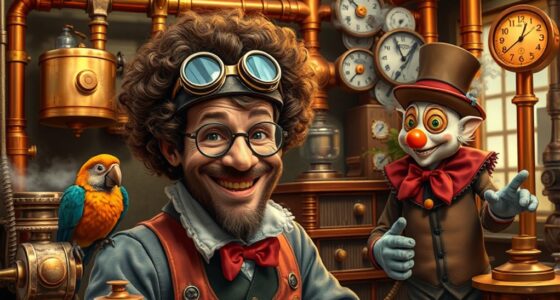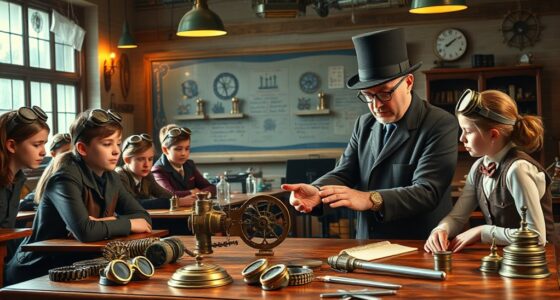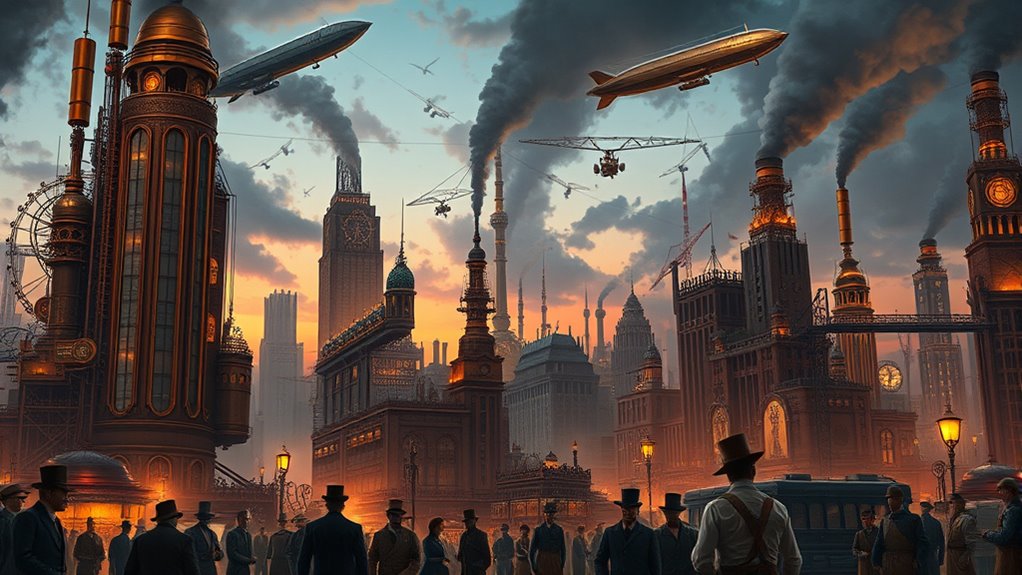

Steampunk offers sharp social commentary by critiquing industrial progress and its role in reinforcing imperialism, class divides, and technological exploitation. It shows how factories and inventions often serve the interests of the powerful while deepening social inequalities. You’ll see how steampunk’s worlds reflect current issues like social hierarchy and environmental harm, prompting you to think about the broader impacts of innovation. Explore further to understand how these themes challenge conventional notions of progress and societal growth.
Key Takeaways
- Steampunk critiques industrialization’s dark side, highlighting environmental damage and societal exploitation tied to technological progress.
- It explores class conflicts by depicting working-class inventors challenging elite control and access to technology.
- Steampunk questions who benefits from innovation, revealing power imbalances and reinforcing social hierarchies.
- It uses alternate worlds to reflect on real-world issues like inequality, emphasizing technology’s role in societal division.
- The genre serves as a social lens, critiquing imperialism, reinforcing or challenging hierarchies, and prompting reflection on progress’s social impact.
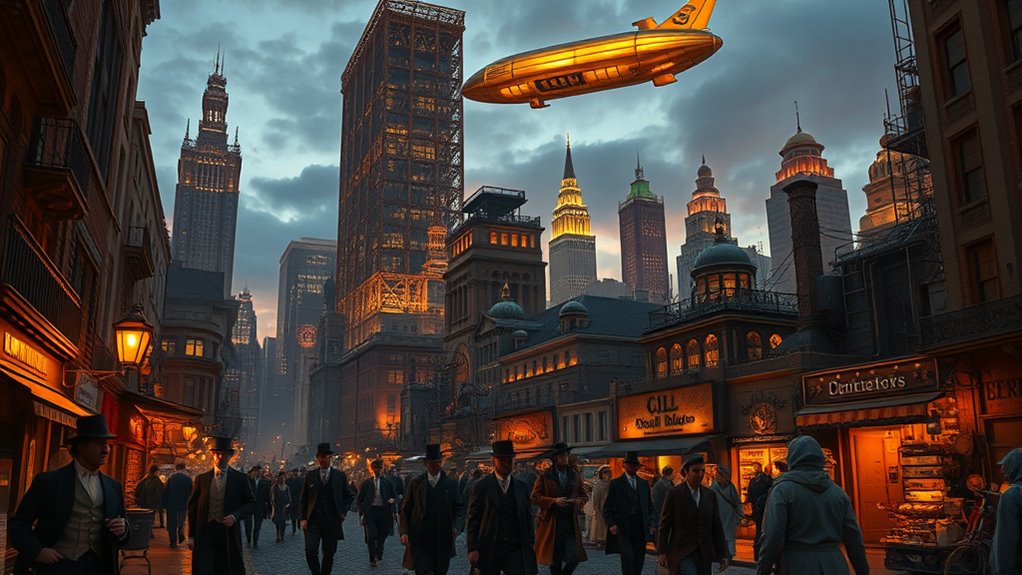
Have you ever wondered how steampunk art and literature critique modern society? This genre isn’t just about Victorian aesthetics and steam-powered gadgets; it’s a lens through which you can examine the complex issues of our world. Central to steampunk’s social commentary are themes of industrial critique and class dynamics, which serve to highlight the inequalities and contradictions embedded in rapid technological progress and societal structures. When you explore steampunk stories or visuals, you’re invited to question how industries shape lives and how power is distributed among different classes.
Steampunk’s industrial critique often exposes the dark side of technological advancement. You see it in stories where factories belch smoke and pollution, symbolizing unchecked industrial growth that benefits a select few while disregarding the environment and the working class. By romanticizing or critiquing this industrial age, steampunk prompts you to reflect on current real-world issues—how technological progress can deepen social divides or lead to exploitation. It’s a reminder that innovation isn’t neutral; it can reinforce existing hierarchies or challenge them. When you observe steampunk worlds, you recognize that industry isn’t just about invention; it’s a battleground where societal values are negotiated.
Class dynamics are equally prevalent in steampunk narratives. You might notice how characters from different social strata interact or clash within these worlds. Often, you see working-class inventors or rebels fighting against the oppressive elites who control resources and technology. These stories critique how wealth and power concentrate, leaving marginalized groups behind. Steampunk advocates for a critical view of societal hierarchies, illustrating how class influences access to innovation and opportunity. By doing so, it encourages you to contemplate the ways modern society perpetuates inequality and whether technological progress truly benefits everyone or just the privileged few.
Furthermore, steampunk’s fascination with invention and progress becomes a platform for social critique. You’re encouraged to think about who benefits from technological innovations and who bears the costs. The genre challenges you to question whether progress is truly progressive or if it masks deeper social injustices. As you explore steampunk worlds, you’re prompted to see invention not as an isolated act of creativity but as intertwined with societal power structures. This perspective invites you to reflect on your own society’s industrial practices, class stratifications, and the potential for technology to serve as a tool for social change or oppression.
In essence, steampunk offers a provocative mirror to contemporary issues through its critique of industry and class. It invites you to see beyond the gears and goggles and understand the deeper social implications embedded in technological and societal transformation.

Enjoy Your Steampunk Victorian Style Goggles with Compass Design, Azure Blue Lenses & Ocular Loupe
✔︎Handmade steampunk goggles by UMBRELLALABORATORY in the USA: These vintage Victorian style goggles with double magnifying eye loupes…
As an affiliate, we earn on qualifying purchases.
As an affiliate, we earn on qualifying purchases.
Frequently Asked Questions
How Does Steampunk Influence Modern Social and Political Movements?
You’re influenced by steampunk’s blend of technological optimism and anti-establishment sentiments, inspiring modern social and political movements. Its emphasis on inventive solutions and questioning authority encourages you to challenge the status quo. Steampunk’s aesthetic and ideas promote innovation, activism, and alternative histories, empowering you to imagine a more equitable future. By embracing its principles, you help foster a culture that values ingenuity and resists oppressive systems.
Are There Specific Steampunk Works That Critique Colonialism Explicitly?
Did you know that about 15% of steampunk works explicitly critique colonialism? Yes, some stories incorporate colonial critique through postcolonial narratives, highlighting the impacts of imperialism. For example, novels like “The Steampunk Revolution” challenge colonial histories, emphasizing marginalized voices. These works actively question colonial power structures, making steampunk a compelling genre for exploring postcolonial themes and encouraging readers to reflect on history’s ongoing effects.
How Do Steampunk Aesthetics Reflect Class Distinctions?
You notice how steampunk aesthetics highlight class distinctions by emphasizing the industrial class’s craftsmanship and Victorian hierarchy’s opulence. You see elaborate gears, luxurious fabrics, and intricate gadgets that symbolize wealth and status, contrasting with simpler, utilitarian designs of working-class gear. This visual contrast underscores societal divisions, reflecting how the industrial era reinforced class distinctions, allowing you to explore themes of power, privilege, and social mobility within the steampunk world.
Can Steampunk Inspire Real-World Technological Innovation?
Yes, steampunk can inspire real-world innovation by blending Victorian aesthetics with modern tech. Imagine wearable technology that looks like gears and brass fittings, making it both functional and stylish. This fusion encourages creativity in alternative energy sources and smart devices, pushing boundaries beyond conventional designs. By embracing steampunk’s inventive spirit, you could help develop sustainable solutions while keeping a vintage, imaginative charm alive in everyday gadgets.
What Are the Origins of Steampunk’s Social Themes?
You see, steampunk’s social themes originate from Victorian values and a colonial critique. It reflects on the era’s obsession with progress, class disparities, and imperialism. By blending these elements with futuristic inventions, steampunk critiques historical injustices and explores societal dynamics. This mix allows you to question authority, challenge norms, and imagine alternative futures rooted in the complexities of the past.
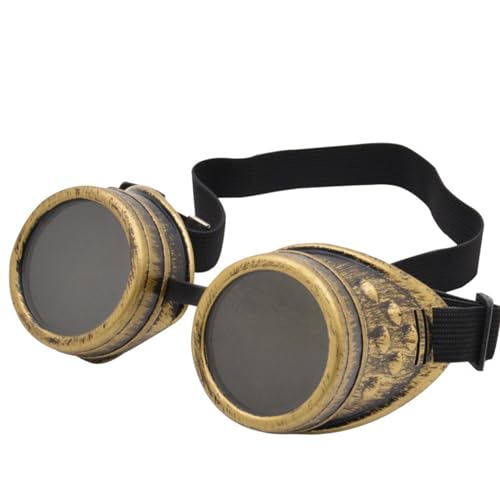
CWB&ADB Steampunk Goggles, Vintage Bronze Costume Accessory, Dark Lens Cosplay Eyewear
VINTAGE DESIGN: Authentic steampunk style goggles featuring a distressed bronze finish and dark-tinted lenses for a classic Victorian…
As an affiliate, we earn on qualifying purchases.
As an affiliate, we earn on qualifying purchases.
Conclusion
As you explore steampunk’s world, you realize it’s like a mirror reflecting society’s struggles with imperialism and class. It challenges you to see beyond the gears and goggles, urging you to question who benefits from invention and progress. Just as a clock’s intricate parts depend on each other, society’s issues are interconnected. By understanding these stories, you’re better equipped to recognize and challenge injustice, making change as essential as the steampunk era’s relentless innovation.

RechicGu Style A Watch Clock Clockwork Hand Gear Cog Steampunk Necklace Vintage Golden Color and Silver
Recommended Age : 3-12 Years old. SIZE: Neck Chain:About 68cm(26.8inch),Pendant: 12x7cm (4.7×2.7in).Package:1pc Necklace
As an affiliate, we earn on qualifying purchases.
As an affiliate, we earn on qualifying purchases.

Retrol Mini Functional Steam Generator and LED Lamp Scene Model Set, Working Power Display Add-on for Steam Engine Models, STEM Educational, Home Decor & Gift Collection for Adults
💡 Watch Steam Power Light Up Your World: Feel a surge of awe as your steam engine's power…
As an affiliate, we earn on qualifying purchases.
As an affiliate, we earn on qualifying purchases.