Steampunk in the classroom sparks curiosity by combining Victorian fashion, engineering, and storytelling to create engaging lessons. You can design airship models, explore historical clothing, and incorporate imaginative narratives to deepen understanding and creativity. Using gears, goggles, and inventive projects, you encourage problem-solving and artistic expression. This approach makes learning dynamic and memorable, connecting past innovations with modern ideas. Keep exploring how steampunk can transform your teaching experience into a vibrant adventure.
Key Takeaways
- Integrate history, engineering, and art through steampunk-themed projects like airship design to foster cross-disciplinary learning.
- Use Victorian fashion elements such as corsets and goggles to deepen understanding of historical context and design aesthetics.
- Promote creativity by encouraging students to incorporate steampunk motifs like gears and leather into their models and drawings.
- Enhance engagement with storytelling, prompting students to craft narratives about their airship adventures and technological innovations.
- Develop critical thinking and problem-solving skills by exploring aerodynamics, materials, and the symbolism of steampunk fashion in projects.

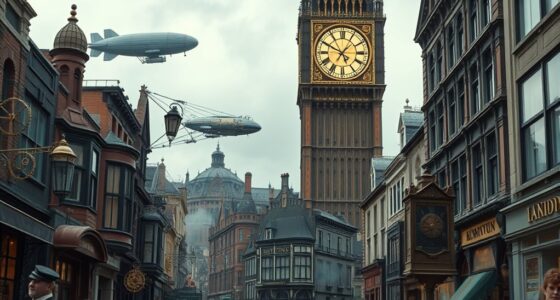
Have you ever wondered how you can make learning more engaging and creative? Steampunk offers a fantastic way to do just that, blending history, invention, and imagination into a mesmerizing classroom experience. One way to bring this genre alive is by exploring airship design, which serves as a central theme in steampunk culture. Imagine students designing their own airships, combining Victorian fashion with imaginative engineering. This exercise not only sparks creativity but also encourages problem-solving and technical thinking. You can guide students to research Victorian-era engineering and fashion, then challenge them to create models or drawings of their dream airships. They’ll learn about the importance of aerodynamics, materials, and aesthetics, all while immersing themselves in a fascinating historical period. Incorporating Victorian fashion into the project adds an extra layer of depth. Students can study the intricate details of corsets, top hats, waistcoats, and bustles, understanding how clothing styles of the time reflected societal values and technological advancements. Then, they can incorporate these fashion elements into their airship designs, imagining what a steampunk airship crew might wear. This approach makes history tangible and relatable, bridging the gap between past and future. As they craft their designs, encourage students to think about how Victorian fashion influences the overall look and feel of their creations. Perhaps they’ll add brass gears, leather straps, and goggles to their characters’ costumes, creating a cohesive steampunk aesthetic. You can also introduce them to the concept of Victorian fashion as a symbol of progress and innovation, tying it into the broader theme of technological advancement. Throughout the activity, emphasize the importance of storytelling—prompt students to imagine the adventures their airship crews would undertake, the challenges they’d face, and the societal implications of their inventions. This narrative element makes their projects more meaningful and memorable. By integrating airship design and Victorian fashion into your lessons, you’re not just teaching about history or engineering; you’re fostering a sense of wonder and curiosity. Students learn to see history as a living, breathing world filled with possibilities. They realize that creativity and innovation go hand in hand, and that the past can inspire future inventors and explorers. Steampunk, with its unique blend of old-world charm and futuristic imagination, becomes a powerful tool to inspire critical thinking, artistic expression, and a love for learning that lasts beyond the classroom walls.

LightInTheBox Rustic Industrial Tube Pipe Chandeliers, Steampunk Pendant Light Fixture 5-Light Edison Farmhouse Ceiling Lamp for Dining Room Living Room Bar
Steampunk Design: This industrial light fixture features a unique pipe design, complemented by a rustic paint finish. Its...
As an affiliate, we earn on qualifying purchases.
Frequently Asked Questions
How Can Steampunk Inspire Creative Writing in Students?
You can inspire creative writing in students by encouraging them to explore steampunk themes, which foster fantasy storytelling. Use descriptive imagery to help students craft vivid worlds filled with gears, goggles, and Victorian-inspired technology. Challenge them to invent characters and adventures within this imaginative setting. This approach sparks originality, enhances their descriptive skills, and makes writing engaging, allowing students to express their creativity through detailed, fantastical narratives.
What Are Affordable Steampunk Classroom Decoration Ideas?
Like gears turning in harmony, you can create an affordable steampunk classroom with DIY gear crafts from recycled materials and vintage prop displays. Use old clock parts, brass fittings, and gears to craft wall art or centerpieces. Thrift stores often have vintage suitcases or metal objects perfect for displays. These budget-friendly ideas add steampunk flair without breaking the bank, inspiring curiosity and creativity among your students.
How Do Steampunk Themes Align With Curriculum Standards?
You can align steampunk themes with curriculum standards by emphasizing historical accuracy and interdisciplinary integration. Use steampunk to explore Victorian history, technological innovation, and literature, making lessons engaging and educational. Incorporate projects that combine science, art, and history, helping students connect ideas across subjects. This approach not only meets curriculum goals but also sparks creativity and critical thinking, making learning both fun and meaningful.
What Safety Precautions Are Needed for Steampunk Science Projects?
Imagine you’re in a Victorian lab, gears turning and steam rising—safety’s essential. You should always wear protective gear, like goggles and gloves, to shield against splashes or debris. Guarantee fire safety by keeping a fire extinguisher nearby and avoiding open flames near combustible materials. Clear workspace clutter and supervise experiments closely. These precautions keep your steampunk science projects safe, fun, and educational, just like a true Victorian inventor!
How Can Steampunk Foster Inclusivity Among Diverse Learners?
You can foster inclusivity among diverse learners by incorporating steampunk’s cultural representation and accessible design. Use gear-themed activities that highlight different cultural influences, ensuring everyone sees themselves reflected. Offer adjustable materials and varied project options so all students can participate comfortably. By celebrating diverse perspectives through steampunk themes, you create an engaging environment where every learner feels valued, empowered, and inspired to explore their creativity.

TFCFL Industrial Chandelier, 7-Light Vintage Steampunk Style Rustic Pendant Lamp Gear Metal Ceiling Hanging Lighting Fixture for Restaurant Bar Coffee Room
【Industrial Rustic Style】The wheel and gears paired well with bulb to offer a unique industrial flair, 7 condensed...
As an affiliate, we earn on qualifying purchases.
Conclusion
Incorporating steampunk into your classroom truly breathes new life into learning. It sparks curiosity, encourages creativity, and makes lessons come alive like gears turning in harmony. By blending history, science, and imagination, you open the door for students to think outside the box. Remember, when it comes to inspiring young minds, sometimes you have to think on your feet and embrace the unexpected. With steampunk, you’re not just teaching—you’re igniting a passion that will last.

Industrial Table Lamp, Vintage Bedside Lamp with USB C and USB A Charging Ports, Dimmable Steampunk Office Lamp Metal Pipe Edison Reading Lamps for Bedroom, Dorm, Farmhouse Decor 6W LED Bulb Included
Dimension: 5.59''(L)*5.59''(W)*16.14''(H) in total, sturdy rust metal base with 59'' wiring. Please read more size information on the...
As an affiliate, we earn on qualifying purchases.

PIPRE Steampunk Table Lamp, Industrial Water Pipe Lamp Retro Iron Piping Desk Lamp Vintage Nightstand Lamps for Bedroom Living Room Kitchen Café Dorm Pub Brown1
✔️ 【Industrial Water Pipe Lamp】The industrial table lamp with metal and retro water pipe look, dresses up your...
As an affiliate, we earn on qualifying purchases.