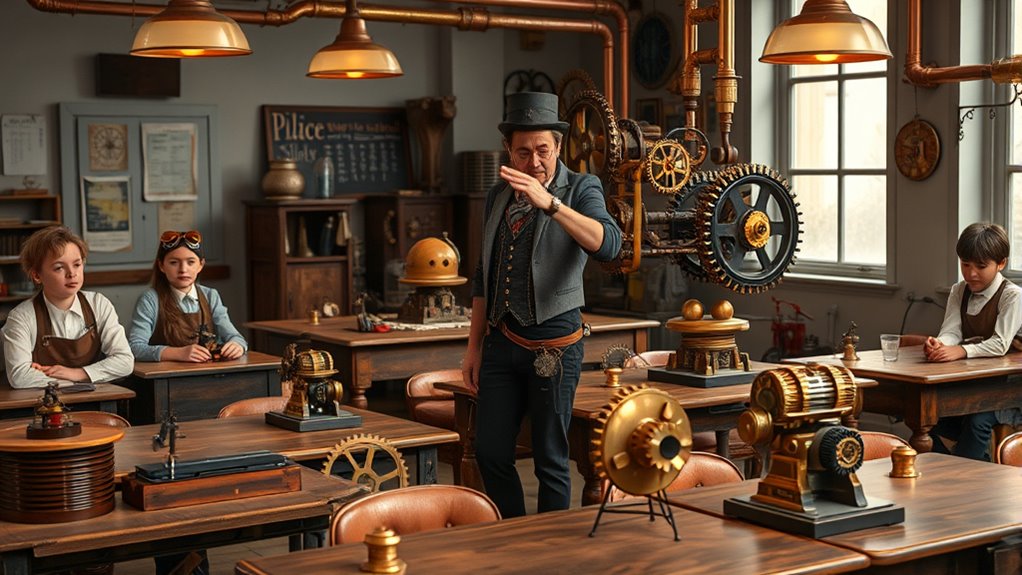

Steampunk in education combines Victorian-inspired aesthetics with hands-on learning to engage students in science, history, and art. By incorporating ornate designs, gears, and vintage motifs, you create immersive environments that encourage exploration. Using steam-powered models and crafting projects promotes critical thinking, craftsmanship, and resourcefulness. This approach fosters creativity and interdisciplinary understanding, making lessons memorable and fun. If you keep exploring, you’ll discover more ways to blend Victorian charm with innovative teaching methods to inspire learners.
Key Takeaways
- Steampunk in education uses Victorian-inspired designs and gear motifs to create immersive, visually engaging learning environments.
- It promotes critical thinking by demonstrating steam-powered machinery through models and digital simulations.
- Hands-on projects encourage resourcefulness by repurposing everyday objects into artistic or functional steampunk items.
- The theme integrates history, literature, and science, fostering interdisciplinary understanding of Victorian technological advancements.
- It enhances creativity and curiosity by blending aesthetics, engineering principles, and storytelling into engaging lessons.
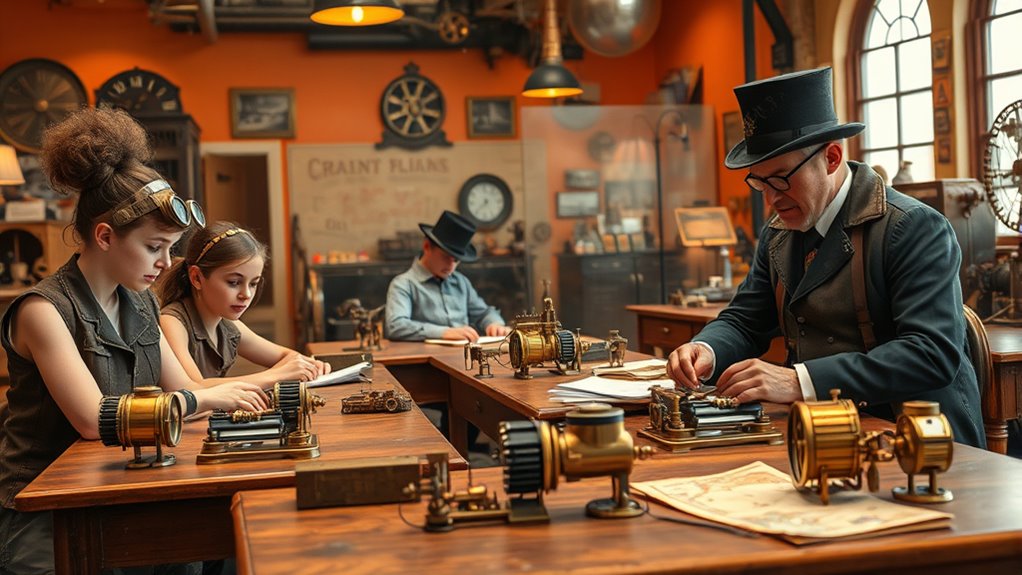
Steampunk in education blends the imaginative worlds of Victorian-inspired technology with modern teaching methods, inspiring students to explore creativity and innovation. As you incorporate steampunk elements into your classroom, you tap into the rich Victorian aesthetics that emphasize ornate designs, intricate gears, and vintage charm. These visual details help create an immersive environment where students feel transported to a different era, sparking curiosity about history, engineering, and design. You might decorate your space with brass fixtures, clockwork motifs, and aged leather, establishing a setting that encourages exploration and hands-on learning.
Using steam-powered tools as inspiration, you can challenge students to think critically about the evolution of technology. While actual steam-powered devices are largely historical relics, you can incorporate models, replicas, or digital simulations to demonstrate how these tools worked. Students will understand the ingenuity behind steam engines, pistons, and gear mechanisms, gaining insights into the principles of mechanical engineering. You might assign projects where they design their own steampunk-inspired inventions, combining Victorian aesthetics with modern concepts. This approach not only enhances technological literacy but also nurtures creativity and problem-solving skills.
In your lessons, emphasize the craftsmanship and resourcefulness characteristic of the steampunk movement. Encourage students to repurpose everyday objects into artistic or functional creations, reflecting the Victorian spirit of innovation. For example, they could craft jewelry from clock parts or build small mechanical devices using simple materials. This process reinforces lessons about sustainability, engineering, and artistic design—all within a steampunk framework that makes learning engaging and memorable.
Furthermore, integrating steampunk themes into discussions about history, literature, and science broadens students’ perspectives. You can explore Victorian society’s technological advancements and societal values, prompting conversations about how innovation influences culture and progress. Literature from the era or inspired by steampunk aesthetics can deepen understanding of the period’s ethos and inspire creative writing projects. Science lessons can include the mechanics of steam power, illustrating foundational principles of thermodynamics and engineering in a fun, accessible way. Emphasizing sound vibrations in experiments can also introduce students to the science of sound as a form of energy transfer.
Ultimately, using steampunk in education isn’t just about aesthetics; it’s about fostering an environment where creativity, critical thinking, and historical curiosity flourish. By blending Victorian aesthetics with steam-powered tools and inventive projects, you provide students with a unique, engaging way to learn about technology, history, and art. It’s a powerful method to ignite their imaginations and encourage them to see the endless possibilities when science and creativity intersect.

YBSAHLYY 20 Pcs Vintage Paper Hanging Clock Decorations – Steampunk, Fantasy & Wonderland Theme Wall/Ceiling Decor | Halloween, New Year, Wedding | Living Room & Staircase
【Retro Time-Chaos Design】Featuring a vintage Roman numeral clock silhouette, this decor set captures the whimsical "time disarray" aesthetic…
As an affiliate, we earn on qualifying purchases.
As an affiliate, we earn on qualifying purchases.
Frequently Asked Questions
How Can Steampunk Be Integrated Into STEM Curricula Effectively?
You can integrate steampunk into STEM curricula by using its mechanical engineering concepts and historical context to spark student interest. Encourage hands-on projects like building steampunk-inspired gadgets, which teach principles of gears, levers, and steam power. Discuss the Victorian era’s technological innovations to provide historical insights. This approach makes learning engaging and relatable, helping students see real-world applications of engineering and history while fostering creativity and problem-solving skills.
What Age Groups Benefit Most From Steampunk-Inspired Lessons?
You know what they say, “You’re never too young to dream big.” Middle school students benefit greatly from steampunk-inspired lessons, as they can explore complex concepts creatively. Early childhood learners also thrive by engaging with hands-on, imaginative activities. By tailoring lessons to each age group, you foster curiosity and innovation, making steampunk a versatile tool that inspires both young and older students alike.
Are There Specific Steampunk Resources or Materials for Educators?
Yes, there are many steampunk resources for educators. You can find steampunk art projects that inspire creativity and engage students through hands-on activities. Additionally, steampunk literature resources offer exciting stories and themes to enrich your curriculum. These materials help bring the steampunk aesthetic into your classroom, making lessons more immersive and fun. Explore online platforms, teacher blogs, and educational publishers for ready-to-use steampunk resources tailored for different age groups.
How Does Steampunk Promote Creativity and Critical Thinking?
Steampunk sparks your mechanical imagination, turning the classroom into a vintage innovation workshop where ideas collide like gears in a clock. It encourages you to think critically by blending history, technology, and creativity, challenging you to reimagine what’s possible. As you design and problem-solve with steampunk elements, you develop innovative solutions and sharpen your analytical skills, making learning an adventure that fuels both your curiosity and inventive spirit.
What Challenges Might Teachers Face When Incorporating Steampunk Into Lessons?
You might face challenges like maintaining student engagement, as steampunk can be complex or unfamiliar for some learners. Cultural sensitivity is vital; make sure the steampunk elements respect diverse backgrounds and avoid stereotypes. Additionally, you may need to adapt materials to suit different learning styles and provide adequate resources. Addressing these issues helps create an inclusive, engaging environment that encourages critical thinking and creativity without alienating students.
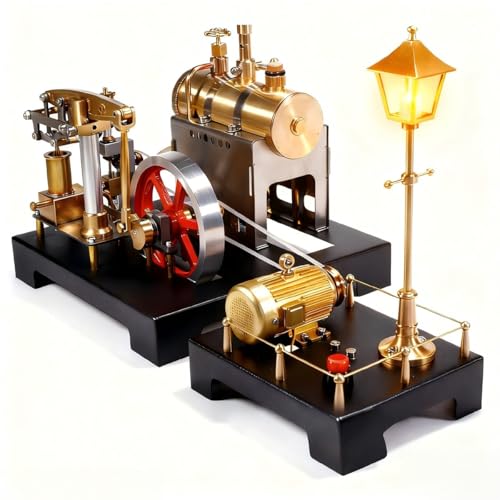
MechPuConToy Steam Engine Model with Boiler and Lamp Scene DIY Kit, SE-01 Full Metal Beam Engine Steam Engine Model Kit That Works with Centrifugal Regulator (84PCS)
Highly Restored Engine: Witness the magic of steam power as this lifelike model comes to life. With mini…
As an affiliate, we earn on qualifying purchases.
As an affiliate, we earn on qualifying purchases.
Conclusion
As you explore steampunk in education, you realize how its blend of history and innovation sparks curiosity. Just like discovering a hidden gear in a vintage clock, you find that embracing this style unexpectedly unlocks students’ creativity. It’s a coincidence, really—how a touch of Victorian charm can ignite modern learning. With each lesson, you see the gears turn, proving that sometimes, the best ideas come from the most unexpected combinations.

ZOOFOX 300 Gram Gears Charms, Mixed Vintage Bronze Watch Cog Wheel Set, DIY Metal Steampunk Pendant for Crafting, Jewelry Making Accessory
High-quality Material: Our antique pendants are constructed of alloy material which is lead-free, nickel-free and durable, they adopted…
As an affiliate, we earn on qualifying purchases.
As an affiliate, we earn on qualifying purchases.

Retrol SE-03 38PCS DIY Stationary Mill Steam Engine and Boiler Model Kit, Working Miniature Engine with Generator and Lamp Stand, Vintage Steampunk Model for Educational and Collectors
Authentic Steam Power Experience: The RETROL SE-03 operates under real steam pressure with a functional brass boiler and…
As an affiliate, we earn on qualifying purchases.
As an affiliate, we earn on qualifying purchases.