TL;DR

Get art and craft supplies delivered free with Prime
- Fast, free delivery on millions of items
- Prime Video, Amazon Music and more included
- Member-only deals all year
The inaugural Catholic Universities Art Triennale, known as ArtCut, presents exhibitions by more than 100 artists across seven cities. Organized through Catholic universities and framed by “Exercises in Empathy,” the series emphasizes human creativity and relationships amid the rise of AI. The source does not specify exhibition dates or provide details about the individual shows.
The Vatican-commissioned Catholic Universities Art Triennale is presenting exhibitions by more than 100 artists across seven cities, with its inaugural edition centering human creativity and empathy amid the rapid rise of artificial intelligence. The simultaneous shows, titled under the umbrella theme “Exercises in Empathy,” are hosted at Catholic universities in Brazil, Chile, Colombia, Italy, Portugal, Angola and the United States.
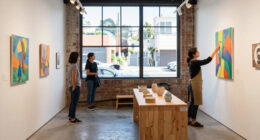
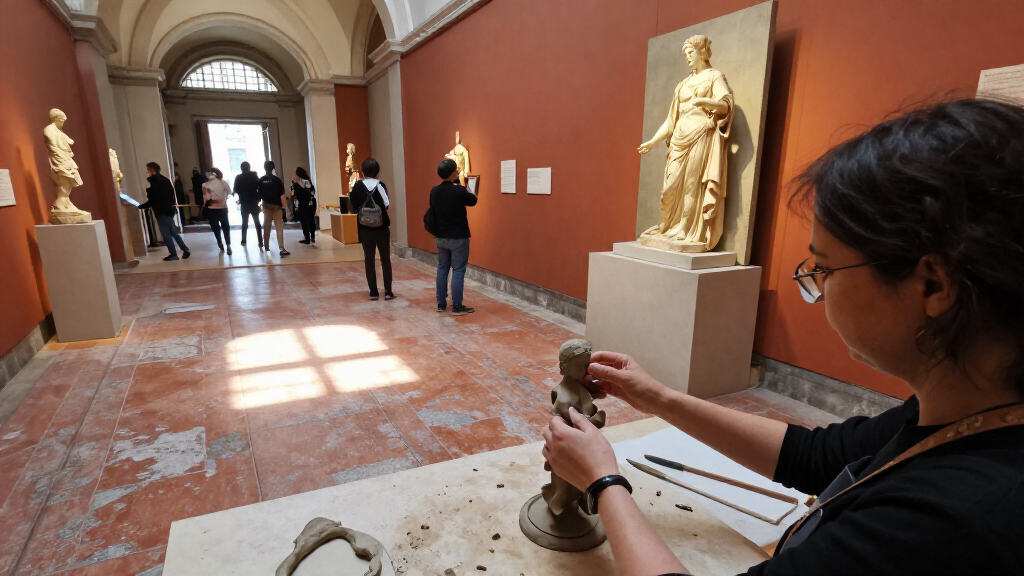
The exhibition series, known as ArtCut, includes artists such as Arthur Jafa, Jeremy Frey and Mona Hatoum. Its framing places empathy and self-reflection at the heart of human progress, rather than treating technological advancement as its defining measure. The report also identifies works by Vanderlei Lopes, Julião Sarmento, Andreia Santana and Carlos Bunga in images accompanying the coverage.
Cardinal Tolentino de Mendonça, prefect of the Holy See’s Dicastery for Culture and Education, commissioned the contemporary art exhibitions at the seven Catholic universities. The report describes the exhibitions as taking place simultaneously, but does not give opening or closing dates, venue-level schedules or a complete list of participating artists.
ArtCut’s stated premise draws on Pope Leo XIV’s message about AI and art: that AI systems do not have the affective, relational and spiritual perspective through which people develop wisdom. The exhibitions respond by focusing on defining facets of humanity, including physical and intellectual experience. This is the triennale’s framing; the source does not report an independent assessment of AI-generated art or a formal comparison of works made by humans and machines.
Human Creativity in the AI Debate
The project brings a cultural institution’s position on AI into public view through contemporary art rather than through a policy document alone. By putting artists and works across multiple countries under one theme, ArtCut gives audiences a shared setting in which to consider what empathy, relationships and human judgment contribute to creative practice.
The subject matters beyond the participating universities because AI tools are increasingly part of discussions about how images and other creative work are made. The triennale’s premise is that technology should not be treated as interchangeable with human experience. Its shows may prompt visitors to think about that distinction, though the available report does not establish how audiences have responded or whether the exhibitions include AI-generated work.
Popular right now

Shark Navigator Lift-Away Upright Vacuum (NV360)

Dreame L50 Ultra Robot Vacuum and Mop

Samsung 42-Inch Class OLED S90F 4K Smart TV (2025)
As an affiliate, we earn on qualifying purchases.
The Pope’s Message Behind ArtCut
The inaugural edition is organized under “Exercises in Empathy” and described as expanding on Pope Leo XIV’s earlier encyclical on protecting the human condition from AI’s capacity for manipulation and delusions of omnipotence. The source does not provide the encyclical’s title or publication date, so those details cannot be confirmed from the report.
At the center of ArtCut’s approach is the Pope’s stated distinction between machine output and human understanding: AI systems can produce material without understanding what they produce, the report says, because they lack affective, relational and spiritual perspectives. The exhibitions take up that argument through art concerned with different dimensions of humanity, rather than presenting the triennale as a technical evaluation of AI.
“AI systems “do not understand what they produce, for they lack the affective, relational and spiritual perspective through which human beings grow in wisdom.””
— Pope Leo XIV, as quoted in the Hyperallergic report
Exhibition Schedules and Show Details
The source report does not identify opening and closing dates, admission arrangements or the exact venues within the seven university locations. It also does not provide a complete artist roster or a full account of what each exhibition contains. Those details are needed for readers who want to visit or compare the shows.
It is also unclear whether any of the exhibitions include AI-generated works, or how participating artists interpret the theme in their individual pieces. The Pope’s remarks are presented as the series’ guiding argument, not as proof that AI systems cannot produce work that viewers consider art.
Details Visitors Still Need
The exhibitions are presented as simultaneous events across the seven countries, but the report does not name a subsequent program milestone or say when the triennale will publish more information. Visitors will need to consult the participating universities or ArtCut’s organizers for local schedules, venue information and admission details.
Further announcements could clarify the full artist list, the contents of each exhibition and whether public programs accompany the shows. Until those details are available, the confirmed development is the launch of a seven-city series organized around human creativity and empathy, framed as a response to the growth of AI.
Key Questions
What is the Catholic Universities Art Triennale?
ArtCut is a Vatican-commissioned contemporary art exhibition series organized at Catholic universities. Its inaugural edition features more than 100 artists across seven cities.
Where are the exhibitions being held?
The participating university locations are in Brazil, Chile, Colombia, Italy, Portugal, Angola and the United States. The source report does not give specific campus or gallery addresses.
What is the theme of the inaugural edition?
The umbrella theme is “Exercises in Empathy.” The series focuses on facets of humanity and foregrounds empathy and self-reflection amid debate about artificial intelligence.
Which artists are participating?
The report names Arthur Jafa, Jeremy Frey and Mona Hatoum among the participants. It does not provide a complete artist roster.
When can visitors see the exhibitions?
The shows are described as simultaneous, but dates and visiting information were not included in the report. Local university or organizer announcements may provide schedules and venue details.
Source: hyperallergic.com