TL;DR

Get art and craft supplies delivered free with Prime
- Fast, free delivery on millions of items
- Prime Video, Amazon Music and more included
- Member-only deals all year
Ibrahim Said’s solo exhibition “Shaping Time” opens at Yossi Milo in New York and runs through January 9. The ceramic sculptures draw on Islamic and ancient Egyptian art, Fustat pottery traditions and research undertaken during Said’s 18-month residency connected to the Metropolitan Museum of Art and Vacheron Constantin. The gallery frames the work as an exploration of time, memory and the relationship between permanence and change.
Egyptian-born artist Ibrahim Said’s solo exhibition “Shaping Time” opens at Yossi Milo in New York, presenting ceramic sculptures shaped by Islamic and ancient Egyptian art, historic Fustat pottery and an 18-month residency connected to the Metropolitan Museum of Art. The exhibition, which runs through January 9, brings historical references into a contemporary body of work focused on vessels, pattern and the passage of time.
The works expand the familiar form of a vessel into sculptural arrangements of ceramic bodies joined by concave pillars or curved bands, according to the gallery. Said uses symmetry, layered ornament and patterns including latticework. The gallery describes these forms as holding histories and imagined futures together, rather than treating time as a simple sequence from past to future.
The exhibition follows Said’s completion of the inaugural Metropolitan Museum of Art and Vacheron Constantin Artisan Residency. The program gave him access to The Met’s collection over 18 months and, according to the exhibition report, influenced the new work. Individual pieces listed in the report include “Delta Vase” (2025), made from white earthenware, and several 2026 works, including “Floating Vase – Gold Twist” and “Shaping Time 3.”
The gallery also connects the labor-intensive making process to the exhibition’s subject: careful symmetry and accumulated pattern call attention to time spent shaping each object. Said’s works address traditions associated with life after death and the tension between what endures and what passes. These are the gallery’s descriptions of the work’s themes, rather than independently documented statements of the artist’s intent in the source report.
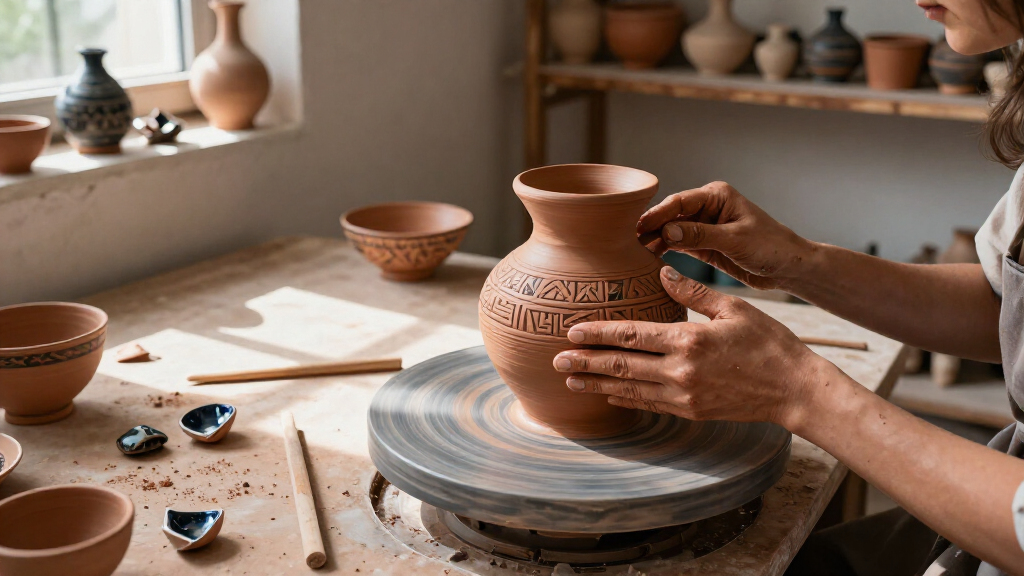
Ceramic Forms Carry Historical References
“Shaping Time” places Said’s contemporary ceramic practice in conversation with Egyptian and Islamic artistic traditions, while drawing attention to a local craft history tied to his upbringing. Said was born in Old Cairo and grew up observing ceramics workshops in the area’s Pottery Village, according to the exhibition report. That connection gives the work a personal as well as historical frame: the sculptures engage with traditions that are part of the material culture around the artist’s early life.
The exhibition also gives audiences a public view of work shaped by an extended museum residency. The 18-month program gave Said access to The Met’s collection; the report says that experience influenced this body of work, but does not specify which objects or research encounters informed individual sculptures. The residency and exhibition together show how historical collections can provide a point of reference for new art without making the resulting objects replicas of the past.
For visitors, the practical news is that the work is on view in New York for a defined run through January 9. The exhibition’s subject matter links the material process of making ceramics with wider questions about memory and continuity, while its forms remain rooted in a specific craft history rather than a general account of pottery.
As an affiliate, we earn on qualifying purchases.
Fustat Ware and Said’s Cairo Roots
The exhibition report locates one of Said’s historical reference points in Fustat, a historic district of Cairo that was once Egypt’s ancient Islamic capital and a major trading center. Pottery known as Fustat ware has been excavated across the area. It commonly features luster glaze, which can give a surface an iridescent effect, and some examples have incised designs. The report describes this pottery as a tradition informing Said’s engagement with ornament and ceramic surfaces.
Said’s background provides a direct link to Cairo’s present-day ceramic community as well as its archaeological past. Born in Old Cairo, he grew up around the workshops of the Pottery Village, where the report says dozens of studios make up the local ceramics industry. His sculptures draw on these histories but use joined, often elongated forms to reconsider what a vessel can be.
The new exhibition follows Said’s inaugural residency with The Met and Vacheron Constantin. The available report says the residency lasted 18 months and gave him access to the museum’s collection. It does not name specific collection objects as sources for particular works, so the relationship is best described at the level stated by the gallery: the residency influenced the broader body of work.
“Said considers time “not as a fixed progression from past to future, but as a layered condition in which histories and imagined futures continually overlap.””
— Yossi Milo gallery, as quoted in the exhibition report
Islamic and Egyptian style ceramic sculpture supplies
As an affiliate, we earn on qualifying purchases.
As an affiliate, we earn on qualifying purchases.
Details Behind the Residency’s Influence
The exhibition report does not identify which works were made specifically in response to particular objects in The Met’s collection, nor does it describe the residency’s research process in detail. It also does not provide statements from Said directly; the account of his approach and themes is presented through the gallery’s description.
The source lists selected works and materials but does not provide a complete exhibition checklist, visitor information or details about related public programs. The historical description of Fustat ware offers broad context, but the report does not specify which individual pottery finds Said studied or how particular historical techniques relate to each sculpture. Those links should not be assumed beyond the gallery’s stated account.
As an affiliate, we earn on qualifying purchases.
Exhibition Runs Through January 9
“Shaping Time” is scheduled to remain at Yossi Milo through January 9, 2027. The source report does not announce later venues, additional dates or a related publication. Further details about the exhibition and the artist’s work may be shared by the gallery or Said through the channels referenced in the report.
As the exhibition continues, visitors can see the ceramics themselves and consider how the joined forms, patterns and material choices relate to the gallery’s account of Said’s historical references. Any more specific explanation of individual works’ connections to The Met’s collection would require information beyond what has been published in the supplied report.
ceramic sculpting tools for artists
As an affiliate, we earn on qualifying purchases.
As an affiliate, we earn on qualifying purchases.
Key Questions
Where is Ibrahim Said’s “Shaping Time” exhibition?
It is on view at Yossi Milo in New York, according to the exhibition report.
How long is the exhibition scheduled to run?
The report says “Shaping Time” opened October 23, 2026, and continues through January 9, 2027.
What traditions inform the sculptures?
The work draws on Islamic and ancient Egyptian art, including the history of Fustat pottery. The report also connects Said’s practice to his experience growing up near Cairo’s Pottery Village workshops.
What was the Metropolitan Museum residency?
Said completed the inaugural Metropolitan Museum of Art and Vacheron Constantin Artisan Residency. It provided access to The Met’s collection over 18 months and influenced the new body of work, according to the exhibition report.
What remains unknown about the exhibition?
The source does not specify which museum objects informed particular sculptures, provide a complete work list or announce future exhibition dates. It also presents the themes primarily through the gallery’s description rather than direct comments from Said.
Source: rss
Halloween Picks
halloween
As an affiliate, we earn on qualifying purchases.