TL;DR

Get art and craft supplies delivered free with Prime
- Fast, free delivery on millions of items
- Prime Video, Amazon Music and more included
- Member-only deals all year
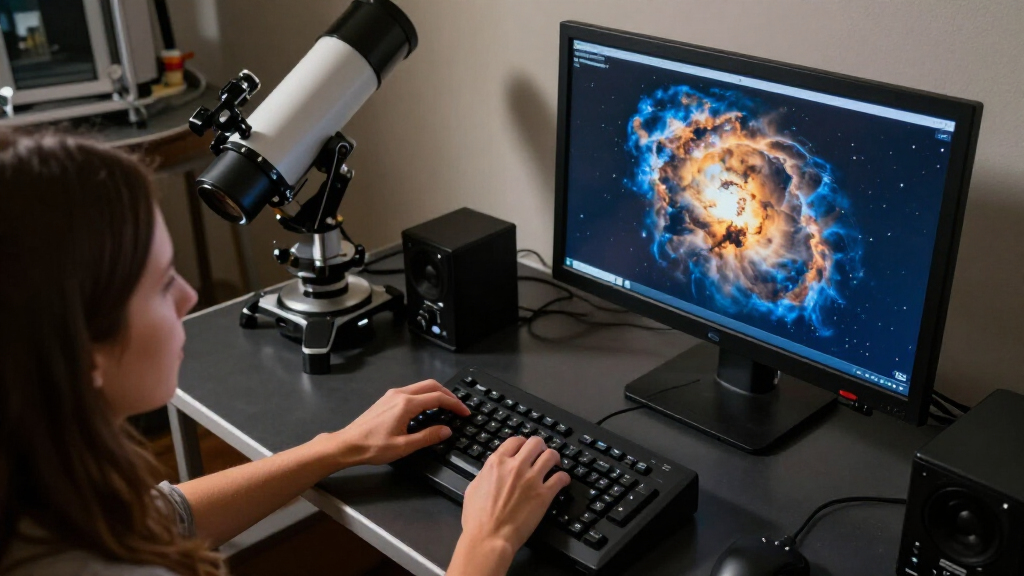
NASA’s James Webb Space Telescope has imaged the planetary nebula NGC 2392, nicknamed the Lion Nebula, using its NIRCam and MIRI instruments. The infrared observations show structures in gas and dust shaped by radiation from the dying star at the nebula’s center; astronomers estimate the nebula will disperse in about 10,000 years.
NASA’s James Webb Space Telescope has captured new infrared views of NGC 2392, the Lion Nebula, revealing shells, rings and dust around a dying star. Images from Webb’s NIRCam and MIRI instruments show how radiation from the star is shaping the surrounding material as the nebula expands.
The images were made using Webb’s Near Infrared Camera (NIRCam) and Mid-Infrared Instrument (MIRI). The views highlight different features in the gas and dust surrounding the nebula’s central star. In the NASA description quoted by Colossal, the bright central region appears like a small nose in the nebula’s lion-like shape.
NASA says the central star is in a late stage of stellar evolution, with a dense core remaining as it sheds its outer layers. The star’s heat and radiation ionize hydrogen gas, forming a bubble around it. NASA describes the nebula’s visible structures as cavernous shells, rings and tendrils; the lion’s apparent mane is the illuminated inner surface of one of those shells.
The MIRI image emphasizes the nebula’s dust. According to NASA, radiation from the star is destroying some dust while filaments of dust persist. The material has taken several thousand years to form its current structure and continues to change as the star pushes it outward.
A Snapshot of a Changing Nebula
The images offer a view of how a dying star can reshape the material around it. In NGC 2392, radiation from the central star interacts with gas and dust, creating the layered forms captured by Webb. Seeing both gas structures and dust detail helps convey that a planetary nebula is not a static object, but an evolving remnant of a star’s outer layers.
The timescales put that change into perspective. NASA says the nebula has taken thousands of years to develop, while astronomers estimate it will fully disperse in about 10,000 years. That estimate describes the nebula’s expected future, not a change that can be watched over a human lifetime.
As an affiliate, we earn on qualifying purchases.
How NGC 2392 Got Its Shape
NGC 2392 is a planetary nebula, a cloud of material released by a star late in its life. Despite the name, planetary nebulae are not planets. The Lion Nebula’s shape comes from the interaction between its central star and the layers of gas and dust the star has shed.
Colossal’s report notes that Webb has also imaged other well-known celestial objects, including the Horsehead Nebula and the Pillars of Creation. For this observation, NIRCam and MIRI provide infrared views of NGC 2392, with the MIRI image especially drawing attention to varying dust structures. The source report does not provide an observation date, technical exposure details or a publication from a research team.
As an affiliate, we earn on qualifying purchases.
Missing Observation and Research Details
The source report does not say when Webb made these observations, provide measurements of the nebula’s expansion, or identify a peer-reviewed study associated with the images. It also does not give the methods behind the estimate that NGC 2392 will disperse in about 10,000 years. That figure is attributed to astronomers, but the report does not name them or explain the estimate’s range.
The source describes what the images show and quotes NASA’s interpretation of the nebula’s features. It does not establish that the telescope measured a new rate of change or that the images alone set the nebula’s projected lifetime.
As an affiliate, we earn on qualifying purchases.
Further Webb Data Could Add Detail
The source report does not announce a follow-up observation, publication date or additional release schedule. Further images or accompanying technical information could clarify when the observations were taken and how researchers interpret the nebula’s evolving dust and gas. For now, the reported development is the release of infrared views from NIRCam and MIRI, alongside NASA’s explanation of the structures and their gradual dispersal.
As an affiliate, we earn on qualifying purchases.
Key Questions
What is the Lion Nebula?
The Lion Nebula is the nickname for NGC 2392, a planetary nebula formed from material shed by a dying star.
Which Webb instruments captured it?
The images were captured with Webb’s NIRCam and MIRI, which observe infrared light.
What makes the nebula look like a lion?
Its shells, rings and tendrils create a lion-like appearance. NASA describes the central bright region as a nose and an illuminated inner shell as the mane.
How long will the Lion Nebula last?
Astronomers estimate it will fully disperse in about 10,000 years, according to the source report. The report does not provide the underlying calculation or a more precise range.
When did Webb take the images?
The source report does not specify the observation date. It reports the images and identifies the instruments, but gives no observing schedule or technical details.
Source: rss
Halloween Picks
halloween
As an affiliate, we earn on qualifying purchases.