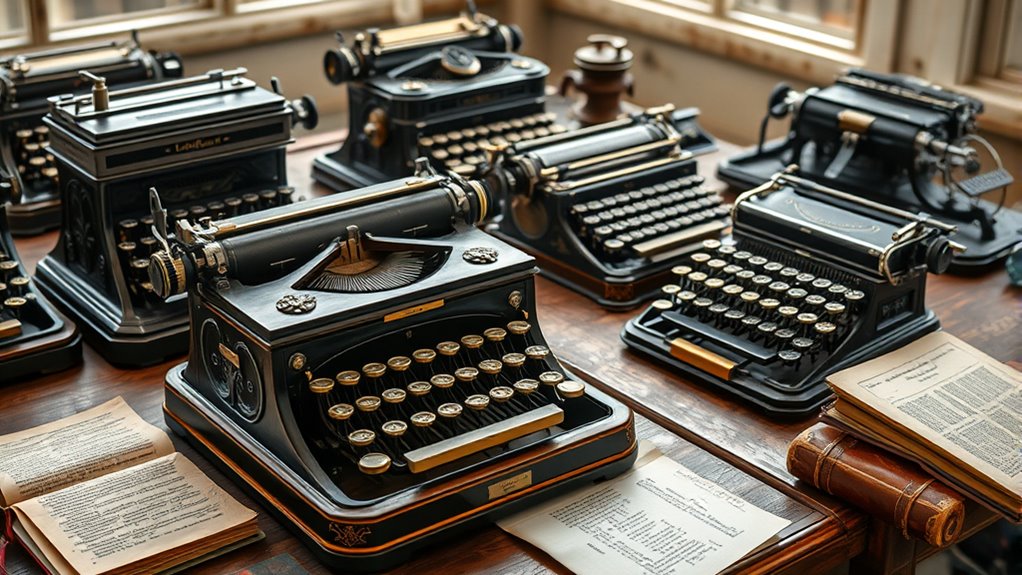

Typewriters and writing machines of the 1800s revolutionized how you communicate by turning handwritten work into faster, more uniform, and professional-looking documents. They introduced mechanical keys that struck ink onto paper, making typing quicker and more efficient. These innovations improved clarity and professionalism, transforming paperwork across businesses, journalism, and government. If you explore further, you’ll discover how these devices paved the way for modern office technology and changed society’s approach to written communication.

Get art and craft supplies delivered free — and shop member deals
- Fast, free delivery on millions of items
- Access to Prime Big Deal Days deals on October 6–7
- Prime Video, Amazon Music and more included
Key Takeaways
- The 1800s saw the invention of mechanical typewriters like Sholes’ 1868 model, introducing the QWERTY layout.
- Typewriters replaced handwritten documents, offering faster, more legible, and professional text production.
- Early models used typebars and inked ribbons, enhancing efficiency and reducing errors compared to manual writing.
- Innovations included features like the spacebar, shift keys, and carriage return, improving usability and reliability.
- They revolutionized communication, influencing office work, journalism, and societal expectations for speed and clarity.
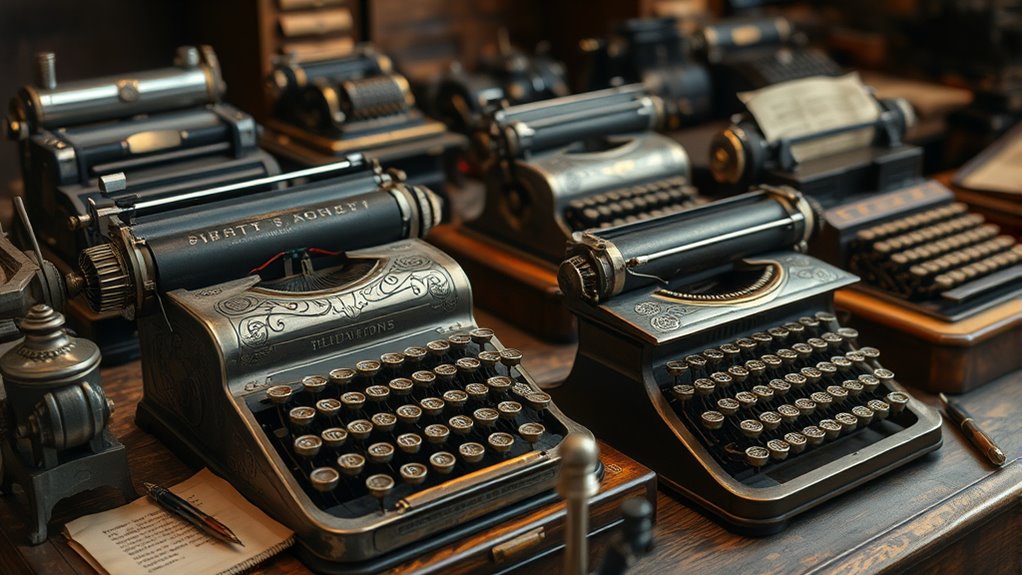
Have you ever wondered how people in the 1800s transformed handwritten documents into typed text? It all began with the invention of the typewriter, a device that revolutionized communication and record-keeping. The introduction of these machines marked a significant milestone in the historical impact of written correspondence. Before their advent, clerks and writers relied solely on ink and paper, manually forming each letter with pen or quill, which was time-consuming and prone to errors. The typewriter changed that by providing a faster, more efficient way to produce consistent, legible text. It wasn’t just about speed; it also elevated the professionalism of documents, making business correspondence, journalism, and personal letters clearer and more uniform. This shift had a profound influence on the way information was shared, stored, and preserved, shaping modern communication practices. The mechanical innovations of the 1800s improved not only the functionality but also the mechanical design of these devices, enhancing their reliability and ease of use.
The development of the typewriter was driven by a series of mechanical innovations that improved functionality and usability. Early models, like Christopher Latham Sholes’ 1868 typewriter, introduced a QWERTY keyboard layout still in use today. These innovations included the creation of a mechanical arm or typebar for each key, which struck an inked ribbon and pressed onto paper, producing the letter. The mechanical design allowed for rapid typing, reducing the physical effort needed compared to handwriting. Over time, improvements such as the addition of the spacebar, shift keys for capitalization, and carriage return mechanisms made the machines more efficient and user-friendly. These innovations weren’t just about enhancing speed—they also aimed to minimize jamming and misprints, increasing reliability and durability. The mechanical ingenuity behind these devices laid the groundwork for future developments in office equipment and automation.
As mechanical innovations advanced, typewriters became more accessible and versatile, influencing various sectors. They contributed to the rise of business offices, journalism, and literary publishing, transforming the scale and scope of written communication. Their impact extended beyond productivity; they symbolized progress and modernity. By enabling faster documentation, typewriters helped streamline administrative processes, making record-keeping more accurate and less labor-intensive, which was critical during a period of rapid industrial growth. The mechanical innovations of the 1800s didn’t just improve the devices themselves—they reshaped societal expectations about speed, clarity, and professionalism in written work. This technological leap paved the way for subsequent electronic and digital writing tools, making the typewriter a cornerstone in the evolution of communication technology.
As an affiliate, we earn on qualifying purchases.
Frequently Asked Questions
How Did Typewriters Influence Women’s Employment Opportunities in the 1800S?
Typewriters opened new employment opportunities for women, challenging traditional gender roles and allowing social mobility. You might have found work as a typist or secretary, roles previously limited to men, giving you financial independence. The accessibility of typewriting jobs helped women break into the workforce, fostering greater societal participation. This shift not only changed perceptions of women’s capabilities but also paved the way for broader gender equality in professional settings.
What Were the Most Common Materials Used in Early Typewriter Construction?
Think of early typewriters as sturdy bridges, built to last. You’ll find they mainly used metal frames for strength and wooden keys for comfort. The metal provided durability, supporting the machine’s structure, while the wooden keys offered a smoother, more natural feel for the typist. These materials combined to create reliable tools that transformed writing into a more efficient, accessible task, bridging the gap between manual effort and modern productivity.
How Did Typewriter Technology Evolve During the 1800S?
You see, during the 1800s, typewriter technology evolved through early mechanical innovations like the shift key and improved keyboard layouts, making typing easier and faster. Material advancements also played a role, with manufacturers using stronger metals and better plastics to enhance durability and functionality. These improvements transformed typewriters from bulky machines into more efficient, reliable tools, paving the way for modern electronic keyboards we use today.
What Were the Key Challenges Faced by Early Typewriter Inventors?
You face key challenges like mechanical limitations that made early typewriters prone to jamming and slow operation. Ergonomic challenges also hindered widespread use, as designs often caused user fatigue and discomfort. Inventors struggled to develop machines that balanced speed, reliability, and comfort. Overcoming these issues required innovative thinking, leading to improvements in mechanics and ergonomics that made typewriters more practical and accessible for everyday use.
How Did Typewriters Impact Literacy and Education During the 1800S?
You notice that typewriters improved literacy and education by making writing more consistent and accessible. As you use them, handwriting accuracy declines, but overall literacy rates rise because more people can produce clear, legible documents quickly. This shift helps students and writers focus on ideas rather than perfect penmanship, opening new opportunities for learning and communication across different social classes.
As an affiliate, we earn on qualifying purchases.
Conclusion
By understanding the evolution of 1800s typewriters, you see how they revolutionized communication—speeding up business and personal correspondence. Did you know that by 1890, over 100,000 typewriters were in use across the United States? This statistic highlights just how quickly these machines transformed written work. As you reflect on their impact, it’s clear that these early inventions laid the groundwork for modern keyboards, shaping the way you write today.
As an affiliate, we earn on qualifying purchases.
As an affiliate, we earn on qualifying purchases.
Fall Picks
fall essentials
As an affiliate, we earn on qualifying purchases.