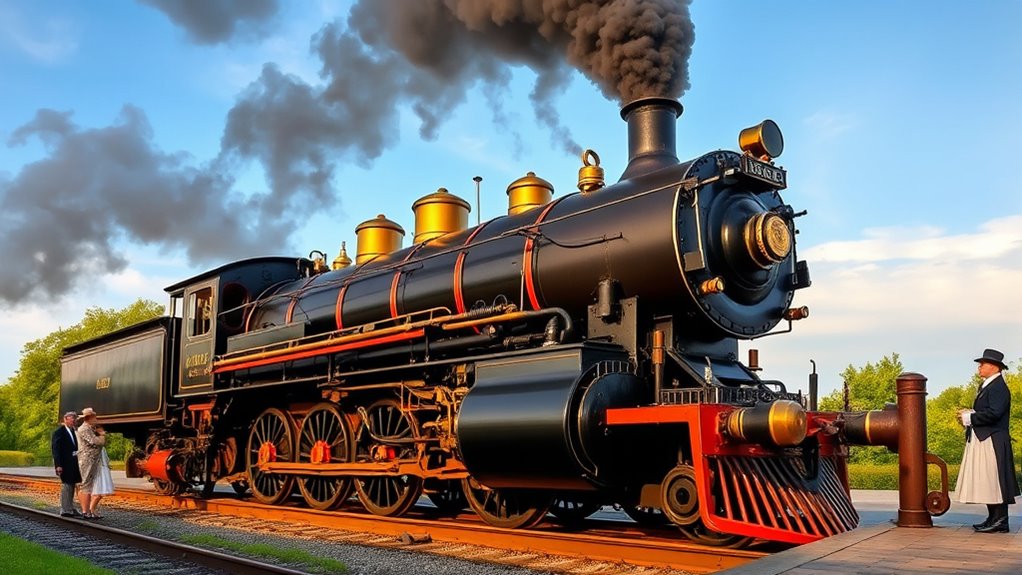

Steam locomotives transformed transportation during the Victorian era by making travel faster, more reliable, and connecting regions like never before. They fueled the rapid growth of railway networks, supported industries, and helped cities expand around station hubs. These powerful machines became symbols of progress and human ingenuity, inspiring technological advancements across many fields. If you want to discover how these engines shaped society and industry, keep exploring to uncover their fascinating impacts.
Key Takeaways
- Steam locomotives revolutionized Victorian travel by enabling faster, more reliable transportation across expanding railway networks.
- They symbolized societal progress and technological innovation during the Victorian era.
- Continuous engineering advancements improved power, speed, and safety of steam-powered trains.
- Railways supported urbanization, economic growth, and regional development along their routes.
- The iconic sounds and images of Victorian steam locomotives became enduring symbols of progress and industrial achievement.

Have you ever wondered how steam locomotives transformed transportation? These powerful machines revolutionized the way people and goods moved across distances, marking a pivotal moment in history. During the Victorian era, steam locomotives became symbols of progress, driven by advancements in railway technology that propelled society into a new age. Before their arrival, travel was slow and limited, but with the invention of steam-powered engines, the landscape of transportation changed dramatically. Railways expanded rapidly, connecting cities, towns, and even rural areas, making travel faster, more reliable, and more efficient than ever before.
Steam locomotives revolutionized travel, connecting regions faster and more reliably than ever before.
You might find it fascinating how the development of railway technology during the industrial revolution laid the foundation for modern transportation. Engineers and inventors experimented tirelessly, refining steam engine designs to improve power, speed, and safety. The early locomotives, though rudimentary, proved capable of hauling heavier loads over longer distances, which opened up new economic opportunities. Factories could now distribute their products farther and faster, supporting the growth of industries and fueling urbanization. This technological leap didn’t happen overnight; it was the result of continuous innovation driven by the demands of a rapidly changing society.
As you explore this era, you’ll see that steam locomotives became more than just machines—they became symbols of progress and human ingenuity. The expansion of railway networks transformed entire regions, shrinking travel times from days to mere hours. This not only boosted commerce but also fostered cultural exchange, allowing people to explore new places and ideas with unprecedented ease. The sound of chugging engines and the sight of smoke billowing from stacks became iconic images of the Victorian age, embodying the spirit of innovation that defined the period.
Moreover, the impact of railway technology went beyond transportation. It influenced engineering, manufacturing, and even social structures. The ability to move large quantities of goods quickly and cheaply led to a boom in trade and industry. Cities grew around railway hubs, and new towns emerged along the lines. The Victorian era’s fascination with progress was embodied in these steam-powered marvels, which symbolized human achievement and the relentless drive for advancement. In essence, steam locomotives didn’t just change how people traveled—they reshaped entire societies, laying the groundwork for the modern world.
Frequently Asked Questions
How Did Steam Locomotives Influence Victorian Society Beyond Transportation?
You see, steam locomotives transformed Victorian society by spurring urban development, as cities expanded around train routes. They also sparked cultural shifts, making travel more accessible and encouraging new social interactions. As you observe, these trains connected distant communities, fostering economic growth and changing lifestyles. This technological leap didn’t just move people; it reshaped societal structures, making Victorian life more dynamic, interconnected, and forward-looking.
What Were the Main Technological Innovations in Victorian-Era Steam Locomotives?
You might think Victorian steam locomotives were simple machines, but they featured key innovations like steam valve improvements and piston design advancements. These innovations increased efficiency and power, allowing trains to run faster and heavier loads. Imagine the engineers refining valve controls and piston structures, pushing the limits of steam technology. These breakthroughs transformed transportation, making travel and trade more reliable and connecting the world more closely than ever before.
How Did Victorian Steam Locomotives Impact Economic Growth and Industry?
You see that Victorian steam locomotives fueled industrial expansion and boosted economic growth by making transportation faster and more reliable. They increased labor mobility, allowing workers to reach factories and markets more easily. This improved trade, lowered costs, and encouraged regional development. As a result, industries thrived, cities expanded, and the economy transformed, paving the way for modern transportation systems and a more interconnected society.
What Safety Measures Were Implemented on Victorian Steam Locomotives?
Ever wonder how safety was maintained on Victorian steam locomotives? You’d see innovations like railway signaling to prevent collisions and measures similar to automotive safety, such as safety valves and brakes, which kept engines from overpressure and accidents. These systems weren’t perfect, but they drastically improved safety for crews and passengers, making train travel more reliable. Can you imagine the sense of security Victorian travelers felt with these precautions in place?
How Did Victorian Steam Locomotives Compare to Earlier Transportation Methods?
Compared to horse-drawn carriages and sailing ships, Victorian steam locomotives offered faster, more reliable transportation. You could travel longer distances in less time, and they weren’t affected by weather like sailing ships. Steam engines also handled heavier loads, transforming trade and industry. Unlike horse-drawn carriages, they required less manual effort, and unlike sailing ships, they provided scheduled, consistent service, revolutionizing transportation during the era.
Conclusion
You marvel at the power, you admire the engineering, you feel the nostalgia of a bygone era. Steam locomotives symbolize progress, passion, and innovation. They connect places, inspire dreams, and ignite curiosity. As you remember their mighty roar and graceful movement, you realize they’re more than just trains—they’re legends of the Victorian age. And in your heart, their timeless spirit continues to race forward, forever fueling your wonder and appreciation.