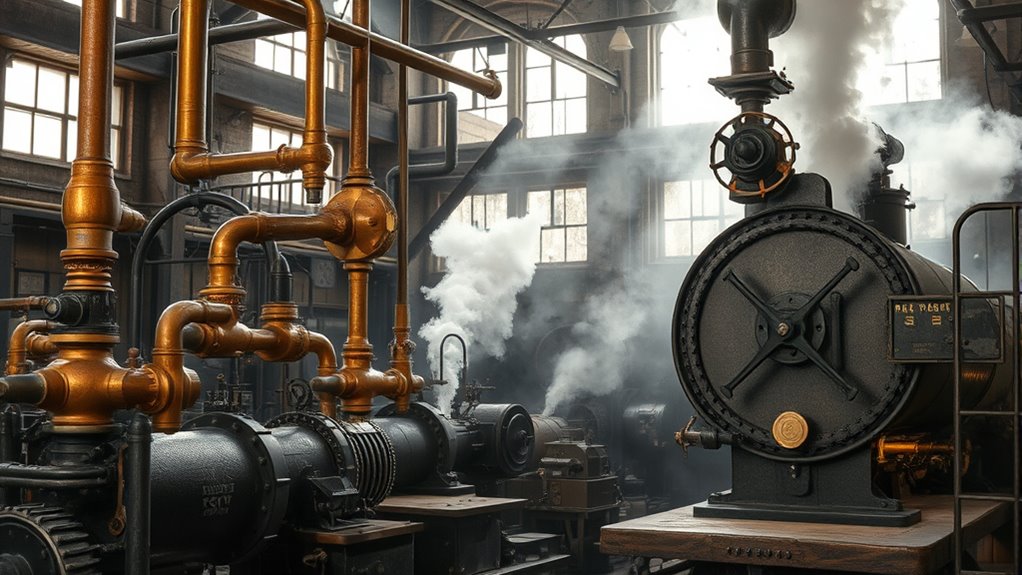

Steam technology, developed in the 19th century, still plays a vital role in modern industries. You’ll find it powering electricity plants through advanced turbines, supporting renewable energy systems like biomass and solar thermal collectors, and improving efficiency with innovative materials and automation. Although concerns about environmental impact remain, ongoing improvements focus on sustainability and cleaner solutions. If you want to discover how steam continues to shape modern progress, there’s much more to explore ahead.
Key Takeaways
- Modern industries still rely on steam turbines for efficient electricity generation and power plant operations.
- Advances in materials and automation have enhanced the efficiency and environmental friendliness of contemporary steam machinery.
- Steam principles underpin various transportation systems, including certain types of ships and locomotives.
- Integration of renewable energy sources like biomass and solar thermal collectors continues to utilize steam technology sustainably.
- Ongoing research aims to reduce environmental impacts, making steam systems more eco-friendly and aligned with modern sustainability standards.
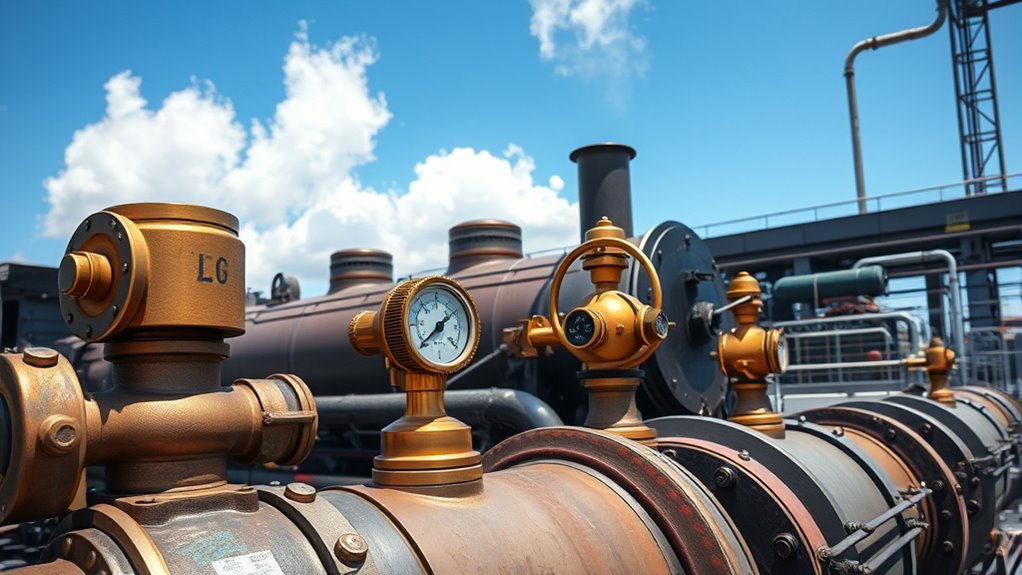
Steam technology has experienced a remarkable resurgence, transforming industries and shaping modern innovations. Though it originated in the 19th century, steam power remains relevant today, especially as industries seek sustainable and efficient solutions. Its enduring presence illustrates how classic technology can adapt to contemporary needs, fueling industrial innovation while raising questions about environmental impact. You might be surprised to learn that many modern applications, from power generation to transportation, still rely on steam principles. This blend of old and new demonstrates the versatility of steam technology and its capacity to evolve without losing its core advantages.
In the domain of industrial innovation, steam technology continues to serve as a foundation for developing more efficient machinery and processes. Engineers and scientists leverage the principles of steam to design systems that maximize energy output while minimizing waste. For example, advanced steam turbines operate with incredible precision, powering turbines in electricity plants worldwide. These innovations improve energy efficiency, reduce operational costs, and support sustainable development. By integrating cutting-edge materials and automation, modern steam systems are more reliable and environmentally friendly than their 19th-century predecessors. This evolution underscores how steam technology fosters industrial progress, offering scalable solutions for diverse sectors, from manufacturing to renewable energy.
At the same time, the environmental impact of steam technology remains a critical consideration. Historically, steam engines contributed considerably to air pollution, emitting smoke and greenhouse gases. Today, however, the focus has shifted toward cleaner, greener solutions. Modern steam systems are often paired with renewable energy sources, such as biomass or solar thermal collectors, to reduce reliance on fossil fuels. High-efficiency boilers and emission control devices further cut down pollutants, aligning steam technology with contemporary environmental standards. You also see innovations like waste heat recovery and closed-loop systems that reuse thermal energy, decreasing overall environmental footprint. While the environmental impact of steam technology has improved remarkably, ongoing research continues to address challenges, aiming to make steam-based systems even more sustainable and eco-friendly.

EODSAD Permanent Magnet Synchronous Generator 1500W AC14V PMA Low Rpm Alternator AC/DC Alternator Dual Phase Permanent Magnet Generator
Permanent Magnet Silicon Rectifier Generator Is a Combination Of Excitation Silicon Rectifier Generator And Permanent Magnet Constant Voltage…
As an affiliate, we earn on qualifying purchases.
As an affiliate, we earn on qualifying purchases.
Frequently Asked Questions
How Does Modern Steam Technology Compare Efficiency-Wise to Modern Engines?
You’ll find that modern steam technology, despite its historical efficiency, is generally less efficient than contemporary engines. Technological limitations, like lower thermal efficiency and higher fuel consumption, hinder its performance. While 19th-century steam engines revolutionized industry, today’s modern engines—like internal combustion and electric motors—outperform them in energy use and environmental impact. So, although steam still holds some niche applications, it’s largely surpassed in efficiency by modern technology.
Are There Any Current Innovations Improving Traditional Steam Engine Designs?
You’ll find that current innovations focus on improving traditional steam engine designs through historical preservation efforts and steam engine museums. Engineers experiment with modern materials and control systems to boost efficiency and safety, ensuring these engines remain relevant. These advancements help preserve historical technology while demonstrating their potential for sustainable energy solutions. Visiting steam engine museums offers insight into these innovations, inspiring further development and appreciation of this classic technology.
What Are the Environmental Impacts of Using Steam Technology Today?
Like Prometheus stealing fire, using steam technology today impacts the environment. You might notice increased industrial pollution, as burning coal or other fuels releases harmful emissions. Additionally, steam engines consume significant water, stressing local water supplies. While these traditional systems continue to serve specific needs, they contribute to environmental degradation, reminding you that even old tech leaves a modern footprint. Reducing these impacts requires innovative solutions and sustainable practices.
How Is Steam Technology Integrated Into Renewable Energy Systems?
You can find steam technology integrated into renewable energy systems through historical applications like concentrated solar power plants, where steam turbines generate electricity from solar heat. Additionally, modern advancements incorporate steam turbine integration with biomass and geothermal energy, making use of proven 19th-century principles. This combination boosts efficiency and sustainability, allowing renewable sources to produce clean power while leveraging the enduring strength of steam technology.
Can Steam Engines Be Used for Small-Scale or Portable Applications Today?
They say “necessity is the mother of invention,” and steam engines still find small-scale uses today. You can find miniature models and portable generators powered by steam, ideal for demonstrations or remote locations. While not common, these compact steam engines provide reliable power in niche applications where electricity isn’t accessible. With proper maintenance, they prove that old tech can still serve new purposes effectively.

MISOL Solar Collector of Solar Hot Water Heater/with 10 Evacuated Tubes/Heat Pipe Vacuum Tubes
solar collector of solar hot water heater
As an affiliate, we earn on qualifying purchases.
As an affiliate, we earn on qualifying purchases.
Conclusion
So, here you are, marveling at how 19th-century steam tech still powers our world. It’s almost poetic—humans cling to old inventions, pretending they’re cutting-edge. Who needs innovation when you’ve got steam, right? Maybe next, we’ll upgrade to horse-drawn carriages with Wi-Fi. But hey, as long as your morning coffee brews with a little steam, you can smugly enjoy the irony—technological progress, served hot and nostalgic.

Steam Generation from Biomass: Construction and Design of Large Boilers
As an affiliate, we earn on qualifying purchases.
As an affiliate, we earn on qualifying purchases.

Sunnytech Mini Low Temperature Stirling Engine Motor Steam Heat Education Model Toy LT002
FANTASTIC SMART THING WITH EXTREMELY WELL MADE WHICH RUNS LIKE A DREAM—-The stirling engine is produced with high…
As an affiliate, we earn on qualifying purchases.
As an affiliate, we earn on qualifying purchases.