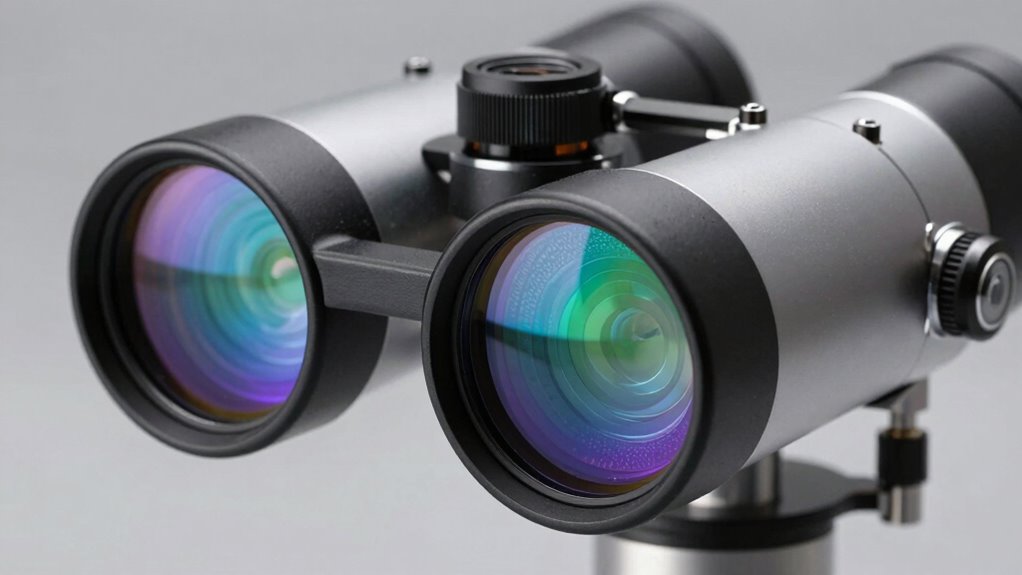

In goggles, lenses, and telescopes, optics help you see clearly by controlling how light bends and enters your eyes. Refraction shapes the light to create sharp images, while coatings reduce glare and enhance brightness. These features improve your vision in different conditions, whether underwater or through a telescope. By understanding how optics work, you’ll see how they make your viewing experience clearer and more detailed—there’s much more to discover if you keep exploring.

Get art and craft supplies delivered free — and shop member deals
- Fast, free delivery on millions of items
- Access to Prime Big Deal Days deals on October 6–7
- Prime Video, Amazon Music and more included
Key Takeaways
- Optics use refraction to focus and direct light for clear vision and image formation in goggles, lenses, and telescopes.
- Optical coatings reduce reflections and enhance light transmission, improving clarity and brightness of the viewed image.
- Precise lens shaping controls light entry, minimizes distortion, and enhances image sharpness in various optical devices.
- Advanced optical principles enable telescopes to observe faint celestial objects with high detail and contrast.
- The combination of refraction and coatings optimizes the performance and utility of optical devices across environments.
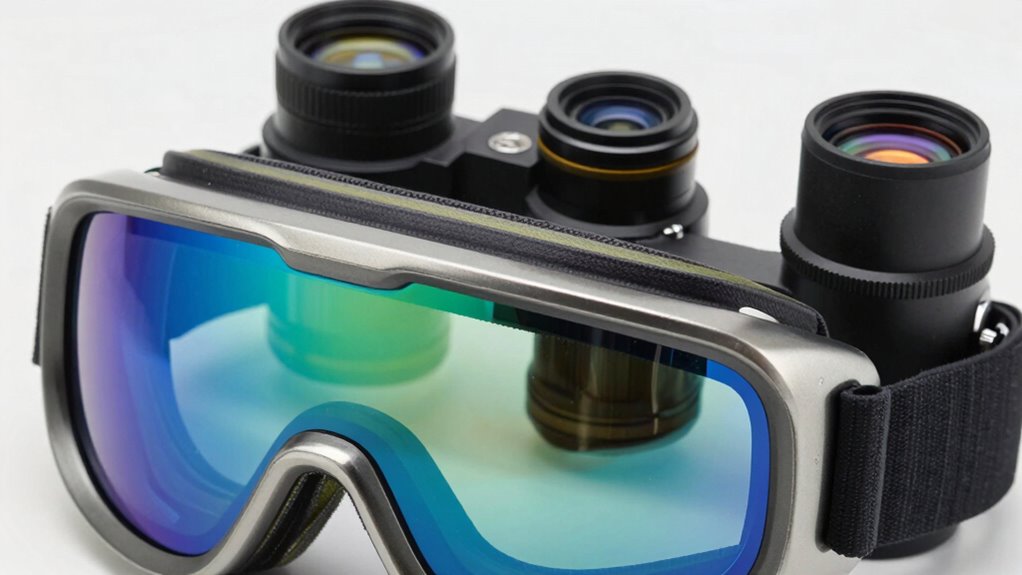
Have you ever wondered how goggles, lenses, and telescopes help us see more clearly? The secret lies in the fascinating science of optics, which manipulates light to improve your vision and expand your perspective. When light passes through these devices, it undergoes a process called light refraction. This bending of light occurs because of differences in the optical density between air and the material of the lens or glass. By carefully shaping the lens, optics can focus light precisely onto your eyes or a sensor, creating sharp images and enhancing clarity. This is especially important in telescopes, where you’re trying to see distant celestial objects in incredible detail. The way lenses bend light allows you to observe planets, stars, and galaxies with remarkable precision. Additionally, optical coatings are designed to improve the performance of these devices by reducing unwanted reflections and increasing light transmission.
Optical coatings play an equally essential role in guaranteeing that your vision remains clear and undistorted. These thin layers of material are applied to the surfaces of lenses to control how light interacts with them. Without optical coatings, lenses would reflect a significant amount of light, leading to glare, reduced contrast, and overall image degradation. Coatings can minimize reflections and increase light transmission, so more light reaches your eyes or the sensor. This results in brighter, clearer images, whether you’re wearing goggles for swimming, skiing, or diving, or using high-powered telescopes to explore space. Plus, optical coatings can also be designed to block certain wavelengths of light, like ultraviolet or infrared, protecting your eyes and improving the quality of your view. The principles of light refraction and optical coatings work together to optimize visual clarity and performance across various optical devices. Understanding how light behaves in different media further enhances the design of these devices, ensuring that the light is manipulated precisely for optimal results. Moreover, advancements in optical technology continue to push the boundaries of what these devices can achieve.
Optical coatings reduce reflections and boost light transmission, ensuring clearer, brighter images and better protection for your eyes.
In goggles, these principles guarantee that you see underwater or in bright environments without distortion or glare. The lenses are often treated with anti-reflective coatings, which reduce unwanted reflections that can impair vision. For telescopes, advanced optical coatings help maximize light collection from distant objects, allowing you to observe faint stars and nebulae without losing detail. The shape of the lenses, combined with these coatings, enables precise control over how light enters and travels through the device. This synergy of light refraction and optical coatings means you experience sharp images, better contrast, and a more immersive view.
In essence, the science of optics—through light refraction and optical coatings—makes all these devices work so effectively. They harness the behavior of light to enhance your vision, whether you’re exploring the depths of the ocean or the vastness of space. Without these principles, our ability to see so far and so clearly would be impossible.
high quality optical coated lenses
As an affiliate, we earn on qualifying purchases.
As an affiliate, we earn on qualifying purchases.
Frequently Asked Questions
How Do Anti-Fog Coatings Work on Optical Devices?
Anti-fog coatings work through specialized surface treatments that prevent moisture buildup on optical devices. They utilize anti-fog chemistry, which creates a thin, hydrophilic layer that spreads water droplets into a uniform film, reducing fog. When you apply these coatings, they help maintain clear vision by minimizing condensation. Regularly reapplying or choosing high-quality surface treatments guarantees your goggles, lenses, or telescopes stay fog-free even in humid or temperature-changing environments.
What Materials Are Commonly Used in High-Precision Lenses?
Think of high-precision lenses as master craftsmen’s tools—crafted from materials like fused silica, BK7 glass, and calcium fluoride. These materials offer exceptional durability and minimal distortion, ensuring your view stays sharp. Manufacturing precision is critical; it’s like tuning a fine instrument. You benefit from clear, accurate images because these materials resist environmental stresses and maintain optical clarity, making your observations reliable and true to life.
How Does Chromatic Aberration Affect Telescope Images?
Chromatic aberration causes colors to blur and distort your telescope images due to color dispersion. When different wavelengths of light focus at different points, you experience a focal shift, making celestial details less sharp. This effect reduces image clarity, especially for bright objects. To combat it, you can use specialized lenses or correctors that minimize color dispersion, helping you see clearer, more accurate astronomical details.
What Are the Latest Advancements in Optical Coating Technology?
You won’t believe the latest breakthroughs in optical coatings. Researchers now use nanostructured coatings that dramatically improve light transmission and durability. Quantum dot enhancements are revolutionizing how coatings absorb and emit light, leading to sharper, more vibrant images. These advancements make your optical devices more efficient and longer-lasting, opening new possibilities in imaging and astronomy. Stay tuned—this cutting-edge technology is transforming optics as we understand it.
How Do Environmental Factors Influence Optical Performance Over Time?
Environmental factors like moisture, UV exposure, and temperature fluctuations can cause environmental degradation, impacting your optical devices’ long-term durability. Over time, these elements can lead to coating deterioration, lens warping, or discoloration, reducing clarity and performance. To maintain peak function, it’s essential to protect your optics with proper sealing, regular cleaning, and storage in stable environments, ensuring they stay effective and durable despite environmental challenges.
underwater goggles with anti-reflective coating
As an affiliate, we earn on qualifying purchases.
As an affiliate, we earn on qualifying purchases.
Conclusion
In the end, optics is like the magic behind your favorite gear, transforming blurry images into clear, breathtaking views. Whether you’re diving with goggles, reading through lenses, or gazing at the stars through a telescope, understanding how optics works helps you appreciate the precision and craftsmanship involved. It’s like having a trusted guide on your adventure, making every moment sharper and more vivid. Without optics, these experiences would be like trying to see through a fog—dim and frustrating.
telescopes with high light transmission
As an affiliate, we earn on qualifying purchases.
As an affiliate, we earn on qualifying purchases.
polarized optical coatings for lenses
As an affiliate, we earn on qualifying purchases.
As an affiliate, we earn on qualifying purchases.
Evergreen bestsellers Picks
bestsellers
As an affiliate, we earn on qualifying purchases.