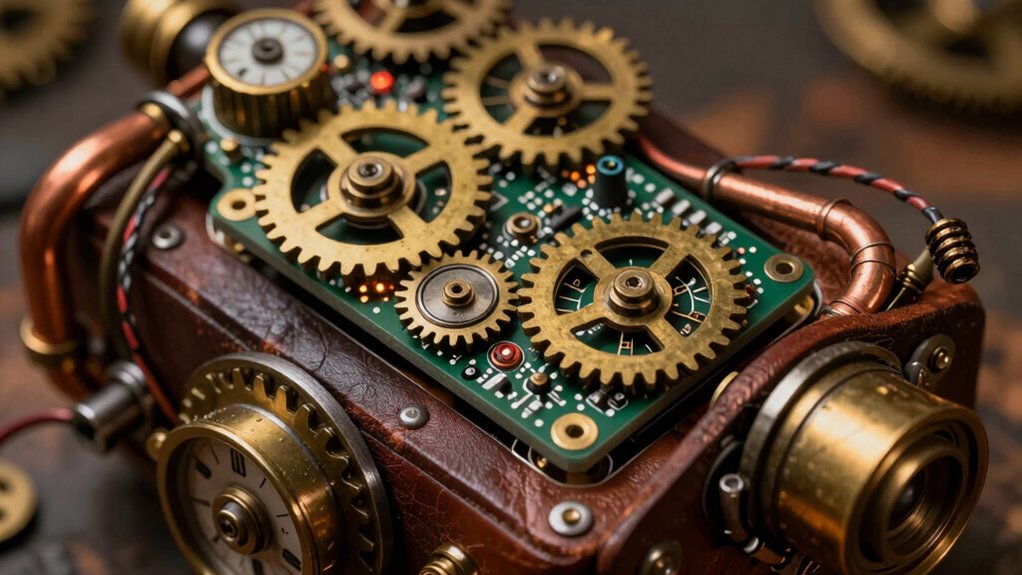

You use microcontrollers to bring your steampunk props to life by controlling lighting, sound, and movement. They help you integrate complex electronics behind gears and clockwork, making your creations animate and interact. You’ll wire components neatly, use power sources like batteries, and program the microcontroller for synchronized effects. Proper grounding and insulation guarantee safety and reliability. To master these techniques and create stunning, functional props, exploring further will give you all the essential tips and tricks.

Get art and craft supplies delivered free — and shop member deals
- Fast, free delivery on millions of items
- Access to Prime Big Deal Days deals on October 6–7
- Prime Video, Amazon Music and more included
Key Takeaways
- Microcontrollers control lighting, sound, and movement to create dynamic steampunk effects.
- They enable synchronization of multiple electronic features for seamless prop operation.
- Makers embed microcontrollers discreetly behind gears or within mechanical components for authenticity.
- They use programming to automate complex animations and responses in steampunk gadgets.
- Proper wiring and power management ensure reliable, safe functionality of electronic features.
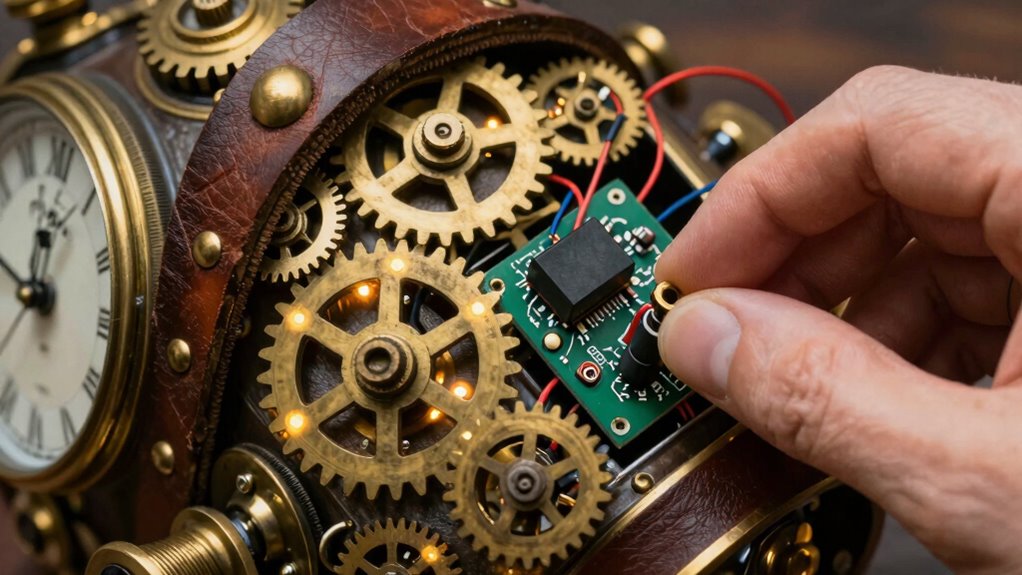
In the world of steampunk prop-making, microcontrollers have become vital tools that enable makers to bring their intricate designs to life. Whether you’re creating a glowing automaton or an animated gadget, understanding how to incorporate microcontrollers effectively is key. You’ll find that mastering soldering techniques is essential for connecting your components securely and reliably. Precise soldering ensures your circuit connections are stable, preventing glitches during operation. Use a fine-tipped soldering iron and high-quality solder to make neat joints, and always work in a well-ventilated area to avoid fumes. As you work through your project, pay attention to grounding and insulation to prevent short circuits, especially when working with complex wiring setups. Proper grounding and insulation are crucial for circuit safety and reliable operation. Power supply options play a significant role in your prop’s performance. You need to choose the right power source that matches your microcontroller’s voltage and current requirements. Common options include batteries, USB power adapters, or even small AC/DC converters if your prop demands higher wattage. Batteries like lithium-ion or rechargeable AA packs offer portability, making your prop ready to display anywhere. For more elaborate projects, you might consider integrating a power management system, such as voltage regulators or step-down converters, to guarantee consistent power delivery. Proper power management not only enhances safety but also prolongs the lifespan of your electronic components. When integrating microcontrollers into your steampunk props, think about how you’ll hide or incorporate the electronics into your design. You might embed a small circuit board behind a gear or within a mechanical chest, ensuring it remains concealed yet accessible for maintenance. Using soldering techniques that emphasize neatness and security helps keep your build clean and functional. Additionally, plan your wiring layout carefully to avoid tangles and to facilitate troubleshooting. As technology advances, exploring power options like wireless power transfer can open new creative possibilities, especially for mobile or display-only props. Selecting a power source that provides stable energy is essential for consistent operation, especially when incorporating features like lighting effects, sound, or movement. Choose the most convenient source that aligns with your prop’s mobility and display needs, making certain your microcontroller has continuous, reliable power. This approach guarantees your prop operates smoothly, with lighting effects, sound, or movement synchronized perfectly.
microcontroller development kit for beginners
As an affiliate, we earn on qualifying purchases.
As an affiliate, we earn on qualifying purchases.
Frequently Asked Questions
What Are the Best Microcontrollers for Beginners in Steampunk Projects?
The best microcontrollers for beginners in steampunk projects are Arduino and ESP32. They’re user-friendly, support sensor integration, and have good power management options. Arduino’s straightforward coding makes it easy to add lights, sounds, or motor control, perfect for steampunk props. ESP32 offers more advanced features, like Wi-Fi, for more complex projects. Both are affordable, widely supported, and ideal for those just starting out in creative, interactive steampunk builds.
How Do Microcontrollers Enhance the Realism of Steampunk Props?
Imagine your steampunk prop comes alive as microcontrollers boost its realism. You integrate LEDs that flicker like ancient machinery and set up sound activation that triggers mysterious noises, immersing viewers deeper into your creation. This seamless combination of LED integration and sound effects creates an authentic, mesmerizing experience. The microcontroller orchestrates all, making your prop feel like a real, functioning piece of a bygone era, heightening the suspense and wonder.
Can Microcontrollers Be Integrated With Traditional Steampunk Aesthetics?
Yes, you can integrate microcontrollers with traditional steampunk aesthetics by blending vintage technology with modern electronics. You might hide microcontroller components behind brass fittings, gears, or aged wood to maintain the authentic look. Use retro-style displays, switches, and dials to give your prop a vintage vibe while enabling smart features. This fusion preserves the steampunk aesthetic while adding the versatility and interactivity of microcontrollers, making your props both beautiful and functional.
What Safety Precautions Are Necessary When Working With Microcontrollers?
Did you know that nearly 30% of DIY electronics accidents involve electrical safety issues? When working with microcontrollers, you must prioritize electrical safety to prevent fire hazards. Always use proper insulation, avoid overloading circuits, and double-check connections before powering up. Keep your workspace dry, wear safety gear, and disconnect power when making adjustments. These precautions help you create stunning steampunk props safely and confidently.
How Do Makers Troubleshoot Microcontroller Failures in Props?
When troubleshooting microcontroller failures in props, you start by checking power management, ensuring your power supply is stable and connections are solid. Next, verify sensor calibration to confirm sensors are functioning correctly. Use a multimeter to test circuitry, and reset or reprogram the microcontroller if needed. If issues persist, isolate components, replace faulty parts, and review your code for bugs. This systematic approach helps you quickly identify and fix problems.
Arduino compatible microcontroller for prop projects
As an affiliate, we earn on qualifying purchases.
As an affiliate, we earn on qualifying purchases.
Conclusion
As you delve into steampunk prop creation, you’ll find microcontrollers are game-changers, adding authentic, interactive elements that captivate. Did you know that over 60% of makers now incorporate microcontrollers into their projects? This trend highlights how tech-savvy craftsmanship is shaping the future of steampunk. Embrace these tools, and you’ll craft props that not only look incredible but also surprise and delight everyone who sees them. Your next masterpiece is just a microcontroller away!
LED lighting modules for microcontrollers
As an affiliate, we earn on qualifying purchases.
As an affiliate, we earn on qualifying purchases.
As an affiliate, we earn on qualifying purchases.
Fall Picks
fall essentials
As an affiliate, we earn on qualifying purchases.