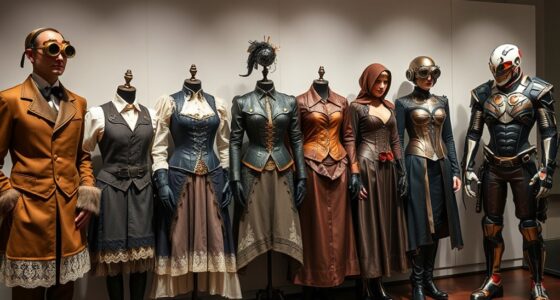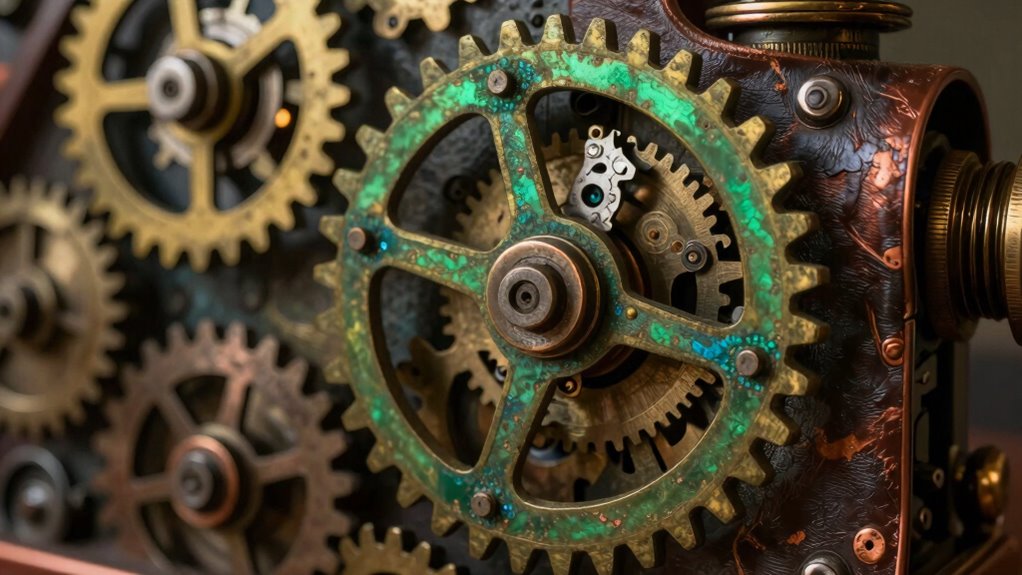

To create a steampunk color palette that works, start by blending earthy, muted tones like deep browns, tarnished coppers, and weathered brass to evoke vintage machinery. Incorporate metallic finishes such as antique brass or oxidized copper for shine and character. Balance these with textured materials like distressed leather and aged wood, adding accent colors like dark reds or smoky grays for depth. If you want to craft a cohesive, layered industrial look, there’s more to discover below.

Get art and craft supplies delivered free — and shop member deals
- Fast, free delivery on millions of items
- Access to Prime Big Deal Days deals on October 6–7
- Prime Video, Amazon Music and more included
Key Takeaways
- Use warm, muted tones like tarnished copper, weathered brass, and deep browns to establish an authentic vintage industrial base.
- Incorporate textured surfaces such as distressed leather and aged wood to add depth and tactile interest.
- Add accent colors like deep emeralds, dark reds, or smoky grays sparingly to create visual contrast and layered interest.
- Combine metallic finishes like antique brass and oxidized copper to enhance the vintage, industrial feel.
- Maintain color consistency and balance textures with metallics for a cohesive, immersive steampunk environment.
Steampunk design is all about blending vintage industrial elements with a rich, earthy color scheme that evokes the era of steam-powered machinery. When you aim to create a steampunk-inspired palette, start by focusing on colors that reflect the gritty, mechanical world you want to portray. Think deep browns, tarnished coppers, and weathered brass—colors that mimic the patina of vintage machinery. These hues set the foundation for your palette, anchoring your design in a sense of history and industrial charm. Incorporate warm, muted tones that evoke aged metal and worn leather, giving your space or project a sense of authenticity.
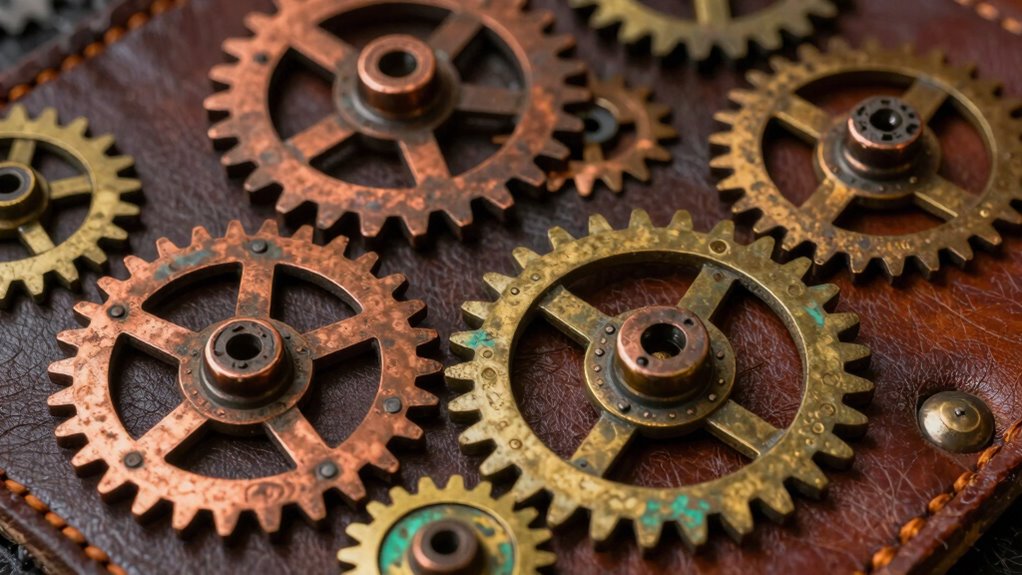
To build on that base, incorporate industrial textures that complement your color choices. Think of rough, textured surfaces like riveted metal, distressed leather, and aged wood. These textures add depth and tactile interest, making your palette more immersive. When selecting hues, consider how these textures interact with the colors. For instance, a rusty orange or a muted olive green pairs beautifully with industrial textures, creating a visual harmony that feels both vintage and mechanical. The key is to balance the richness of your colors with the raw, tactile feel of industrial materials. This contrast enhances the vintage machinery aesthetic and makes your palette more dynamic.
You should also consider accents that highlight the steampunk vibe. Deep emeralds, dark reds, and smoky grays work well as pops of color against the earthy base. These accents can be used sparingly in accessories, small furniture pieces, or decorative elements to add visual interest without overwhelming the overall scheme. When you choose these hues, think about how they contrast or complement the primary colors, creating a layered, nuanced look typical of steampunk design. Additionally, understanding color management techniques can help you ensure consistent and accurate hues across various materials and digital or print formats.
Finally, keep in mind that the beauty of a steampunk palette lies in its versatility. You can mix and match metallic finishes—brushed nickel, antique brass, or oxidized copper—to add shine and variation. These metallics, combined with your earthy tones and industrial textures, make your environment feel both vintage and industrial, alive with character and history. Incorporating different metallic finishes can further enhance the layered complexity of your design. By thoughtfully selecting your colors and textures, you craft a cohesive steampunk palette that’s both authentic and visually enthralling, bringing your vintage machinery-inspired world to life with every detail.
As an affiliate, we earn on qualifying purchases.
Frequently Asked Questions
How Do I Balance Vibrant and Muted Colors in a Steampunk Palette?
To balance vibrant and muted colors in a steampunk palette, you should start with Victorian era hues as your base, like rich browns and deep reds. Then, introduce metallic tone pairing, such as brass or copper accents, to add vibrancy. Use muted shades to ground the palette, allowing the metallic and vibrant tones to pop without overwhelming. This creates a harmonious, authentic steampunk look that’s both lively and sophisticated.
Can I Incorporate Neon Colors Into a Steampunk Color Scheme?
You can definitely incorporate neon colors into a steampunk palette, but do so carefully—think of it as adding a splash of color to a classic painting. Neon glow introduces a futuristic contrast that can make your design pop, creating an eye-catching fusion of old-world charm and modern edge. Use neon sparingly, pairing it with muted, earthy tones to maintain the steampunk vibe while highlighting those vibrant accents.
What Color Combinations Evoke a Vintage Industrial Feel?
To evoke a vintage industrial feel, you should combine Victorian era hues like deep browns, muted greens, and dusty reds with metallic accents such as brass, copper, or iron. These colors create a nostalgic, rugged atmosphere. Use darker shades as your base and highlight with metallic touches to add depth. This combination instantly transports you to an industrial Victorian setting, blending old-world charm with mechanical grit.
How Do I Choose Accent Colors That Enhance Steampunk Aesthetics?
Think of your accent colors as the jewelry to Victorian-inspired hues—small but impactful. Use metallic accent shades like bronze or brass to add shimmer, making your palette feel alive. I once crafted a steampunk lamp with deep copper tones, and a splash of emerald green sparkled like a jewel, elevating the entire piece. Choose metallic shades that complement your base colors, and your steampunk aesthetic will truly shine.
What Are Common Color Mistakes to Avoid in Steampunk Design?
Avoid using metallic hues excessively, as they can overwhelm your steampunk design and make it look too shiny or artificial. Instead, balance metallic accents with rich earth tone palettes like browns, greens, and deep reds to evoke a vintage, industrial feel. Steer clear of overly bright or pastel colors, which clash with the gritty, vintage aesthetic. Focus on harmony between warm, muted tones and metallics for an authentic steampunk look.
industrial textured leather furniture
As an affiliate, we earn on qualifying purchases.
As an affiliate, we earn on qualifying purchases.
Conclusion
Remember, beauty is in the eye of the beholder, so trust your instincts as you craft your steampunk palette. By combining rich browns, metallics, and vintage hues, you’ll create a vibrant, cohesive look that captures the essence of the genre. Don’t be afraid to experiment and make it your own. With patience and a keen eye, you’ll turn your palette into an enchanting work of art—just like they say, “Rome wasn’t built in a day.”
As an affiliate, we earn on qualifying purchases.
As an affiliate, we earn on qualifying purchases.
Halloween Picks
halloween
As an affiliate, we earn on qualifying purchases.