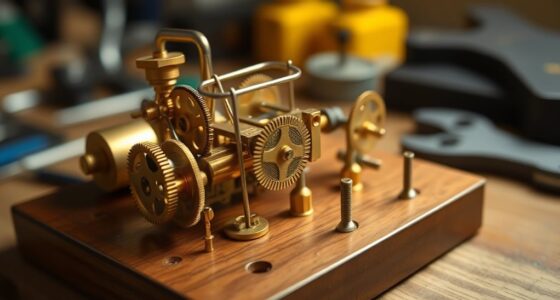
To create a steampunk guitar or violin, blend Victorian elegance with industrial details like brass fittings, gear accents, and riveted leather. Customize with gear-driven tuners, vintage pressure gauges, and steam valve-inspired tailpieces for an authentic look. Use metallic finishes, patina techniques, and LED lighting to enhance the aged, industrial aesthetic. Focus on seamless integration of mechanical elements that contribute both to style and function. Continue exploring for more tips to craft your unique steampunk instrument.
Key Takeaways
- Incorporate Victorian-vintage industrial elements like brass fittings, gears, riveted leather, and distressed metal parts for authentic steampunk aesthetics.
- Customize instruments with gear-driven tuning pegs, faux pressure gauges, pipes, and brass tailpieces for functional steampunk flair.
- Embed mechanical components such as gears, valves, and metallic accents into the body or fretboard, ensuring seamless integration.
- Add warm lighting, weathered finishes, and patina to enhance aged metal effects and highlight intricate steampunk details.
- Ensure all modifications comply with safety standards and legal regulations while reflecting personal artistic storytelling.
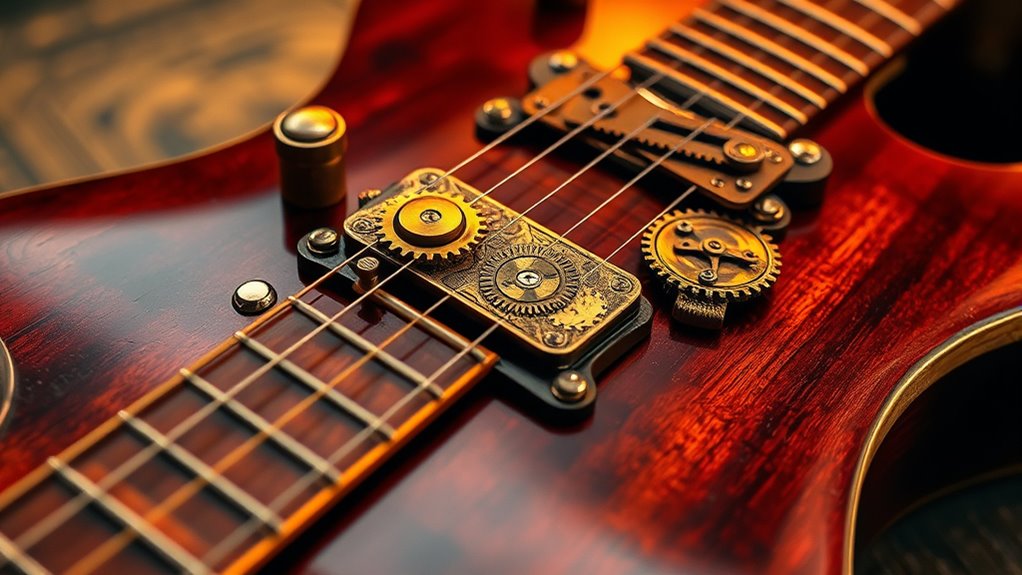
Transforming a musical instrument into a steampunk masterpiece is an exciting way to showcase your creativity and craftsmanship. When you immerse yourself in steampunk aesthetics, you’re blending vintage industrial charm with a touch of Victorian elegance, creating a unique look that makes your instrument stand out. Whether you’re customizing a guitar or a violin, this style invites you to incorporate brass fittings, gear accents, and riveted leather details. The goal is to turn your instrument into a functional work of art that reflects the steampunk vision—combining history, innovation, and artistry.
Transform your instrument into a steampunk masterpiece blending Victorian elegance with industrial charm.
Instrument customization in this setting goes beyond just painting or adding decorative elements. It’s about integrating mechanical components and metallic finishes that enhance both the aesthetic appeal and the instrument’s character. For guitars, you might replace standard tuning pegs with gear-driven tuners or add faux pressure gauges and small pipes along the neck for a more industrial look. For violins, consider adding brass fittings or a custom tailpiece that resembles a miniature steam valve. These enhancements not only boost visual appeal but can also influence the instrument’s overall feel, making it more tactile and engaging to play.
When you approach this project, think of the instrument as a blank canvas for your steampunk vision. Source vintage or distressed metal parts—cogs, wheels, valves—that can be integrated seamlessly into the design. Welding or gluing these components onto the body, fretboard, or tailpiece can create a layered, textured effect that embodies the steampunk aesthetic. It’s important to strike a balance between form and function; you want your modifications to be visually striking but also maintain the instrument’s playability and sound quality.
Lighting can also be a compelling addition to your steampunk instrument. Small LED lights embedded into the design, mimicking the glow of vintage machinery, can add an extra layer of intrigue. Use warm amber or copper tones to enhance the aged look, and consider weathering or patina techniques to give the metal parts an authentic, antiqued finish. Remember, the key to successful instrument customization lies in your attention to detail and your ability to harmonize the mechanical elements with the musical purpose.
Additionally, understanding the importance of local laws and regulations related to metalwork and modifications can help ensure your project complies with safety standards and legal requirements. Ultimately, transforming your guitar or violin into a steampunk piece isn’t just about aesthetics; it’s about crafting an instrument that speaks to your personality and style. It’s a chance to blend craftsmanship with imagination, creating something that’s not only visually engaging but also uniquely yours to perform with. Every gear, rivet, and metallic detail should tell a story—your story—about innovation, artistry, and a love for both music and the steampunk universe.
Frequently Asked Questions
What Are the Best Materials for Steampunk Guitar Modifications?
For steampunk guitar modifications, you should choose materials that enhance steampunk aesthetics while maintaining historical accuracy. Brass and copper are ideal for fittings and accents, giving an authentic vintage look. Leather works well for straps and embellishments, adding texture and depth. Incorporate gears, clock parts, and rivets to emphasize the steampunk vibe. These materials blend well, creating a cohesive, visually striking design that captures the essence of steampunk style.
How Can I Ensure My Mod Is Lightweight and Ergonomic?
Did you know that using lightweight materials can reduce a guitar’s weight by up to 30%? To guarantee your mod is lightweight and ergonomic, choose materials like aluminum or carbon fiber for parts, and avoid heavy metals. Prioritize ergonomic design by shaping the instrument for comfort, balancing weight distribution, and adding padded straps or grips. This approach keeps your instrument comfortable to play, even during long performances.
Are There Specific Design Themes for Steampunk Violin Mods?
You can incorporate Victorian elegance and industrial motifs into your steampunk violin mods by choosing ornate, vintage-inspired embellishments like brass filigree or intricate engravings. Use gears, cogs, and pipes to emphasize the industrial theme, blending elegance with mechanical elements. Focus on balanced, ergonomic designs that are both visually striking and comfortable to play, ensuring your mod captures the perfect mix of Victorian charm and steampunk industrial flair.
How Do I Maintain Sound Quality After a Steampunk Modification?
To maintain sound resonance and tone preservation after a steampunk modification, focus on selecting high-quality materials and precise adjustments. Make certain that any added components don’t obstruct the instrument’s natural vibrations, and regularly inspect for loose fittings or damage. Keep the instrument clean and well-maintained, and consider consulting a luthier or expert to fine-tune your modifications, so your instrument retains its original sound quality alongside its steampunk aesthetic.
Can I Add Electronic Effects to a Steampunk Guitar or Violin?
Yes, you can add electronic effects to a steampunk guitar or violin. You’ll want to incorporate digital effects pedals or processors, which can be integrated into your instrument’s circuit. Carefully plan your circuit integration to guarantee the effects don’t interfere with the steampunk aesthetic. Use discreet wiring and components that blend with the vintage look, and test thoroughly to maintain sound quality while achieving your desired electronic effects.
Conclusion
As you step back to admire your steampunk masterpiece, your instrument becomes a treasure chest of creativity and craftsmanship. Every gear, valve, and rivet tells a story, transforming your music into an adventurous voyage through time. Think of your modded guitar or violin as a steampunk ship, sailing through a sea of melodies and inventions. With each note, you’re not just playing music—you’re steering a vessel into a world where art and invention collide.