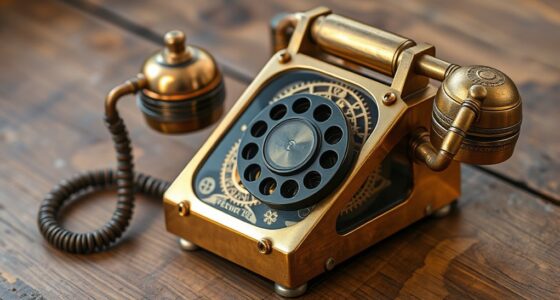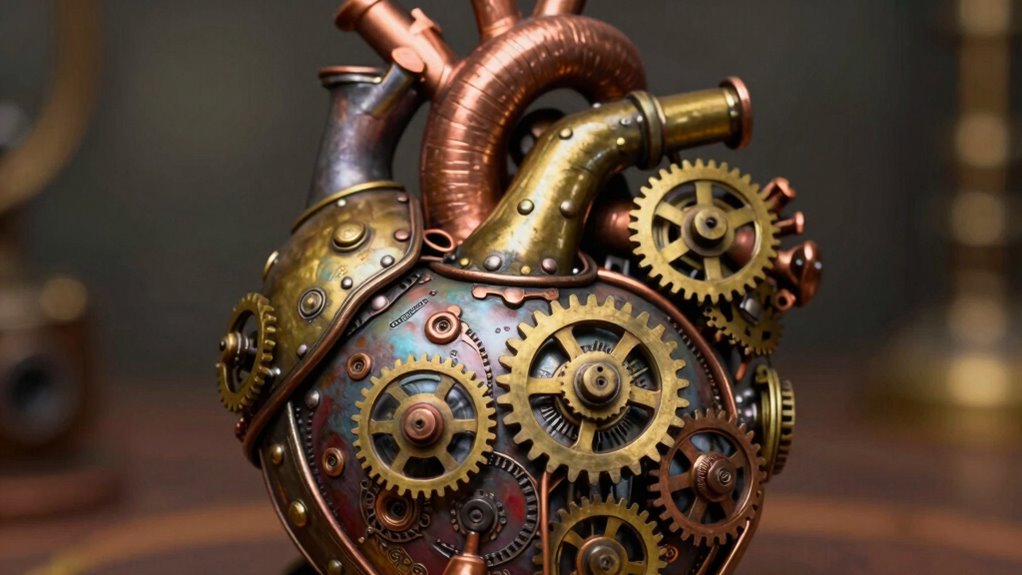
To create a DIY steampunk mechanical heart prop, start by gathering vintage-inspired materials like brass, copper, aged wood, and scrap metal from salvage yards or craft stores. Sketch your design with Victorian motifs, focusing on gear mechanisms, pistons, and tubing. Assemble carefully, incorporating authentic details such as rivets, brass fittings, and steam pipes, then add LED lighting for a glowing effect. If you keep exploring, you’ll find tips to bring your steampunk heart to life with impressive realism and craftsmanship.

Get art and craft supplies delivered free with Prime
- Fast, free delivery on millions of items
- Prime Video, Amazon Music and more included
- Member-only deals all year
Key Takeaways
- Use vintage clock parts, gears, and medical devices to create an authentic Victorian-inspired steampunk heart.
- Source materials like brass, copper, iron, and aged wood from salvage yards and specialty shops for realism.
- Sketch detailed designs focusing on gear placement, pistons, tubing, and Victorian motifs before assembly.
- Assemble components carefully, adding rivets, brass fittings, and lighting effects to enhance authenticity and visual impact.
- Finish with patina and detailed touches to ensure durability, aesthetic appeal, and storytelling richness.
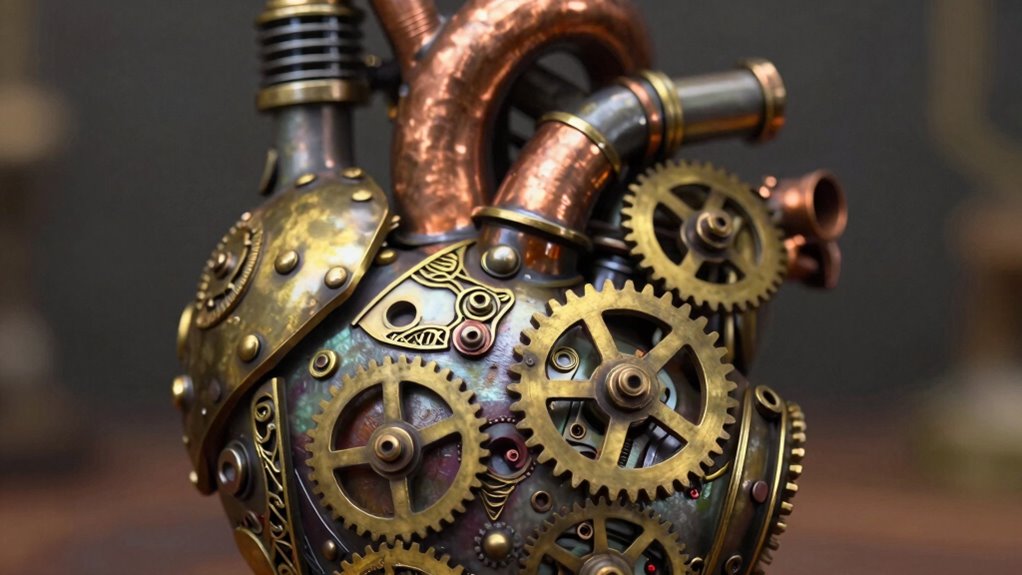
Ever wondered how to craft a striking steampunk-inspired mechanical heart prop that combines artistry with engineering? To start, understanding your historical inspirations is essential. Steampunk draws heavily from the Victorian era, blending the elegance of 19th-century design with industrial innovation. Look at old clockworks, vintage medical devices, and steam-powered machinery for ideas. These elements give your prop authenticity and a rich aesthetic rooted in history. Research antique brass gadgets, gear mechanisms, and Victorian-era illustrations to get a clearer picture of the style you want to emulate. By grounding your design in these historical inspirations, your mechanical heart gains a sense of story and depth beyond just its appearance. Incorporating vintage medical devices can also add a unique, authentic touch to your creation.
Steampunk heart designs draw on Victorian clockworks and vintage machinery for authenticity and storytelling depth.
Material sourcing is your next crucial step. You’ll want to gather materials that evoke the steampunk vibe—think brass, copper, iron, and aged wood. These materials not only look authentic but also add weight and texture that bring realism to your prop. You can find many of these at craft stores, salvage yards, or online specialty shops. Old clock parts, vintage watch gears, and discarded metal pieces serve as excellent foundational components. Don’t forget to pick up some strong adhesives, small screws, and optional paint or patina solutions to give your piece an aged, weathered look. Sourcing quality materials is essential because it influences both the durability and aesthetic appeal of your final creation. Sometimes, repurposing or upcycling old objects saves money and boosts the authenticity of your design.
Once you have your materials, start planning your design. Sketch out your mechanical heart, paying close attention to the placement of gears, pistons, and tubing. Think of how you can incorporate Victorian motifs or industrial elements into your build. When assembling, focus on making sure each piece fits snugly and functions as part of a cohesive whole. Use your knowledge of historical inspirations to add details like rivets, decorative brass fittings, or steam pipes. As you put everything together, consider how lighting might enhance your creation—LEDs hidden inside can simulate glowing elements, adding an extra layer of realism.
Throughout the process, keep your inspiration grounded in history and your materials authentic. This approach helps you craft a mechanical heart that’s not only visually compelling but also rich with storytelling. With patience and precision, you’ll produce a stunning steampunk prop that seamlessly blends artistic design with mechanical ingenuity—making your DIY project truly stand out.
Popular right now

TCL 85 Designer Series QD-Mini LED TV (Model 85A400U) with Google Smart TV

Vitamix Propel Series 750 Professional-Grade Blender, 4 Programs, Black

De'Longhi Dinamica Plus Fully Automatic Espresso Machine
As an affiliate, we earn on qualifying purchases.
Frequently Asked Questions
What Safety Precautions Are Recommended During Assembly?
You should always wear safety gear like goggles, gloves, and a dust mask to protect yourself during assembly. Follow essential assembly tips, such as working in a well-ventilated area and handling tools carefully. Keep your workspace organized to avoid accidents, and read instructions thoroughly before starting. If using power tools or hot glue, take extra precautions, and never rush the process. Prioritizing safety guarantees a smooth, injury-free assembly experience.
Can the Prop Be Powered Electronically?
Yes, your prop can be powered electronically, transforming it into a mesmerizing, pulsating marvel of steampunk ingenuity. To do this, you’ll harness electric power and master wiring techniques that turn your creation into a living, breathing masterpiece. Carefully connect LEDs, motors, or circuits, ensuring safe insulation and correct polarity. With precise wiring, your mechanical heart will beat with electrifying authenticity, enthralling everyone with its steampunk charm and technical brilliance.
What Are the Best Materials for Durability?
For durability, you should prioritize material selection carefully. Opt for sturdy metals like brass or aluminum, which withstand wear and tear well. Incorporate strong plastics such as ABS for internal parts to keep the structure lightweight yet durable. Consider factors like resistance to corrosion, weight, and ease of shaping when choosing materials. These durability factors guarantee your steampunk mechanical heart remains resilient over time, even with regular handling or display.
How Long Does It Take to Complete the Project?
You can expect to spend around 15 to 25 hours on your steampunk mechanical heart project. The time mainly depends on your skill level, especially during heart assembly and tool selection. If you’re experienced, you’ll work more efficiently, but if you’re new to mechanics, it might take longer. Planning ahead and gathering all necessary tools can speed things up, ensuring you enjoy the creative process without unnecessary delays.
Are There Alternative Design Options Available?
Yes, you have several alternative design options to explore. You could incorporate vintage aesthetics by using antique-looking gears, brass accents, and aged finishes, giving your heart a classic steampunk vibe. Alternatively, focus on functional mechanisms like moving pistons or rotating cogs to add a dynamic touch. Mixing these elements allows you to customize your prop, making it unique while blending vintage charm with functional engineering.
Conclusion
Now that you’ve crafted your own steampunk mechanical heart, imagine the stories it could tell or the dreams it could inspire. Isn’t there a certain magic in creating something so unique with your own hands? Every gear and piston reflects your creativity and passion. So, why not display your masterpiece proudly and let it remind you that, sometimes, the most extraordinary things are born from your own imagination? Keep building, dreaming, and pushing boundaries.