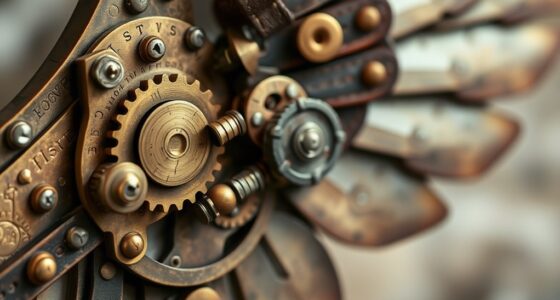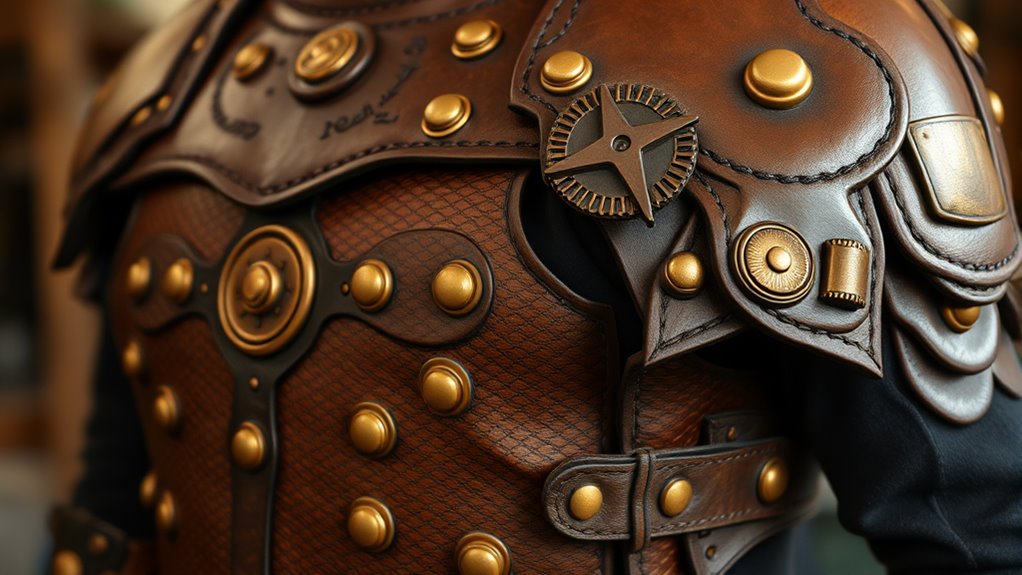
To create steampunk armor with foam or leather, start by sketching Victorian-inspired designs with gears and embellishments. Use foam for lightweight, detailed structures, shaping and gluing pieces to form the armor. Add leather straps and weathered metallic paint to enhance the industrial look. Incorporate mechanical details like gears and pistons for movement and depth. Paying attention to weathering and finishing touches guarantees an authentic, detailed result—exploring further reveals how to perfect your craft.
Key Takeaways
- Use foam for lightweight, sculptable armor base, and leather for straps, trims, and detailed accents to achieve Victorian-mechanical fusion.
- Incorporate layered gear and piston shapes, attaching gear-shaped embellishments for a mechanical, animated appearance.
- Paint metallic finishes like brass, copper, and tarnished silver, and add weathering effects for an aged, industrial look.
- Secure pieces with strong adhesives like hot glue or contact cement, and fasten straps with buckles for adjustable fit.
- Focus on detailed craftsmanship, balancing Victorian elegance with rugged mechanical elements for an authentic steampunk aesthetic.
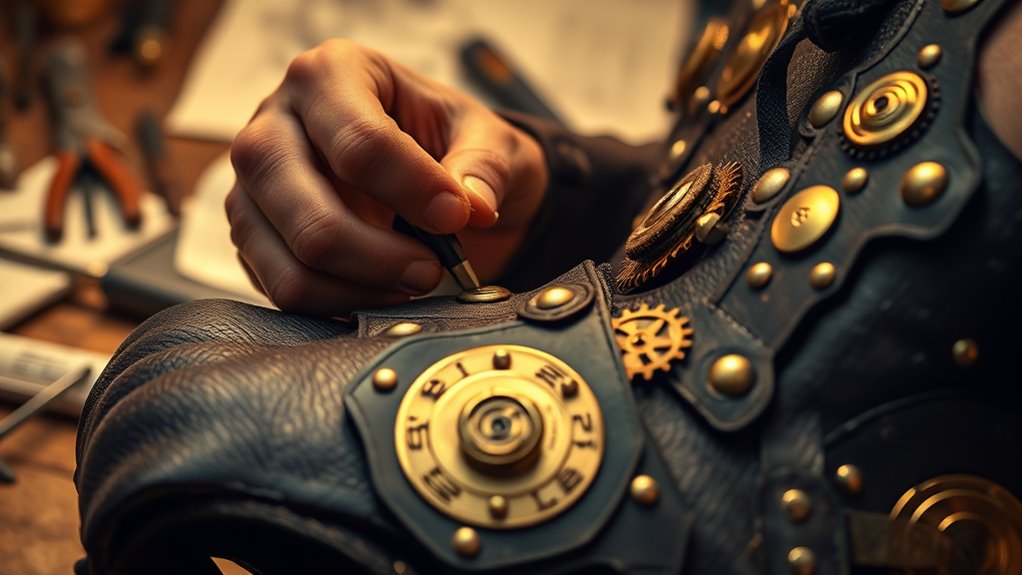
Have you ever wondered how to craft your own steampunk armor? The process begins with understanding the core inspiration behind the style: Victorian fashion fused with mechanical design. Victorian fashion provides a rich, elegant aesthetic that you can incorporate into your armor, with its high collars, intricate embellishments, and structured silhouettes. Mechanical design, on the other hand, injects a sense of industrial innovation, featuring gears, cogs, pistons, and rivets that give your armor a functional, yet fantastical appearance. Combining these elements allows you to create a piece that looks both historically inspired and futuristically mechanical.
Start by sketching out your design, focusing on how Victorian fashion influences your armor’s shape and details. Think about adding brass accents, leather straps, and ornate rivets that mimic the opulence of Victorian dress, but adapt them to fit the contours of armor. Mechanical design should be integrated through layered gears, small pistons, or gear-shaped embellishments that suggest movement and ingenuity. These features will give your armor a dynamic, animated feel, as if it’s alive with machinery.
When choosing your materials, foam and leather are excellent options. Foam is lightweight and easy to carve into complex shapes, making it perfect for creating the bulk and intricate details of your armor. Leather provides durability, a realistic texture, and an authentic Victorian vibe. You can use craft foam for the main structure, then add leather accents for straps, trim, and decorative elements. Leather can be tooled or embossed with gear patterns to enhance the mechanical design, while foam can be painted and weathered to give an aged, industrial look. Additionally, understanding material properties helps in selecting the best options for durability and visual authenticity.
Building your armor involves layering these materials carefully. Cut foam pieces to match your design, then glue and assemble them, shaping the armor to your body. Use hot glue or contact cement for a strong hold. For the Victorian touch, add leather straps and buckles, which also serve as functional fasteners. Incorporate mechanical details by attaching small gear-shaped embellishments or creating layered panels that resemble mechanical plating. Once assembled, paint your foam with metallic colors—brass, copper, and tarnished silver—to evoke the look of aged machinery. Weathering techniques, like dry brushing or adding rust effects, will deepen the mechanical realism.
Ultimately, creating steampunk armor with foam or leather is about blending Victorian fashion’s elegance with mechanical design’s rugged industrial feel. It’s a balancing act between ornate refinement and gritty innovation. With patience and attention to detail, you can craft a piece that’s not only visually striking but also a true reflection of the steampunk universe. Your armor will embody the perfect fusion of Victorian style and mechanical ingenuity, making it uniquely yours.
Frequently Asked Questions
What Safety Precautions Are Necessary When Working With Foam or Leather?
When working with foam or leather, you should prioritize safety by ensuring proper ventilation to avoid inhaling fumes or dust. Always handle hazardous materials with gloves and masks to protect your skin and respiratory system. Keep your workspace well-ventilated, especially when using adhesives, paints, or sealants. Follow safety instructions on product labels, and work in a clean, organized area to prevent accidents and health risks.
How Do I Customize Steampunk Armor for Comfort?
To customize steampunk armor for comfort, focus on fitting features like ergonomic padding that supports your body’s curves and guarantees ease of movement. Incorporate adjustable straps to personalize the fit, preventing pinching or slipping. You can also add soft lining or foam layers underneath for extra cushioning. Prioritize both style and support, so your armor feels fantastic and functions flawlessly during your steampunk adventures.
What Tools Are Essential for Crafting Foam or Leather Armor?
You’ll need metal tools like scissors, X-Acto knives, and pliers to cut and shape foam or leather accurately. A heat gun helps mold and contour the material. For adhesion, options like contact cement, leather glue, or hot glue work well depending on your project. These tools and adhesives are essential to crafting durable, detailed steampunk armor, ensuring your pieces stay secure and look authentic.
How Can I Ensure Durability of My Steampunk Armor?
Did you know that properly reinforced armor can last up to 50% longer? To guarantee durability, incorporate metal reinforcements in stress points and seams. Use weatherproofing techniques like sealing leather with waterproof coatings or foam with protective sprays. Additionally, regularly inspect your armor for damage and perform timely repairs. These steps help your steampunk armor withstand wear and tear, keeping it functional and striking for years to come.
Are There Eco-Friendly Materials Suitable for Steampunk Armor?
You can make your steampunk armor eco-friendly by using biodegradable foams and recycled leather. Biodegradable foams break down naturally, reducing environmental impact, while recycled leather repurposes old materials, giving them new life. These options are durable enough for costume purposes and align with sustainable crafting. Incorporate them into your design to create a stylish, eco-conscious piece that’s both functional and environmentally responsible.
Conclusion
Crafting steampunk armor is like forging a unique symphony, each piece adding to the bold melody of your imagination. As you shape foam or leather into your vision, remember that every rivet and gear brings your character to life. With patience and creativity, you’ll forge more than armor—you’ll craft a statement that echoes through time. So, embrace the process, and let your steampunk spirit shine brighter than the brass and leather you’ve brought to life.