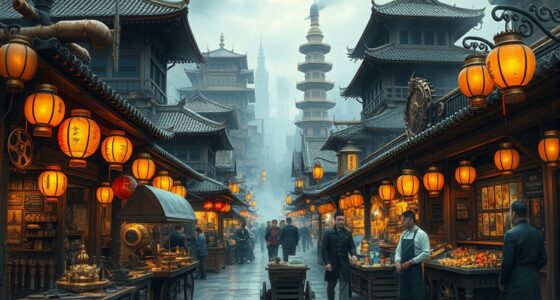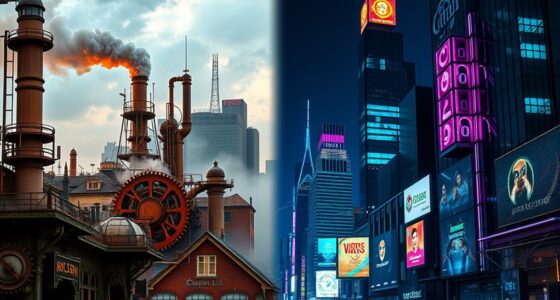
Steampunk blends Victorian elegance with futuristic steam-powered tech, setting it apart from cyberpunk‘s neon-lit dystopias and dieselpunk‘s gritty industrial themes. While cyberpunk focuses on digital worlds and corporate control, and dieselpunk explores early 20th-century industry and post-war societies, steampunk emphasizes craftsmanship, nostalgia, and rebellion through ornate design and mechanical inventions. If you want to discover how these genres shape unique worlds and styles, keep exploring their distinct influences and visions.
Key Takeaways
- Steampunk blends Victorian-era aesthetics with steam-powered technology, contrasting with cyberpunk’s neon-lit digital future and dieselpunk’s industrial grit.
- Technologically, steampunk fuses old craftsmanship with futuristic steam inventions, while cyberpunk emphasizes cybernetics and digital tech.
- Thematic focus in steampunk is on nostalgia, adventure, and rebellion; cyberpunk explores dystopia, control, and cybernetic augmentation.
- Visual design in steampunk features lace, brass, and automata; cyberpunk relies on holograms, neon lights, and cybernetic implants.
- Steampunk reflects history-influenced innovation and craftsmanship, whereas cyberpunk and dieselpunk highlight dystopian and industrial societal themes.
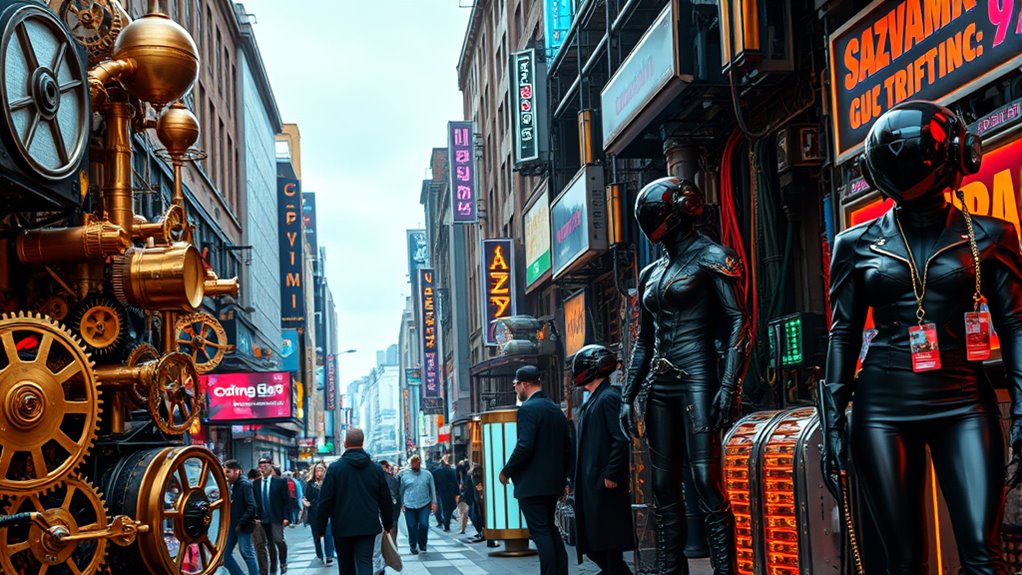
Steampunk stands out from other punk genres by blending Victorian-era aesthetics with futuristic technology, creating a unique retro-futuristic world. As you immerse yourself in this genre, you’ll notice how Victorian aesthetics shape every detail—from intricate lace and brass fittings to elaborate top hats and corsets. This setting evokes a sense of elegance and grandeur, yet it’s infused with a sense of adventure and rebellion against the status quo. The Victorian influences aren’t just superficial; they inform the entire visual and cultural landscape, giving you a glimpse into an alternate history where steam-powered machinery reigns supreme.
Steampunk blends Victorian elegance with rebellious, futuristic machinery, creating an intricate world of style and innovation.
What truly sets steampunk apart are the technological contrasts. You’ll see a fusion of old and new—clocks, gears, and steam engines sit alongside inventions that seem both fantastical and anachronistic. It’s a world where Victorian craftsmanship meets futuristic innovation, which sparks your imagination. These technological contrasts aren’t just for aesthetic appeal—they embody a rebellious spirit, challenging the idea that progress has to follow a linear path. Instead, steampunk envisions a world where technological evolution is rooted in craftsmanship and ingenuity from the past, yet still pushes boundaries.
Compared to other punk genres, steampunk’s emphasis on Victorian aesthetics creates a distinct atmosphere. Where cyberpunk leans heavily on neon-lit cityscapes and dystopian themes, and dieselpunk channels the gritty, industrial feel of the early 20th century, steampunk transports you to a Victorian-inspired universe that feels both nostalgic and inventive. You might find yourself exploring airships, clockwork automata, or steam-powered vehicles, all crafted with a level of detail that echoes Victorian design principles. The aesthetic is elegant but functional, combining beauty and practicality in ways that feel both familiar and fantastical.
This visual style influences not just fashion and design but also the genre’s themes. You’re encouraged to think about the potentials and limits of technology, the social dynamics of a Victorian-inspired society, and the spirit of innovation. The technological contrasts in steampunk serve as a metaphor for the clash between tradition and progress, inspiring you to consider how history shapes the future. Additionally, the distinctive design principles of Victorian craftsmanship further enhance the genre’s unique appeal. The blend of Victorian aesthetics and technological contrasts makes steampunk a genre that feels rooted in history but bursting with inventive possibilities, setting it apart from other punk movements that often focus more on dystopia or cybernetic futures.
Frequently Asked Questions
How Do Steampunk Fashion Trends Differ From Other Punk Styles?
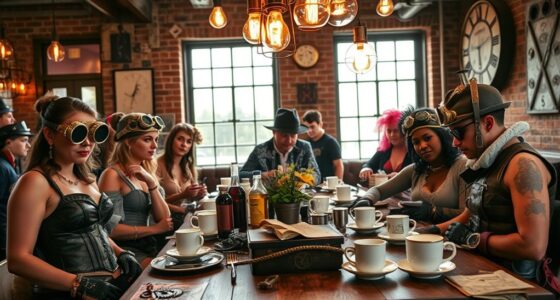
You notice that steampunk fashion blends Victorian elegance with an industrial aesthetic, setting it apart from other punk styles. While cyberpunk leans into futuristic, tech-inspired looks and dieselpunk incorporates 1920s-30s influences, steampunk emphasizes corsets, goggles, and brass accessories. This mix creates a vintage yet innovative vibe, making your style stand out with a creative fusion of elegance and industrial charm that’s uniquely steampunk.
What Are the Core Technological Themes in Each Punk Genre?
You’ll find that each punk genre emphasizes different core technological themes. Steampunk celebrates aesthetic innovation with Victorian-inspired designs and blends technological nostalgia with steam-powered devices. In contrast, dieselpunk focuses on mid-20th-century industrial aesthetics, emphasizing machinery and wartime innovation. Cyberpunk centers on futuristic technology, emphasizing digital worlds and cybernetics. Each genre uses these themes to create a unique atmosphere that reflects its specific period and cultural outlook.
How Has Steampunk Influenced Modern Pop Culture and Media?
You’ve seen steampunk influence modern pop culture and media through its Victorian aesthetics and retro-futuristic visions. It inspires movies, TV shows, and fashion with its blend of 19th-century style and futuristic technology. This genre sparks creativity, encouraging designers and artists to explore alternative histories and steampunk-inspired gadgets. Its unique aesthetic continues to shape visual storytelling, making it a mesmerizing and enduring influence in contemporary entertainment and style.
Are There Specific Historical Periods That Inspired Each Punk Genre?
You’ll find that steampunk draws heavily from the Victorian era and the Industrial Revolution, shaping its aesthetic and themes. Dieselpunk is inspired by the interwar period and World War II, emphasizing diesel technology and wartime innovation. Cyberpunk, on the other hand, takes cues from the late 20th century’s digital revolution, focusing on advanced technology and dystopian futures. Each genre reflects distinct historical moments that influence their unique worlds and styles.
What Are Common Misconceptions About Steampunk Compared to Other Punk Genres?
You might think steampunk is just Victorian elegance mixed with gears, but it’s more than that—it’s about embracing technological nostalgia. A common misconception is that steampunk is solely about fashion or gadgets, yet it’s a vibrant subculture blending history, creativity, and innovation. Nearly 60% of enthusiasts say they’re drawn to its blend of the old and new, proving it’s a rich universe beyond just aesthetics.
Conclusion
Ultimately, understanding steampunk alongside dieselpunk and cyberpunk reveals a tapestry of rebellion against the future’s unknowns. Like Prometheus stealing fire, these genres ignite our imagination with visions of what could be—a world shaped by steam, diesel, or digital dreams. Each offers a unique lens, challenging you to question technology’s role and your place within it. Embrace these worlds as your own modern mythos, and let your curiosity lead the way.