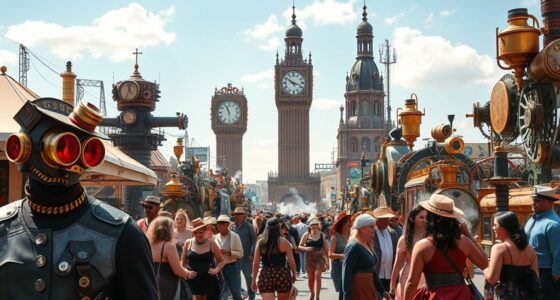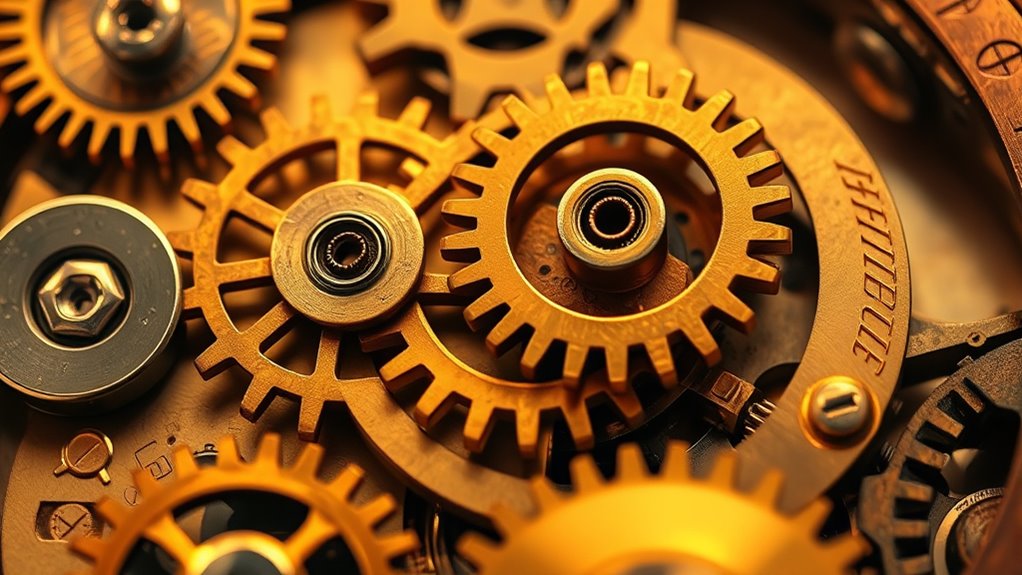

In steampunk aesthetics, gears and clockwork symbolize interconnectedness, progress, and human ingenuity. They reflect the Victorian fascination with craftsmanship and ornate design, blended with machinery’s functionality. These motifs embody both the beauty and power of industrial innovation, representing how different parts work together to create something greater. As you explore further, you’ll discover how these symbols convey layered meanings about societal change, tradition, and the relentless pursuit of progress.
Key Takeaways
- Gears and clockwork symbolize interconnectedness, reflecting how individual parts work together to achieve progress and innovation.
- They represent mechanical precision, human mastery over machinery, and the relentless march of technological advancement.
- These motifs evoke themes of order, control, and the cyclical nature of industrial and societal transformation.
- Gears and clockwork serve as visual metaphors for ingenuity, craftsmanship, and the ongoing pursuit of progress.
- The symbolism highlights the fusion of Victorian elegance with industrial functionality, emphasizing the dialogue between tradition and innovation.
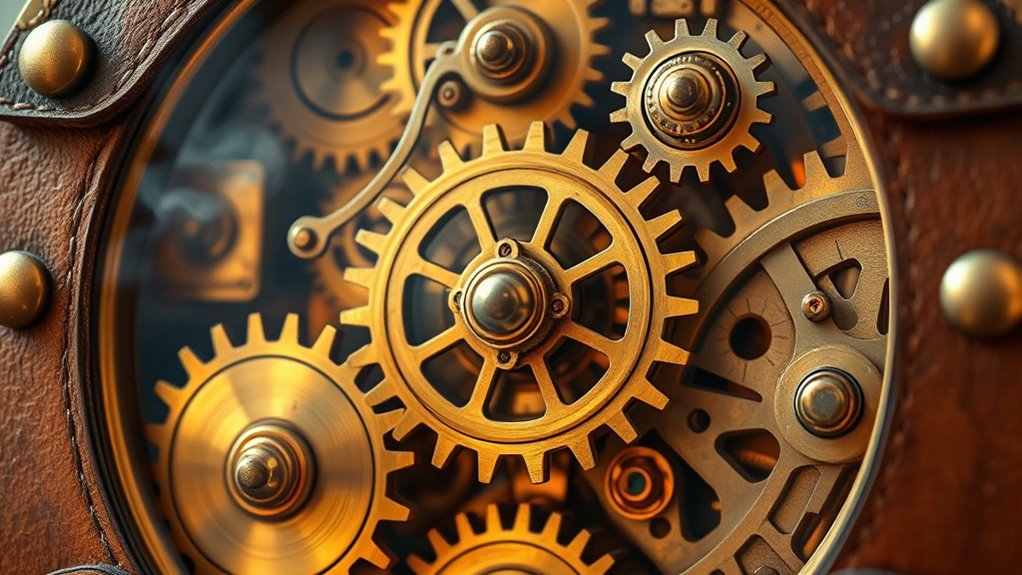
Steampunk aesthetics are rich with symbolism that reflects a fascination with innovation, industry, and a longing for a nostalgic yet futuristic world. When you explore steampunk’s visual language, Victorian influences immediately stand out. You notice the intricate detailing, lavish ornamentation, and elaborate patterns that mimic the elegance and refinement of 19th-century Britain. These Victorian elements aren’t just decorative; they symbolize a period of rapid technological advancement, a time when industry and innovation began to reshape society. By incorporating Victorian influences, steampunk creates a bridge between the past and future, emphasizing a desire to blend tradition with progress. You see this in the fashion, architecture, and accessories, where corsets, top hats, and lace coexist with gears and steam-powered devices, illustrating a society caught between nostalgia and innovation.
Industrial motifs form the backbone of steampunk’s symbolic language. Gears, cogs, and clockwork mechanisms aren’t just functional parts of machinery—they represent the industrial revolution’s core ideals. When you observe these motifs, you’re reminded of the transformative power of industry and technology. Gears symbolize interconnectedness, showing how different parts work together to create something greater. They also evoke a sense of mechanical precision and ingenuity, celebrating human mastery over nature through machinery. The repetitive movement of clockwork mechanisms echoes themes of order and control, yet also hints at the relentless march of progress. You might notice how these motifs are integrated into jewelry, clothing, and artwork, serving as visual metaphors for innovation and the industrial age’s influence on society’s evolution.
The combination of Victorian influences and industrial motifs in steampunk isn’t accidental; it’s a deliberate effort to evoke a specific narrative. Victorian influences lend a sense of elegance, refinement, and history, reminding you of a world where craftsmanship and aesthetics mattered. Industrial motifs, on the other hand, emphasize functionality, progress, and the power of machinery. Together, they symbolize a tension between beauty and utility, tradition and innovation, nostalgia and futurism. When you see steampunk designs, you’re witnessing a visual dialogue that celebrates human ingenuity while acknowledging the complexities of technological change. This interplay creates a distinctive aesthetic that’s not only visually enthralling but also rich in layered meanings about progress, history, and the enduring human spirit of invention.
Frequently Asked Questions
How Do Gears Symbolize Progress in Steampunk Culture?
Gears symbolize progress in steampunk culture because they represent mechanical innovation and the spirit of the industrial revolution. As you see gears turning, it reminds you of human ingenuity and the push for technological advancement. They embody the idea of building a better future through craftsmanship and invention, blending past and future. Gears stand for continuous movement and growth, inspiring you to embrace progress and explore new creative horizons.
What Is the Significance of Clockwork in Steampunk Storytelling?
You see clockwork in steampunk storytelling as a powerful mechanical symbolism that drives the narrative devices. Its intricate cogs and ticking rhythms evoke a sense of precision and destiny, reflecting characters’ fates and technological progress. The constant movement of gears mirrors the relentless march of innovation, emphasizing themes of control and transformation. As you follow these winding mechanisms, you’re drawn into a world where time and invention intertwine to tell compelling stories.
How Do Steampunk Gears Reflect Victorian-Era Industrialization?
You see steampunk gears as a reflection of Victorian innovation, symbolizing the spirit of the Industrial Revolution. They embody the era’s fascination with mechanization and progress, showcasing how Victorian society embraced technological advancements. By incorporating gears into aesthetics, steampunk celebrates this transformative period, highlighting human ingenuity and the drive to innovate. These gears serve as a visual reminder of the era’s groundbreaking industrial achievements and the relentless pursuit of progress.
Are There Spiritual Meanings Behind Steampunk Mechanical Elements?
You might see steampunk mechanical elements as more than just intricate designs; they often symbolize spiritual symbolism and mystical interpretations. For example, a gear turning endlessly can represent the cycle of life or spiritual awakening. Many believe that these elements evoke a connection to the divine or universal energy, transforming mechanical parts into symbols of enlightenment and inner growth, highlighting the mystical layers beneath steampunk’s industrial aesthetic.
How Does Steampunk Aesthetic Influence Modern Engineering Design?
Steampunk aesthetics inspire you to blend innovative material uses with futuristic design integration, pushing engineering boundaries. You’re encouraged to think creatively, combining vintage gears with modern tech to develop unique, functional pieces. This approach influences your designs to feel both nostalgic and cutting-edge, fostering a sense of craftsmanship and innovation. Embracing steampunk’s spirit helps you craft solutions that are not only visually striking but also practically forward-thinking.
Conclusion
As you immerse yourself in steampunk’s gears and clockwork, you realize these symbols aren’t just decorative—they represent innovation, resilience, and a dream of a future built on the past. Do you see how each cog and steam valve echoes a desire to blend tradition with progress? Embracing this aesthetic invites you to question what we value and how we imagine tomorrow. So, aren’t these intricate symbols more than just style—they’re a reflection of your own creative spirit?