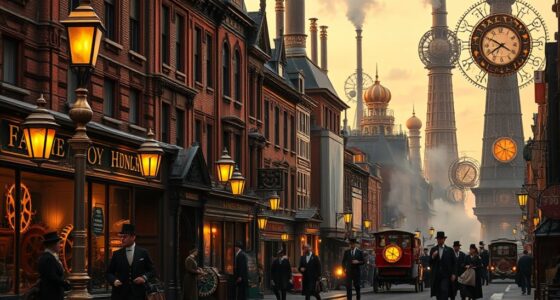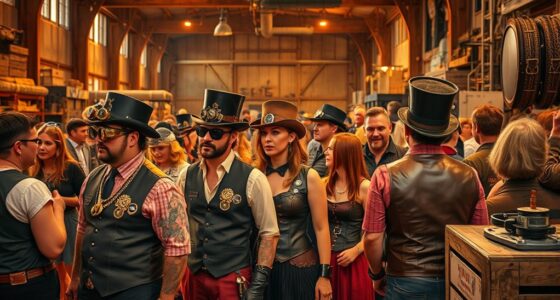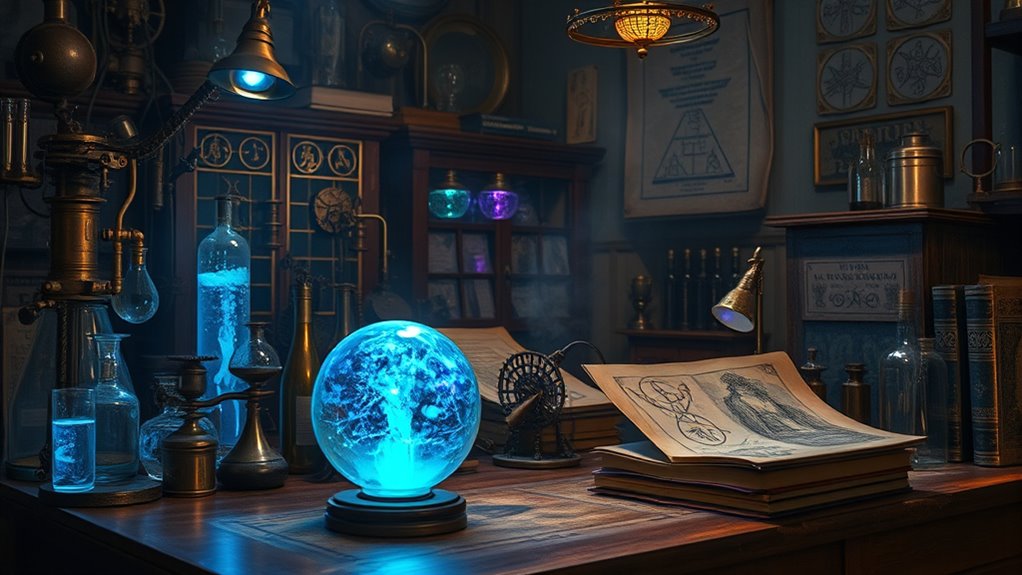

In steampunk, you’ll find a fascinating blend of pseudo-science and supernatural themes inspired by Victorian mysticism. Imagine devices that seem to harness mystical energies or communicate with spirits, often defying scientific explanation. These inventions underscore the era’s fascination with mysterious forces and spiritual anxieties, transforming technology into objects imbued with deeper, mystical meaning. If you keep exploring, you’ll discover how this unique mix creates a mesmerizing universe rooted in wonder and curiosity.
Open a free Amazon Business account
Business pricing, bulk buying and tax-exempt orders.
As an affiliate, we earn on qualifying purchases.
Key Takeaways
- Steampunk blends Victorian-era mysticism with pseudo-scientific inventions that often appear to access supernatural energies.
- Devices in steampunk fiction frequently blur science and magic, suggesting mystical powers beyond empirical understanding.
- Themes explore spiritualism, séances, and occult practices, reflecting Victorian society’s fascination with unseen forces.
- The genre fuses technological myths with mystical devices, creating a universe where science and supernatural elements coexist.
- Victorian mysticism influences steampunk’s aesthetic and narrative, emphasizing wonder, spiritual anxieties, and mystical significance of inventions.
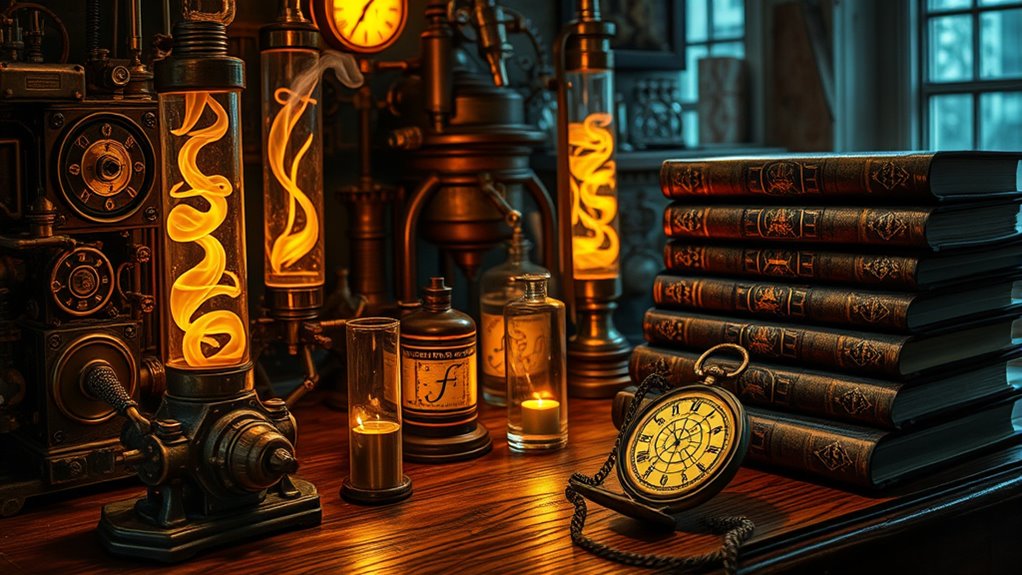
Have you ever wondered why steampunk often blends pseudo-science and supernatural themes? It’s because the genre draws heavily on Victorian mysticism, a time when science and spirituality intertwined in fascinating ways. During that era, people believed in unseen forces and mysterious energies, which fueled a sense of wonder and curiosity. These beliefs weren’t just about faith; they were also fueled by technological myths—stories about inventions and discoveries that seemed almost magical. Steampunk captures this spirit by combining the cutting-edge technology of the Victorian age with the mystical and supernatural ideas that people of that time embraced. It’s no surprise, then, that many steampunk stories feature devices and concepts that seem to defy scientific explanation, echoing the era’s fascination with the unknown.
In steampunk, pseudo-science isn’t just a storytelling device; it’s a reflection of Victorian society’s obsession with pushing the boundaries of what was understood. Think about the elaborate clockwork machines, alchemical experiments, or the supposed ability to harness unseen energies. These elements are often rooted in the idea that science could access supernatural powers or tap into mysterious forces beyond human comprehension. The genre embraces these technological myths, turning them into tangible objects or plot devices that seem to blur the line between reality and the supernatural. This blending creates an atmosphere of intrigue, where characters might use strange, pseudo-scientific contraptions to communicate with spirits or manipulate unseen energies. Additionally, the fascination with dogmatic beliefs of the era influences many of the narrative themes, emphasizing the tension between empirical knowledge and mystical understanding.
Victorian mysticism plays a pivotal role here, influencing the aesthetic and thematic elements of steampunk. The era’s fascination with spiritualism, séances, and the occult seeps into the genre’s imagery and storylines. You might encounter characters who believe that a certain device can channel spiritual energies or that an invention is imbued with mystical power. In doing so, steampunk doesn’t just pay homage to Victorian scientific discovery; it also explores the era’s spiritual anxieties and hopes. This mix of pseudo-science and supernatural themes creates a layered universe where technology isn’t just functional but also imbued with deeper, often mysterious significance, making the genre rich with myth and imagination.
Ultimately, steampunk’s charm lies in its ability to fuse the rational with the mystical, creating a world where technological myths and Victorian mysticism collide. It invites you to question what’s real and what’s imagined, encouraging a sense of wonder rooted in history’s most intriguing blend of science and the supernatural.
steampunk mystical device replica
As an affiliate, we earn on qualifying purchases.
As an affiliate, we earn on qualifying purchases.
Frequently Asked Questions
What Are the Origins of Supernatural Themes in Steampunk?
The origins of supernatural themes in steampunk stem from Victorian mysticism and occult symbolism, which deeply influenced the era’s literature and culture. You see these themes in steampunk as a way to evoke the mysterious and the unknown, blending science with the supernatural. This fascination reflects Victorian society’s curiosity about the mystical, leading creators to incorporate occult symbols and supernatural elements into steampunk worlds to add depth and intrigue.
How Do Pseudo-Scientific Ideas Influence Steampunk Fashion?
Imagine your steampunk wardrobe as a canvas for aesthetic experimentation, where pseudo-scientific ideas serve as colorful brushes. You blend Victorian elegance with gears, goggles, and strange contraptions, symbolizing technological innovation. These ideas inspire you to push boundaries, creating a look that’s both fantastical and inventive. Pseudo-science fuels your imagination, turning everyday materials into extraordinary accessories, making your fashion a reflection of a world where science and fantasy intertwine seamlessly.
Are Any Real Historical Figures Associated With Steampunk’s Supernatural Elements?
You’ll find that some historical mystics and occult inventors are associated with steampunk’s supernatural elements. Figures like John Dee, a renowned mystic and advisor to Queen Elizabeth I, inspire the genre’s mystical themes. Similarly, inventors obsessed with alchemy and the occult, such as Paracelsus, influence steampunk stories that blend real history with supernatural mysteries. Their legacy fuels the genre’s fascination with the mysterious and the arcane.
How Does Steampunk Differentiate From Other Genres With Supernatural Themes?
Think of steampunk as a clockwork universe where Victorian mysticism blends with alternative realities. Unlike other genres, it emphasizes technological innovation intertwined with mystical elements, creating a unique fusion. While supernatural themes in horror or fantasy often focus on fear or magic, steampunk uses these themes to explore societal change and adventure. This distinct mix makes steampunk a fascinating world where history, fantasy, and innovation collide vividly.
Can Pseudo-Science in Steampunk Be Used for Educational Purposes?
Yes, pseudo-science in steampunk can be used for educational applications. By exploring these imaginative concepts, you can foster scientific literacy and critical thinking. Steampunk encourages you to question and analyze the scientific ideas presented, helping you differentiate between fact and fiction. Using steampunk stories and designs, you can engage learners in discussions about history, technology, and the scientific method, making learning both fun and meaningful.
As an affiliate, we earn on qualifying purchases.
Conclusion
Think of steampunk as a grand clockwork garden, where gears of pseudo-science and whispers of the supernatural bloom side by side. These elements are the mysterious vines that add intrigue and depth, inviting you to explore beyond the known. Embrace the allure of this fantastical landscape, where reality and imagination intertwine like threads in a rich tapestry. In this world, the boundary blurs, and every turn promises a new wonder waiting to be uncovered.
steampunk spirit communication device
As an affiliate, we earn on qualifying purchases.
As an affiliate, we earn on qualifying purchases.
As an affiliate, we earn on qualifying purchases.
Labor Day sales Picks
labor day deals
As an affiliate, we earn on qualifying purchases.