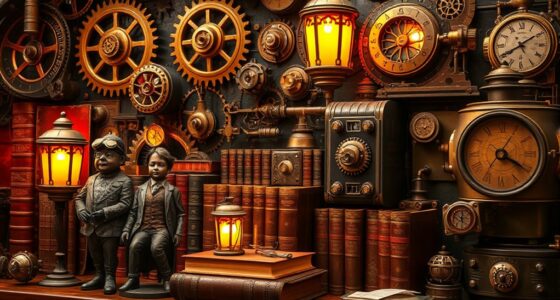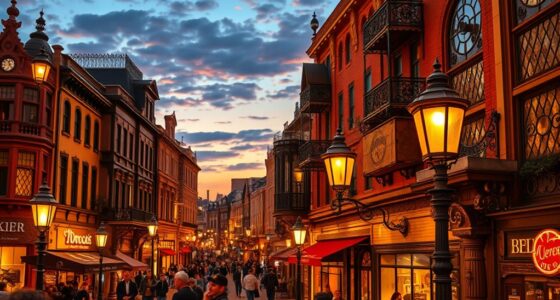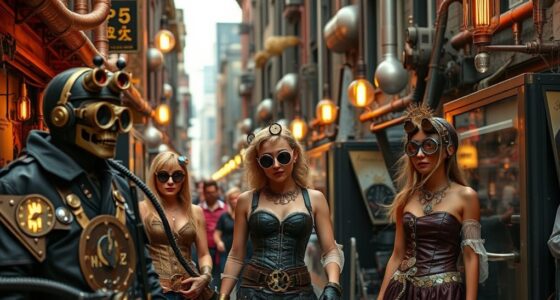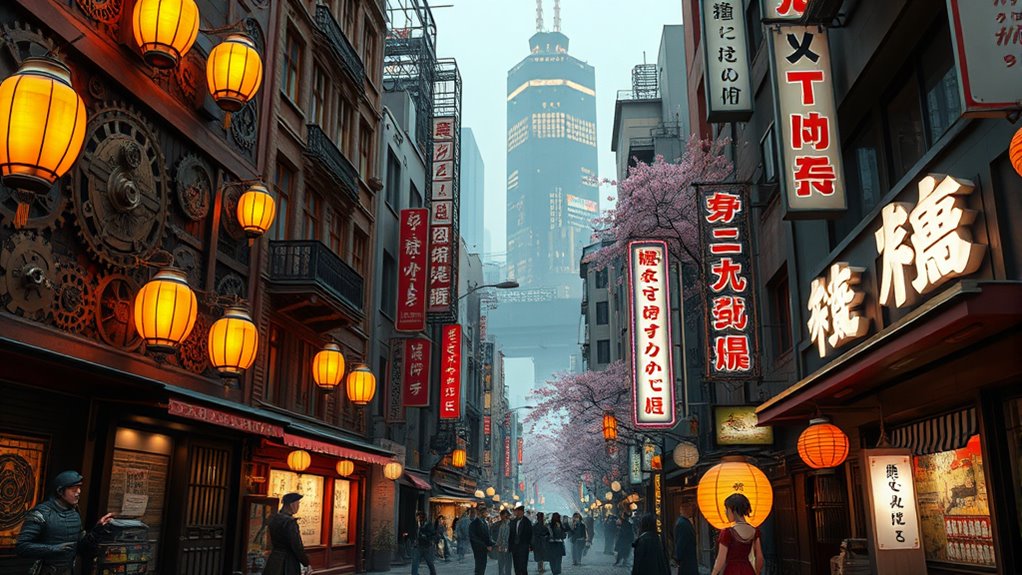

Japanese steampunk blends Victorian elegance with futuristic technology, creating a unique mix you’ll see in anime, fashion, and art. It features Victorian-inspired architecture, clothing like corsets and top hats, and steam-powered machines paired with advanced robotics or energy devices. This style highlights craftsmanship and ingenuity, offering a glimpse into worlds where history and innovation collide. If you want to explore how this fascinating hybrid shapes modern culture and design, keep going to uncover more.
Key Takeaways
- Japanese steampunk blends Victorian aesthetics with futuristic technology, emphasizing craftsmanship and innovation in anime and fashion.
- In anime and manga, it features Victorian-inspired architecture, clothing, and steam-powered machinery with advanced robotics.
- The style reimagines vintage design through a futuristic lens, creating worlds where Victorian elegance coexists with modern technology.
- It influences cosplay, art, and design by combining intricate gears, brass details, Victorian fashion, and sci-fi elements.
- Japanese steampunk symbolizes a fusion of tradition and progress, inspiring creative exploration of past and future aesthetics.

Have you ever wondered how the steampunk aesthetic has taken root in Japan? It’s a fascinating blend of Victorian aesthetics and futuristic technology that captures the imagination of anime fans and designers alike. In Japan, steampunk isn’t just about old-fashioned machinery; it’s an artful fusion of the past and future, creating a world where intricate gears, brass fittings, and Victorian-inspired fashion coexist with cutting-edge innovations. This unique style appeals to those who love the elegance of history combined with the excitement of technological progress, making it a natural fit for Japanese pop culture.
In anime and manga, steampunk often appears as a vivid universe where Victorian aesthetics influence everything from architecture to clothing. You’ll notice the elaborate corsets, waistcoats, top hats, and lace details that evoke 19th-century Britain, but with a twist. These characters often operate within a setting filled with steam-powered machinery, airships, and clockwork devices that seem to leap from a Victorian inventor’s dream. What sets Japanese steampunk apart is its ability to reimagine this vintage style through a futuristic lens. Instead of purely historical accuracy, creators incorporate futuristic technology, like advanced robotics or energy sources, giving the aesthetic a fresh, innovative edge. It’s not just about nostalgia; it’s about envisioning a future where Victorian elegance meets sci-fi inventiveness.
You’ll find this aesthetic heavily featured in anime like “Fullmetal Alchemist” and “Steamboy,” where the worlds are richly detailed with Victorian-inspired architecture and gadgetry. These stories often explore themes of progress, industrialization, and the human desire to push boundaries. The characters’ fashion echoes Victorian style but with a modern or even fantastical twist, emphasizing the blend of old and new. This hybrid appeal resonates deeply in Japan, where tradition and innovation often coexist. The steampunk look becomes more than just an aesthetic; it becomes a way to imagine a society that values craftsmanship, ingenuity, and a sense of wonder about the future.
Japanese steampunk also influences fashion, art, and design beyond anime. You might see it in cosplay, where enthusiasts craft elaborate costumes that combine Victorian details with futuristic accessories. Artists experiment with combining Victorian aesthetics and futuristic technology in their works, creating visually stunning pieces that challenge conventional boundaries. Additionally, color theory plays a crucial role in creating the rich, immersive worlds associated with this style, enhancing its visual appeal and emotional impact. The appeal lies in its ability to evoke nostalgia while simultaneously inspiring hope for what’s to come. Overall, the Japanese take on steampunk is a dynamic, imaginative world that invites you to explore the possibilities of a past and future intertwined, where elegance and innovation walk hand in hand.
Frequently Asked Questions
How Does Japanese Steampunk Differ From Western Styles?
You’ll notice Japanese steampunk differs from Western styles through its unique blend of cultural influences and design aesthetics. Japanese creators incorporate traditional motifs, anime-inspired characters, and futuristic elements, creating a distinct aesthetic. Unlike Western steampunk’s focus on Victorian-era machinery, Japanese versions often emphasize sleek, vibrant visuals and fantasy themes, blending historical and modern styles. This fusion results in a more colorful, playful, and culturally rich interpretation of steampunk.
Which Japanese Anime Best Exemplifies Steampunk Aesthetics?
You should check out “Last Exile,” which exemplifies steampunk aesthetics with its Victorian machinery and steam-powered gadgets. The anime immerses you in a world where intricate, vintage-inspired technology drives the story, blending Victorian elegance with futuristic innovation. Its detailed design and steam-powered contraptions highlight a unique Japanese take on the genre, making it a perfect showcase of steampunk’s aesthetic appeal.
Are There Specific Japanese Cities Known for Steampunk Culture?
You’ll find steampunk culture in Japanese cities like Tokyo and Nagasaki. Tokyo streets buzz with steampunk-inspired cafes, shops, and events that blend Victorian aesthetics with modern tech. Nagasaki harbor, with its historical port vibe, hosts steampunk festivals showcasing costumes, gadgets, and music. These cities celebrate the genre’s creativity, making them prime spots for enthusiasts to explore and immerse themselves in steampunk culture firsthand.
How Has Japanese History Influenced Steampunk Themes?
Japanese history deeply influences steampunk themes by blending Meiji modernization‘s technological advancements with Samurai aesthetics. You’ll notice this fusion in designs that reflect Japan’s rapid industrial growth alongside traditional warrior motifs. The contrast between old and new creates a unique steampunk style, highlighting Japan’s cultural evolution. This historical mix inspires creators to craft worlds where Victorian-inspired machinery coexists with samurai honor, giving Japanese steampunk its distinctive, rich flavor.
What Are Common Materials Used in Japanese Steampunk Fashion?
You’ll find that Japanese steampunk fashion often uses Victorian fabrics like brocade, lace, and velvet to create an authentic look. Mechanical embellishments, such as gears, cogs, and clock parts, are essential for adding that industrial feel. These materials help you achieve a blend of elegance and steampunk aesthetics, emphasizing both intricate detailing and a vintage vibe. Incorporate these elements to craft a unique, Japanese-inspired steampunk style.
Conclusion
As you explore Japan’s steampunk scene, you’re stepping into a vibrant tapestry where Victorian elegance meets futuristic imagination. It’s like opening a clockwork portal, revealing a world where gears turn in harmony with neon-lit dreams. The blend of anime’s vivid storytelling and neo-Victorian charm creates a symphony of innovation and tradition. Embrace this dazzling fusion, and you’ll find yourself lost in a steampunk wonderland that sparks your imagination like a well-oiled engine.