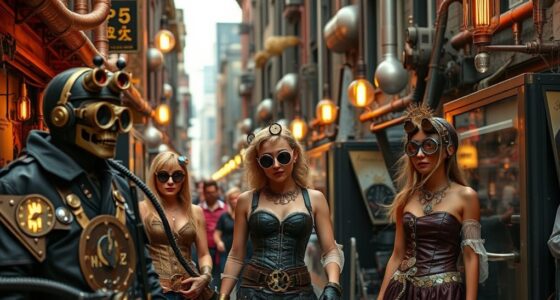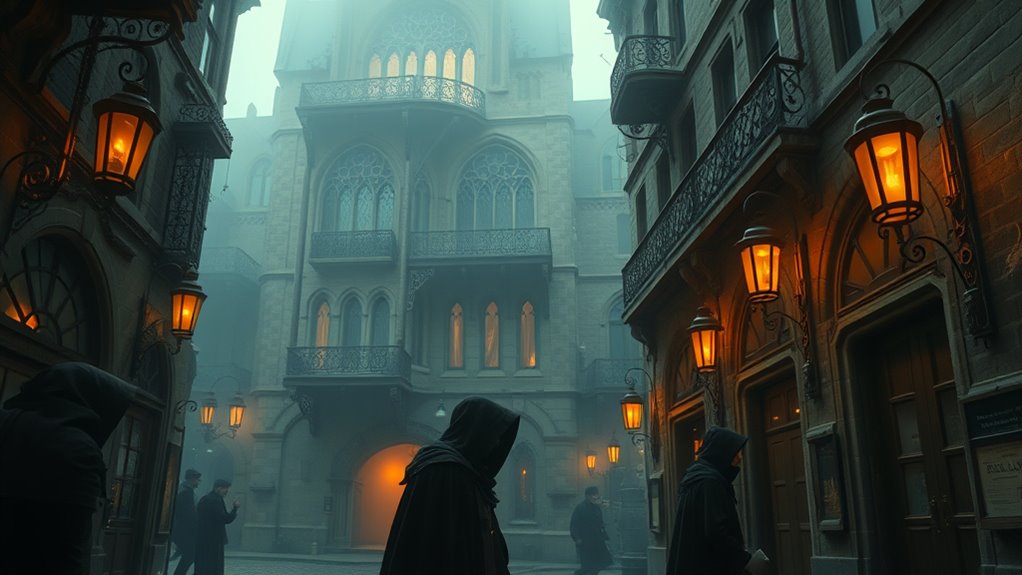

Gothic horror meets steampunk because both genres celebrate Victorian decadence, mystery, and inventive technology that blurs the line between human and machine. You’ll find shadowy corridors, ornate facades, and complex mechanisms that evoke nostalgia for a bygone era while exploring dark secrets and moral ambiguities. The overlapping themes of decay, progress, and the unknown create layered worlds full of intrigue and danger. If you keep exploring, you’ll uncover even deeper connections between these haunting yet wondrous styles.
Key Takeaways
- Both genres emphasize darkness, decay, and mystery, creating atmospheres rich in suspense and the unknown.
- Victorian architecture’s grandeur and gothic elements evoke nostalgia and a sense of ominous history.
- Steampunk technology’s intricate gears and automata complement gothic themes of obsession and moral ambiguity.
- Overlapping aesthetics depict complex environments that symbolize humanity’s hubris and fascination with progress.
- Both genres explore themes of hidden secrets, moral ambiguity, and the supernatural within layered, atmospheric settings.

Gothic horror and steampunk might seem like unlikely allies, but when combined, they create a richly atmospheric world filled with dark secrets and intricate machinery. At the heart of this fusion lies Victorian architecture, a style that exudes grandeur, decay, and mystery. You’ll notice towering facades, pointed arches, and ornate details that evoke a sense of history and foreboding. These structures serve as perfect backdrops for stories that explore the unknown, where shadowy corridors and crumbling mansions hide secrets waiting to be uncovered. Victorian architecture’s intricate design fosters an atmosphere of complexity and decay, mirroring the tangled moralities and dark themes common in gothic horror.
Steampunk’s hallmark, clockwork technology, seamlessly complements this aesthetic. You can imagine gears turning beneath the surface of these Victorian buildings, powering gadgets, automata, and mysterious contraptions. The rhythmic ticking of clockwork devices echoes through fog-laden streets, creating an unsettling yet mesmerizing soundscape. This technology isn’t just functional; it’s a visual and thematic extension of gothic horror’s obsession with the past, decay, and the uncanny. You’ll find mechanical devices that seem almost alive, their whirs and ticks hinting at a world where machinery blurs the line between organic and artificial. Such inventions often carry a sense of menace or wonder, emphasizing humanity’s hubris and fascination with control over nature.
The overlap of Victorian architecture and clockwork technology in gothic-steampunk worlds isn’t accidental. Both evoke a sense of nostalgia for a bygone era, yet they also embody a fascination with innovation and the unknown. You might walk through a city where gothic spires and iron balconies frame a skyline filled with steam-powered airships and automaton guards. These elements reinforce a universe where progress is intertwined with darkness, where technological advancement doesn’t erase horror but amplifies it. The ornate details of Victorian design, combined with the mechanical complexity of clockwork, create a layered environment that invites exploration—and suspicion.
Together, Victorian architecture and clockwork technology give you a vivid, immersive setting that feels alive with secrets. They serve as the perfect foundation for stories that explore human obsession, moral ambiguity, and the supernatural. When gothic horror meets steampunk, you’re transported to a world where beauty and decay coexist, and every ticking gear hints at a story waiting to unfold. It’s a universe that promises mystery, danger, and wonder—if you’re willing to look beneath the surface.
Frequently Asked Questions
How Did Gothic Horror Influence Early Steampunk Literature?
You’ll notice that early steampunk literature draws heavily on Gothic horror’s Victorian atmospheres and Gothic symbolism. This influence shapes the dark, mysterious settings and often features haunted machinery, secret passages, and brooding characters. By incorporating Gothic elements, steampunk authors evoke a sense of gothic suspense and eerie elegance, creating a compelling blend of Victorian aesthetics with a haunting, fantastical edge that enhances the genre’s unique charm and atmosphere.
Are There Any Notable Crossover Authors in Both Genres?
You’ll find several notable crossover authors who blend gothic horror and steampunk, showcasing literary crossover and author collaborations. Writers like China Miéville and Cherie Priest often navigate both genres, creating dark, atmospheric worlds with Victorian influences. These authors use their talents to bridge gothic horror’s eerie mood with steampunk’s inventive technology, appealing to fans of both styles. Their work highlights how these genres can intertwine seamlessly through creative storytelling and shared themes.
What Are Common Aesthetic Elements Shared by Gothic and Steampunk?
You notice that both gothic and steampunk share Victorian architecture, creating a sense of grandeur and history. They also use a dark color palette, emphasizing mystery and a moody atmosphere. In both genres, intricate details and a focus on the mechanical or the supernatural enhance their aesthetic. These elements evoke a sense of nostalgia and darkness, drawing you into worlds where beauty and decay coexist seamlessly.
How Do Gothic Themes Enhance Steampunk Storytelling?
You’ll find that gothic themes transform steampunk stories into immersive worlds filled with Victorian atmospheres and supernatural motifs. These elements amplify mystery, suspense, and emotional depth, making every gadget and shadow feel alive with history and secrets. The darkness and romanticism of gothic horror enhance steampunk’s adventurous spirit, creating a mesmerizing blend where eerie atmospheres and supernatural hints make your journey through these worlds unforgettable and vividly intense.
Can Modern Media Blend Gothic Horror and Steampunk Effectively?
Yes, modern media can blend gothic horror and steampunk effectively. You can imagine Victorian fashion and Victorian architecture setting a dark, atmospheric scene where eerie mysteries unfold. By combining the haunting elegance of gothic horror with the inventive, industrial vibe of steampunk, you create a compelling story. This fusion appeals to audiences craving both suspense and imaginative world-building, making the genres’ overlap not just possible but highly engaging.
Conclusion
As you explore the overlap between gothic horror and steampunk, it feels like the worlds are destined to intertwine. Coincidences seem to guide you, revealing dark secrets and intricate machinery alike. Maybe it’s no accident that these genres share so many shadows and steam-fogged streets—they both thrive on mystery and the uncanny. In the end, you realize that their connection isn’t just coincidence but a reflection of your own fascination with the unknown.