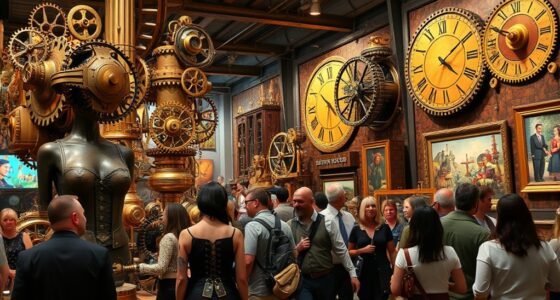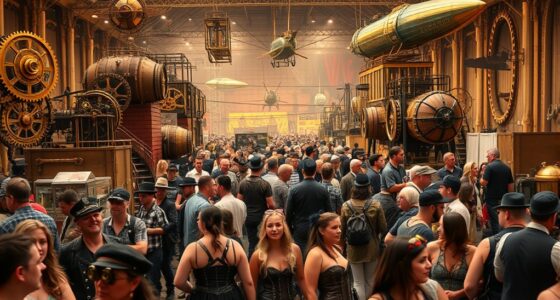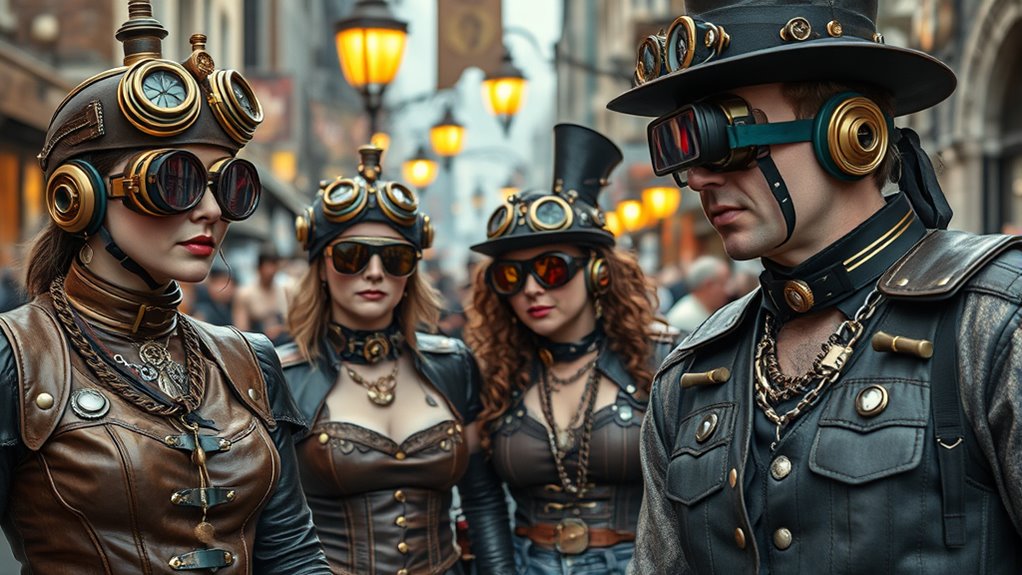

Since the 1980s, steampunk has grown from a niche literary and artistic movement inspired by Victorian aesthetics and steam-powered tech into a vibrant cultural phenomenon. It now blends historical craftsmanship with futuristic elements like LED lights and robotics, inspiring fashion, art, and festivals worldwide. This fusion of old and new encourages creativity and technological innovation, evolving continuously with contemporary influences. If you keep exploring, you’ll discover how this imaginative movement keeps reinventing itself across eras.
Key Takeaways
- Steampunk originated in the 1980s as a literary subgenre inspired by Victorian aesthetics and steam-powered technology.
- It evolved to include visual arts, fashion, and industrial design, blending historical craftsmanship with futuristic elements.
- The culture expanded from niche enthusiasts to a broad movement influencing fashion, art, films, and festivals worldwide.
- Modern interpretations incorporate LED lighting, robotics, and 3D printing, merging Victorian style with cutting-edge technology.
- Today, steampunk symbolizes creative craftsmanship and continues to inspire innovation, adapting to cultural shifts and technological advances.
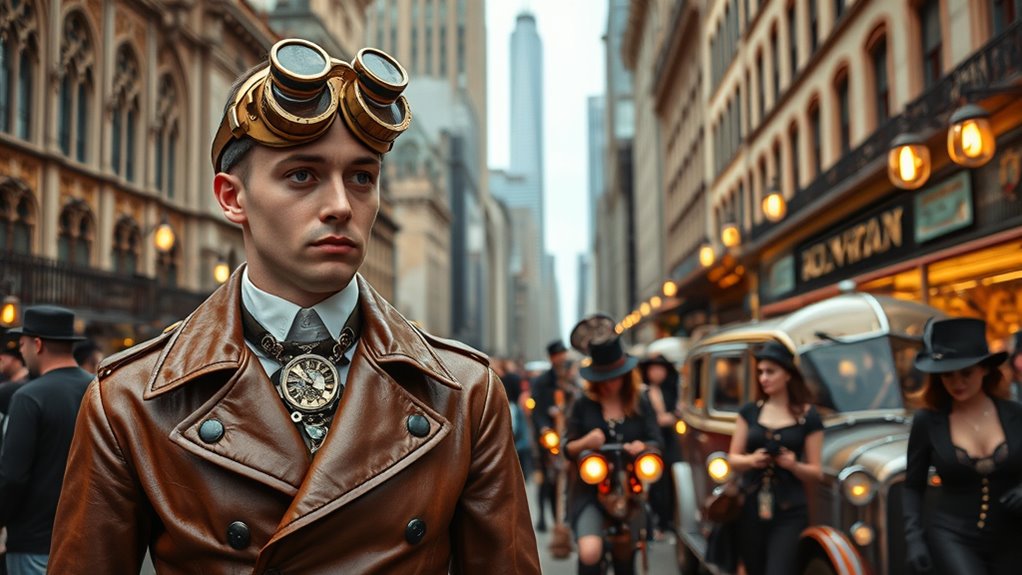
Steampunk culture has evolved from a niche subgenre of science fiction into a vibrant movement that influences fashion, art, and design. You might notice it in the intricate details of costumes, the fusion of Victorian aesthetics, and the imaginative use of futuristic technology. Originally, steampunk drew heavily from the Victorian era, with its ornate clothing, brass gears, and steam-powered machinery. This period’s refined elegance and elaborate detailing serve as the visual foundation of the style. Today, though, it’s more than just a vintage homage; it’s a creative playground where Victorian aesthetics meet futuristic technology, blending the old with the new in innovative ways.
In its early days during the 1980s, steampunk was primarily a literary genre, embraced by authors and enthusiasts who loved reimagining history with advanced, often anachronistic, inventions. As the movement gained momentum, it expanded beyond stories into visual arts, fashion, and even industrial design. You can see this evolution in the way enthusiasts craft costumes that are both historically inspired and technologically imaginative. Think leather vests, goggles, and corsets adorned with clockwork and metallic accents, all inspired by Victorian fashion but with a futuristic twist. These elements reflect a fascination with both the craftsmanship of the past and the possibilities of future innovations.
Over the decades, steampunk has become a symbol of creative expression, where you’re encouraged to explore and merge different eras and technologies. Modern interpretations often incorporate futuristic tech like LED lights, robotic components, or 3D-printed accessories, seamlessly integrated into Victorian-inspired designs. This blending of Victorian aesthetics with futuristic technology allows you to envision a world where steam-powered machines coexist with advanced gadgets, creating a unique aesthetic that’s both nostalgic and forward-thinking. It’s a culture that emphasizes craftsmanship, innovation, and a love for the fantastical, inspiring artists, designers, and hobbyists alike.
Today, steampunk continues to evolve, influenced by contemporary technology and cultural shifts. You see it in everything from fashion runways to maker spaces, where the emphasis remains on creativity and craftsmanship. The movement’s core idea has shifted from a niche hobby to a broad cultural phenomenon, inspiring films, video games, and large-scale festivals. Whether you’re donning a Victorian-inspired outfit with futuristic gadgets or designing art that combines antique motifs with modern tech, you’re part of a tradition that celebrates the timeless allure of Victorian aesthetics intertwined with the limitless potential of futuristic technology.
Frequently Asked Questions
How Did Steampunk Influence Mainstream Fashion Trends?
Steampunk has markedly influenced mainstream fashion trends by blending Victorian aesthetics with retro-futuristic design. You might notice this in clothing that features leather, brass accents, and intricate gear details, giving a vintage yet innovative look. Designers incorporate steampunk elements into everyday wear, making it more accessible. This style encourages creativity, blending historical elegance with futuristic imagination, and has inspired accessories, costumes, and even high fashion collections worldwide.
What Are the Key Technological Innovations Inspired by Steampunk?
You notice that steampunk inspires key technological innovations like Victorian engineering and steam-powered gadgets. These designs influence modern mechanical devices, pushing creativity in engineering. You might see retro-futuristic machines, gear-driven gadgets, and intricate brass accessories that blend Victorian aesthetics with functional tech. This fusion encourages innovation by reimagining how technology could have evolved, sparking interest in sustainable, steam-powered solutions and vintage-inspired engineering projects today.
How Has Steampunk Music Evolved Over the Decades?
Imagine a time-traveling DJ spinning a vinyl from the 1880s—steampunk music has evolved through diverse subgenres like neo-Victorian and dieselpunk, blending Victorian-era aesthetics with futuristic sounds. You see how musical fusion techniques, combining classical instruments, synths, and industrial noise, create a rich tapestry. Over the decades, steampunk music has shifted from niche underground scenes to mainstream festivals, constantly reinventing itself while honoring its vintage roots.
What Role Does Steampunk Play in Contemporary Literature?
You see, steampunk plays a significant role in contemporary literature by shaping unique literary themes and innovative narrative styles. It immerses you in worlds blending Victorian aesthetics with futuristic technology, encouraging exploration of themes like innovation, rebellion, and societal change. As you read steampunk stories, you notice how authors use these elements to craft compelling narratives that challenge conventions and inspire imagination, keeping the genre vibrant and relevant today.
How Are Younger Generations Engaging With Steampunk Culture Today?
You engage with steampunk culture today by exploring its blend with cyberpunk crossover themes, creating futuristic yet vintage aesthetics. You enjoy DIY costume crafting, customizing gears, goggles, and Victorian-inspired fashion to express your unique style. Participating in conventions or online communities, you share your projects and ideas, keeping the culture alive and evolving. Your hands-on approach and love for blending genres make steampunk a dynamic part of your modern identity.
Conclusion
As you explore steampunk’s journey from its 1980s roots to today, you’ll see how it transformed from niche subculture to a global phenomenon. Did you know that a 2020 survey revealed over 60% of steampunk enthusiasts are under 40, showing its appeal across generations? This dynamic evolution reflects your own fascination with blending vintage aesthetics and futuristic ideas. Keep embracing the creativity and innovation that keep steampunk thriving and evolving with you.