TL;DR

Get art and craft supplies delivered free — and shop member deals
- Fast, free delivery on millions of items
- Access to Prime Big Deal Days deals on October 6–7
- Prime Video, Amazon Music and more included
The largest Roman mosaic ever found has been excavated and opened to the public. It offers new insights into Roman art and culture, drawing significant interest from scholars and visitors alike.
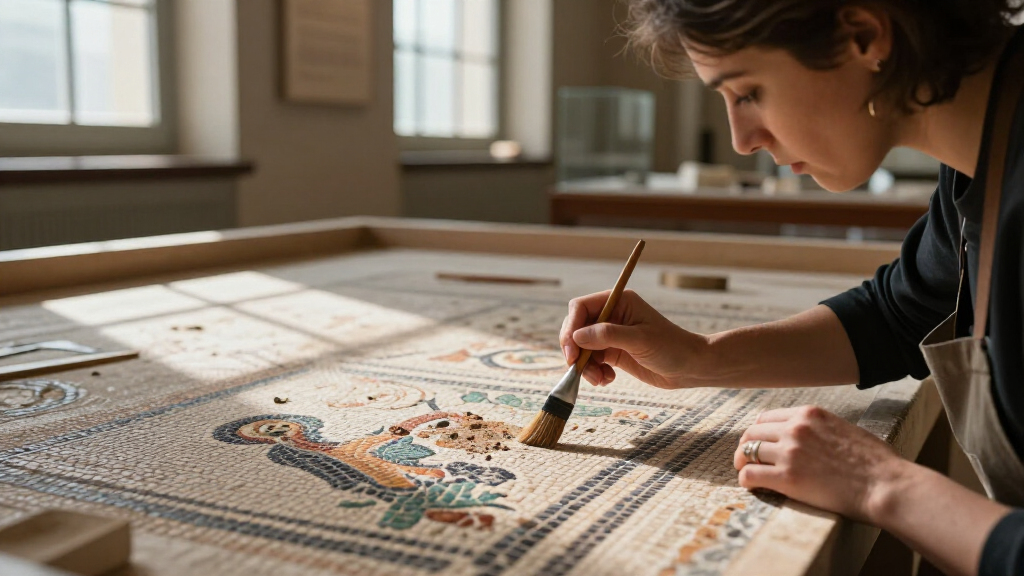
The world’s largest Roman mosaic ever discovered has been officially opened to the public, offering a rare glimpse into ancient Roman artistry and cultural history. The mosaic, unearthed during recent excavations, is now accessible at a site that has become a major archaeological attraction, drawing visitors and scholars from around the globe.
The mosaic was uncovered during excavations at an archaeological site in Italy earlier this year, revealing an intricate and expansive artwork covering an estimated area of over 2,000 square feet. Confirmed by archaeologists involved in the excavation, this mosaic surpasses previous records for size among Roman-era artworks.
Officials from the archaeological authority announced the opening of the mosaic to the public last week, after completing conservation and display preparations. The site now features guided tours, informational exhibits, and digital reconstructions to help visitors appreciate the craftsmanship and historical context of the piece.
Experts involved in the project have emphasized the mosaic’s exceptional quality, noting its detailed depictions of mythological scenes, geometric patterns, and daily life in ancient Rome. The mosaic is believed to date from the 2nd century AD, during a period of significant artistic achievement in the Roman Empire.
Implications for Understanding Roman Artistic Achievement
This discovery is significant because it provides unparalleled insight into Roman artistic techniques, cultural symbolism, and social history. The mosaic’s size and detail surpass previous finds, offering scholars a richer source for studying Roman craftsmanship, iconography, and societal values. Its public display also enhances cultural heritage awareness and tourism, boosting local economies and educational opportunities.
As an affiliate, we earn on qualifying purchases.
Recent Trends in Roman Archaeological Discoveries
Interest in Roman archaeology has surged in recent years, driven by several high-profile discoveries and advancements in excavation technology. The recent unearthing of this mosaic follows a series of significant finds across Italy and the Mediterranean, although the scale of this mosaic makes it a standout. The discovery has attracted widespread media coverage and scholarly attention, reflecting growing global curiosity about ancient Rome.
While the mosaic’s excavation was confirmed by the archaeological team, details about the original site’s full extent and the context of the mosaic within its original structure remain under study. Archaeologists caution that further analysis is needed to fully understand its historical placement and significance.
As an affiliate, we earn on qualifying purchases.
Unresolved Questions About the Mosaic’s Original Context
It remains unclear exactly where the mosaic was originally located within the ancient site, and what specific function it served. Researchers are still analyzing the full extent of the site and the mosaic’s relationship to other structures. Details about the original purpose and the full scope of the complex are still under investigation, and further excavations are planned.
As an affiliate, we earn on qualifying purchases.
Future Research and Public Engagement Plans
Archaeologists plan to conduct further excavations at the site to better understand the mosaic’s original setting and the broader archaeological context. Conservation work will continue to ensure its preservation for future generations. Additionally, there are plans to develop educational programs, virtual tours, and scholarly publications to expand public and academic access to this extraordinary find.
As an affiliate, we earn on qualifying purchases.
Key Questions
How old is the mosaic?
The mosaic is believed to date from the 2nd century AD, during the height of the Roman Empire.
Where exactly was the mosaic found?
The precise location within the archaeological site is still under study, but it was uncovered during recent excavations in Italy.
Can visitors see the mosaic now?
Yes, the mosaic has been opened to the public, with guided tours and exhibits available at the site.
What makes this mosaic so significant?
Its unprecedented size and detailed craftsmanship make it the largest Roman mosaic ever discovered, offering unique insights into ancient Roman art and culture.
Are there plans for further excavations?
Yes, archaeologists plan additional digs to explore the site further and better understand the mosaic’s original context.
Source: rss
Halloween Picks
halloween
As an affiliate, we earn on qualifying purchases.