
TL;DR

Get art and craft supplies delivered free with Prime
- Fast, free delivery on millions of items
- Prime Video, Amazon Music and more included
- Member-only deals all year
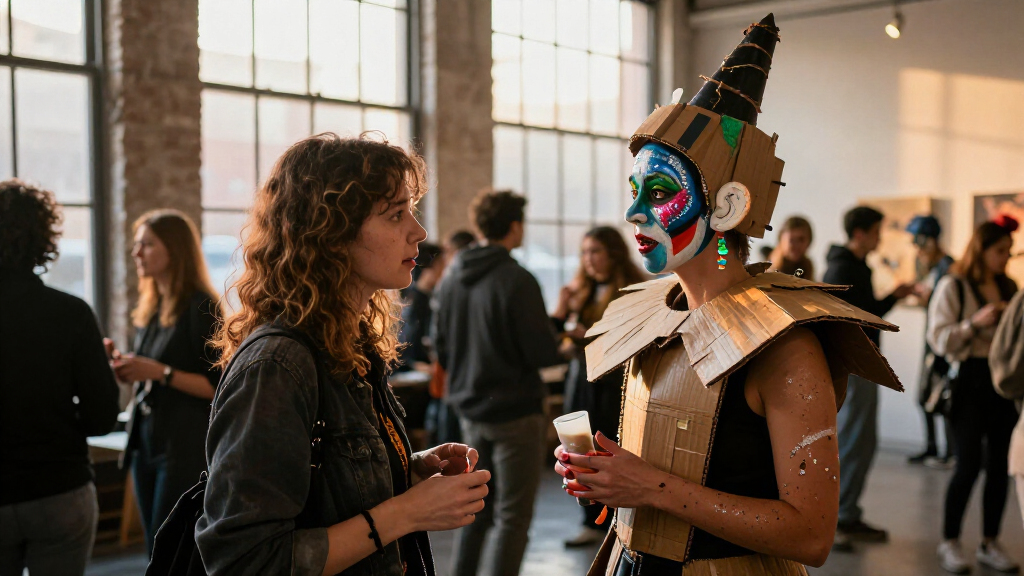
Hyperallergic reported that nearly 200 members, readers, artists and supporters gathered at Oberon in Brooklyn on October 28 for its annual Halloween costume party. The winning costumes referenced artists and artworks including Las Yeguas del Apocalipsis, Francisco Goya, and the famously botched “Ecce Homo” restoration.
Nearly 200 people attended Hyperallergic’s annual art costume party at Oberon in Brooklyn on Wednesday, October 28, with winners drawing on performance art, paintings and art-history oddities. The publication’s recap documents the contest and guests’ costumes, offering a snapshot of how its art-world community turned familiar and obscure works into Halloween outfits.
Hyperallergic said attendees included its members, readers, artists, supporters and their friends. The costume contest featured several awards, including “Best in Show,” “Most Esoteric,” “People’s Choice,” and “Most Likely to Get Censored in Florida.” The publication credited photographer Zac Thompson with documenting the evening.
The “Best in Show” award went to Emilio Rojas and Chico Raro, who portrayed Pedro Lemebel and Francisco Casa Silva of the Chilean art collective Las Yeguas del Apocalipsis, referencing the duo’s 1989 work “Las Dos Fridas.” Zoë Lescaze and Michael Rossi were among the “Most Esoteric” winners for costumes based on lesser-known figures in Francisco Goya’s “Los caprichos”; Hyperallergic said they made every component themselves, including a chair.
Melissa Brown and Marie Lorenz won the “People’s Choice” vote as the botched “Ecce Homo” restoration—sometimes called “Beast Jesus”—and its restorer, Cecilia Giménez Zueco. Other outfits included Roy Lichtenstein’s “Drowning Girl,” Johannes Vermeer’s “Girl with a Pearl Earring,” and George Grosz’s “Eclipse of the Sun,” recreated by curators and staff from the Heckscher Museum of Art. The report also showed guests referencing Marisol, Eva Hesse, Keith Haring, Georgia O’Keeffe, and Marina Abramović and Ulay.
Art History Becomes Partywear
The event’s appeal lies in the range of references: some costumes drew on widely recognized images, while others required knowledge of particular artists, artworks or performance histories. The winning entries show how a costume party can serve as an informal form of art interpretation, making works and artists visible through humor, recreation and shared recognition.
For readers, the recap also provides a record of how a contemporary art community chose to represent itself in 2026. The costumes moved between museum collections, popular culture and conceptual art, while the awards—including “Most Likely to Get Censored in Florida”—used the party format to gesture toward debates around art and public reception. The report does not document any formal policy position or wider campaign tied to that award.
Popular right now

Breville Bambino Espresso Machine, Brushed Stainless Steel (BES450BSS)

Ninja CREAMi Scoop & Swirl 13-in-1 Ice Cream and Soft Serve Maker, NC701

De'Longhi 15-Bar Pump Espresso Machine with Milk Frother & Temperature Control
As an affiliate, we earn on qualifying purchases.
A Recurring Hyperallergic Gathering
Hyperallergic described the October gathering as its annual art costume party. The event brought together people connected to the publication and local art communities at Oberon, a Brooklyn venue. This year’s reported attendance was almost 200, according to the publication.
The costumes drew on works spanning different periods and formats. Examples included Vermeer’s “Girl with a Pearl Earring,” dated by Hyperallergic to about 1665; Grosz’s antifascist painting “Eclipse of the Sun” (1926); and the performance work “Relation in Time” (1977) by Abramović and Ulay. The recap also included outfits based on contemporary or popular references, including Snoopy and an “AI girlfriend.”
““They made every part of their costumes from scratch — yes, including the chair.””
— Hyperallergic on Zoë Lescaze and Michael Rossi’s costumes
What the Recap Leaves Out
The report names award categories and winners but does not provide a complete list of every contestant, the number of entries, or the judging criteria. It also does not specify how many people voted in the People’s Choice category or give a detailed account of how the other awards were decided.
Hyperallergic’s account is a publication-produced recap, accompanied by photographs, rather than an independent assessment of the event. The source material does not establish whether the party raised funds, involved formal partnerships beyond those mentioned, or had any follow-up activities. Those details remain unreported.
The Next Annual Party
Hyperallergic’s report points toward another edition next year, but it does not give a date, venue or confirmed plans for a future party. For now, the photographs and costume descriptions provide the published record of the October 28 gathering. Any announcement about the next event, including its categories or schedule, has not been included in the report.
Key Questions
When and where was Hyperallergic’s Halloween party held?
The party took place on Wednesday, October 28, 2026, at Oberon in Brooklyn, according to Hyperallergic.
Who won Best in Show?
Emilio Rojas and Chico Raro won Best in Show for costumes referencing Pedro Lemebel and Francisco Casa Silva of Las Yeguas del Apocalipsis’s “Las Dos Fridas” (1989).
What won the People’s Choice award?
Melissa Brown and Marie Lorenz won People’s Choice as the “Ecce Homo” restoration—also known as “Beast Jesus”—and its restorer, Cecilia Giménez Zueco.
How many people attended?
Hyperallergic reported that almost 200 people attended. The publication did not provide an exact count.
Has next year’s party been announced?
The report anticipates another annual party but gives no date, venue or confirmed plans for the next event.
Source: hyperallergic.com