
TL;DR

Get art and craft supplies delivered free with Prime
- Fast, free delivery on millions of items
- Prime Video, Amazon Music and more included
- Member-only deals all year
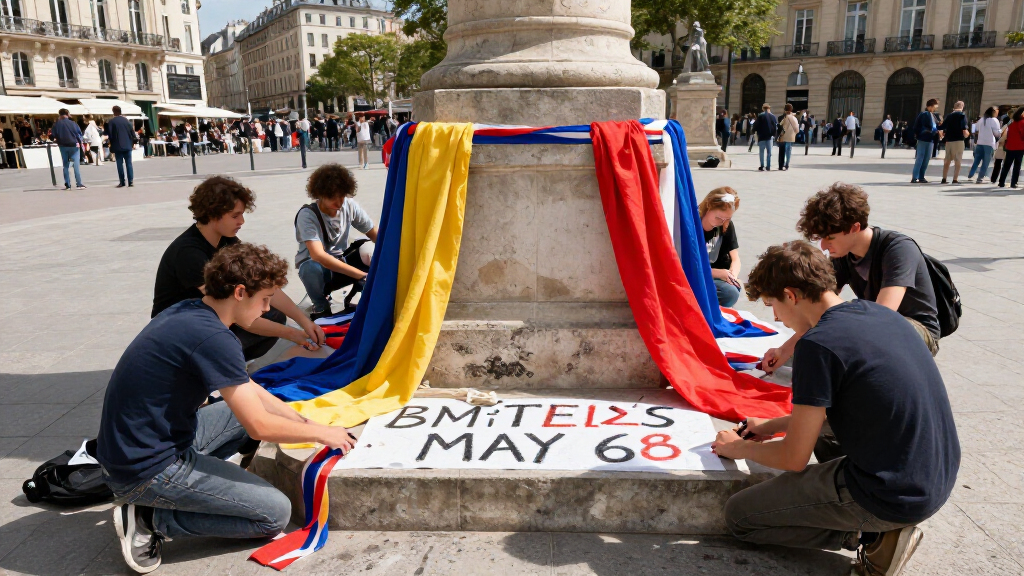
French students have used public monuments and culturally significant sites as part of protests over under-resourced schools, police violence and the cost of living. Reported actions include dressing the Marianne statue at Place de la République, blocking the Louvre entrance and knocking over a bust at Marseille City Hall. The report draws parallels with May 1968, but the scale and full consequences of the current protests remain unclear.
French student protesters have dressed, marked and occupied public monuments in recent demonstrations against under-resourced schools, police violence and rising living costs, according to Hyperallergic. The actions echo protest tactics used in May 1968 and turn landmarks into visible platforms for the students’ demands.
Earlier in October, protesters draped Paris’s Monument à la République in a white garment reading, “Neglected high schools, youth sacrificed,” according to the report. The display referred to poor working conditions, staff shortages and long hours in the education system. On October 17, organizers put a yellow vest on the statue of Marianne at the monument, with a message alleging that police were mutilating high school students.
On October 19, dozens of students from the École du Louvre blocked the main entrance to the Louvre Museum, which is housed in the former royal palace. In Marseille, a separate group broke into City Hall and knocked a bust of Marianne to the floor. The report also describes protesters marking allegorical figures of Liberty, Equality and Fraternity at Place de la République with black tears.
Other actions connected the protests to movements beyond France. Protesters placed a Palestinian flag and a yellow vest on a statue of Joan of Arc in Toulouse; authorities removed both items. The display prompted online disagreement over whether monuments should serve as sites for political messages and whether the flag connected human rights struggles or challenged French national identity.
Monuments Become Protest Platforms
The actions make public landmarks part of the dispute, rather than simply sites near demonstrations. By dressing or marking statues associated with the Republic, protesters connect current complaints about schools and policing to broader arguments about national values, historical memory and who can use public space.
The displays also make protest messages visible beyond rallies themselves. A message placed on Marianne or a flag raised on a statue can invite public debate, as the response to the Toulouse action showed. These gestures may draw attention to the demonstrators’ claims, but they can also produce disagreement about national symbols and the limits of political expression in shared spaces.
The report links the recent activity to May 1968, when students used statues and university buildings in protests against education conditions and the government. That comparison describes a shared tactic; it does not by itself establish that the present movement has the same scale, aims or political consequences.
As an affiliate, we earn on qualifying purchases.
From May 1968 to October
During May 1968, students in Paris used monuments and university sites to express political demands. After the closure of Paris Nanterre University on May 2, demonstrators went to the Sorbonne, where they hung portraits of Marx, Lenin and Mao from its façade and placed red flags in the hands of statues of Louis Pasteur and Victor Hugo. On May 13, protesters climbed the Monument à la République during a demonstration held alongside a national general strike.
The current actions also draw on more recent protest imagery. The yellow vest placed on Marianne refers to the gilets jaunes, whose protests from 2018 to 2020 focused on fuel prices and the hardships facing ordinary citizens. Hyperallergic says the display also pointed to a widening public-police rift and reports that rights groups and lawyers have accused police of causing severe injuries to teenagers. Those allegations, and the specific incidents cited in the report, should be distinguished from the protesters’ messages on the monuments.
Monuments have served as targets and platforms in other movements, too. The report cites actions during Black Lives Matter protests, including the toppling or defacement of statues commemorating colonial and racist figures, and a 2020 action in France in which protesters covered a statue of colonial administrator Joseph Gallieni with black cloth.
““Neglected high schools, youth sacrificed.””
— Message displayed by protesters at the Monument à la République
As an affiliate, we earn on qualifying purchases.
The Protests’ Scale and Outcomes
The supplied report does not establish the overall size or duration of the current protest movement, how many schools or students are involved, or whether the demonstrations have produced policy changes. It describes several actions in Paris, Marseille and Toulouse, but does not provide a full chronology or a count of arrests and injuries.
Accounts of police conduct are attributed to protesters, rights groups and lawyers. The report cites allegations of serious injuries to minors but does not include a response from police or a complete account of the incidents. It is also unclear whether the groups involved in the different monument actions are coordinated or share a single set of demands.
As an affiliate, we earn on qualifying purchases.
Further Demonstrations and Official Responses
The supplied material does not give a schedule for future demonstrations or identify a planned government response. The next developments to watch are whether students continue actions at landmarks and education sites, whether authorities respond with removals or restrictions, and whether officials address the demands over school resources and police conduct.
Any further reporting should clarify the dates and locations of new actions, the students’ stated demands, and the status of the allegations about injuries. The debate over the Toulouse display also leaves open how authorities and the public will respond to political symbols placed on national monuments.
historical monument cleaning tools
As an affiliate, we earn on qualifying purchases.
As an affiliate, we earn on qualifying purchases.
Key Questions
What are French students protesting?
The reported protests address under-resourced schools, difficult working conditions, staff shortages, police violence and the cost of living. The article describes different actions in several cities but does not establish one complete list of demands shared by every group.
What have protesters done to monuments?
Reported actions include dressing Marianne at Place de la République in political messages, marking allegorical statues with black tears, placing a Palestinian flag and yellow vest on a Joan of Arc statue, and climbing the Monument à la République. In Marseille, demonstrators knocked over a bust of Marianne at City Hall.
Why are the protests compared with May 1968?
Students in 1968 also used statues, monuments and university buildings to express political demands. The comparison concerns the use of public symbols and sites; the available report does not show that the present protests match the earlier movement in scale or outcome.
Are claims of police violence confirmed?
The report attributes accusations of serious injuries to rights groups and lawyers and includes allegations displayed on protest garments. It does not provide a police response or establish those claims as official findings, so the details remain disputed or incomplete in the supplied material.
Source: rss
Halloween Picks
halloween
As an affiliate, we earn on qualifying purchases.