
TL;DR

Get art and craft supplies delivered free with Prime
- Fast, free delivery on millions of items
- Prime Video, Amazon Music and more included
- Member-only deals all year
Paul Ramírez Jonas’s participatory artwork Public Trust was presented in Toronto last month by The Bentway, inviting strangers to make and publicly display promises. First shown in Boston in 2016, the project places personal commitments alongside public statements and political headlines; the report frames its return as timely ahead of Toronto’s municipal election.
Artist Paul Ramírez Jonas’s participatory artwork Public Trust invited people in Toronto last month to make promises to strangers, display the vows on a large marquee and take home individual contracts recording them. Presented by The Bentway ahead of Toronto’s municipal election, the project brings private commitments into a public setting and asks participants to reflect on the power of their words and civic participation.
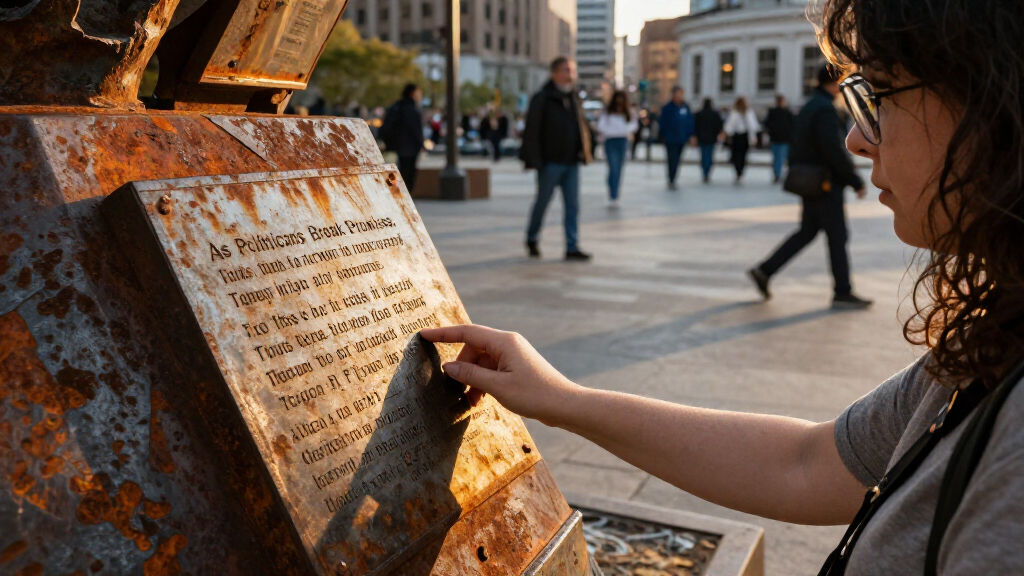
In the Toronto presentation, participants sat down with someone they did not know, made a promise and swore to keep it. The promise was then spelled out on a large-scale marquee, while each participant received a one-of-a-kind contract to take home. One example recorded at the event was: “I promise to disagree better.” The report does not give a full count of participants or vows.
The Bentway presented the work, with programming directed by Anna Gallagher-Ross. Public Trust was commissioned and first shown in Boston in 2016 by Now + There, an organization founded by Kate Gilbert and later renamed the Boston Public Art Triennial. The Toronto event revisits the project as the city approaches a municipal election.
In Boston, promises made by residents were placed alongside daily headlines and commitments from politicians, corporations, weather forecasters and others. The contrast connected everyday vows—often about family or self-improvement—with statements made by public figures and institutions. The source describes this as an invitation to consider how words, participation and public trust relate; it does not report an evaluation of whether participants kept their promises.
Personal Vows Meet Public Promises
The work makes promising a public act: a commitment is spoken to another person, displayed for others to see and recorded in a document. Its format brings a small, personal exchange into the same public space as statements by political and corporate actors, without treating the two kinds of promise as identical.
That juxtaposition is relevant during an election campaign, when voters encounter promises from candidates alongside their own expectations of civic life. The report argues that the project feels particularly urgent now, but that is an interpretation of the artwork’s timing, not a finding that it changes political behavior. Its immediate value is as a public prompt for discussion about accountability, disagreement and participation.
Popular right now

Philips 2200 Series Fully Automatic Espresso Machine with Classic Milk Frother, 2 Coffee Varieties, Intuitive Touch Display, Ceramic Grinder

KitchenAid 5.5-Qt Bowl-Lift Stand Mixer, Porcelain White (KSM55SXXX)

TCL 65-Inch T7 Series 4K QLED Smart Google TV, 144Hz (65T7)
As an affiliate, we earn on qualifying purchases.
From Boston Commission to Toronto
Public Trust began in Boston in 2016, months before Donald Trump was first elected president, according to the original report. It was the first project commissioned by Now + There, then a small organization described in the report as having a one-and-a-half-person team. The project later helped set a standard for the organization’s commissions.
Its structure links personal testimony with the wider flow of public statements and headlines. That design has remained central as the work has been presented in different places. For the Toronto event, the report connects the timing to the upcoming municipal election, but does not say the work was commissioned by an election authority or affiliated with a candidate or party.
“I promise to disagree better.”
— Toronto participant, as quoted in the Hyperallergic report
What the Toronto Event Cannot Show
The report does not specify the Toronto presentation’s exact dates, total attendance, number of promises collected or how long the marquee was displayed. It also does not say whether participants will be contacted later to report on keeping their vows. The example promises are documented as statements, not independently verified actions.
The article’s claim that the project feels more urgent is an opinion about its relevance. No evidence is provided that Public Trust affected voting, political accountability or public confidence. The precise schedule for Toronto’s municipal election is also not included in the source material.
The Election and the Work’s Return
The immediate civic milestone identified in the report is Toronto’s approaching municipal election. The source does not announce another presentation, a follow-up event or a plan to publish results from the promises made. Whether The Bentway will bring Public Trust back, or whether the contracts and displayed vows will be revisited, remains unreported.
For now, the confirmed development is the Toronto presentation itself: residents were invited to make commitments with strangers and take a record of those commitments home. Any further impact will depend on what participants and the presenting organization do after the event.
Key Questions
What is Public Trust?
Public Trust is a participatory artwork by Paul Ramírez Jonas. It invites people to make promises with strangers, display the words publicly and take home a contract recording the vow.
Where and when was the project presented?
The Bentway presented the work in Toronto last month, according to the report. It was first commissioned and shown in Boston in 2016.
What kind of promises did participants make?
The report gives the example, “I promise to disagree better.” It says many Boston vows concerned family or self-improvement, but does not provide a complete list of Toronto promises.
Did the artwork track whether people kept their promises?
The report does not say that promises were checked or followed up. It describes the vows as displayed and recorded, not as verified commitments.
Why was the artwork presented in Toronto now?
The report connects the presentation to the city’s approaching municipal election and interprets the work as timely for reflection on public words and civic participation. It does not identify a direct campaign or electoral role for the project.
Source: hyperallergic.com