TL;DR

Get art and craft supplies delivered free with Prime
- Fast, free delivery on millions of items
- Prime Video, Amazon Music and more included
- Member-only deals all year
Photographer Cy Kuckenbaker’s short film “Everything Twice” pairs his account of learning he was born with a rare disease with a slow analog photography practice. The source describes the work as a meditation on disability, disconnection and self-discovery; it does not name the disease or provide a release date.
Photographer Cy Kuckenbaker has made “Everything Twice,” a short film connecting his discovery that he was born with a rare disease to a slow, handmade analog photography practice. The work, reported by Colossal, uses landscape images and the process of making them to reflect on disability, disconnection and self-discovery.
According to Colossal’s report, Kuckenbaker noticed from childhood that one of his eyes drooped. He had attributed the difference to a snowboarding accident, but doctors dismissed that explanation. After what the report describes as numerous tests over many years, he learned he had been born with a rare disease. The source does not identify the condition or give details about its diagnosis or effects.
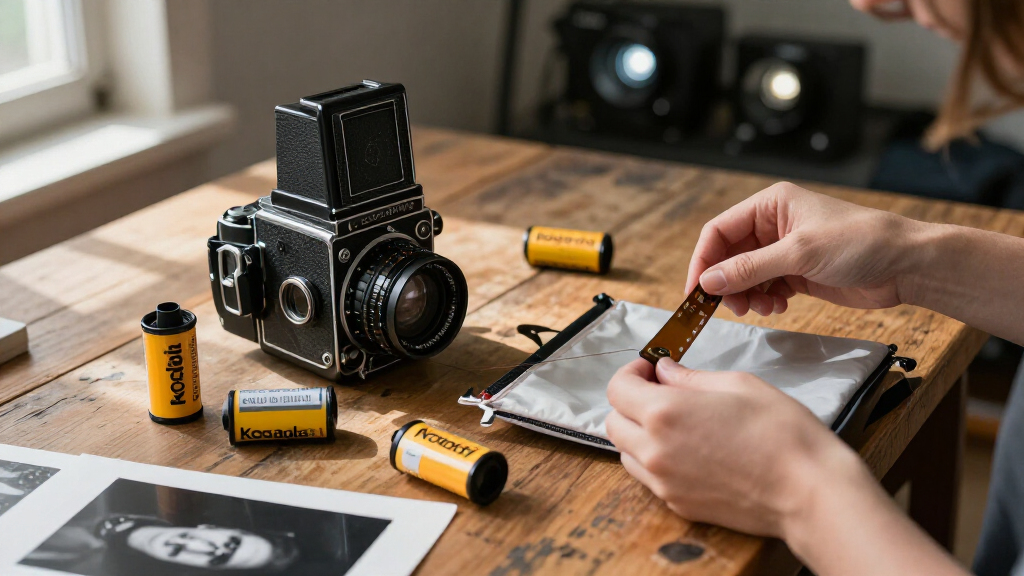
Kuckenbaker developed an analog photography process as a response to burnout, using homemade cameras made from cardboard boxes and drugstore magnifying glasses. He photographed landscapes and other sights along the West Coast. The film brings those images and the labor involved in making them together with his account of reaching a diagnosis.
Colossal characterizes the film as a quiet meditation rather than a medical explainer. Its description frames the work around the slow effort of both photography and understanding an unusual condition, while connecting those experiences to loss and a sense of disconnection. The available report offers a summary, not a full account of the film’s scenes or production.
Slow Photography Meets Disability
The film links two kinds of gradual process: making photographs with improvised equipment and piecing together an explanation for a physical difference that Kuckenbaker had noticed since childhood. That connection offers viewers an account of diagnosis as lived experience, rather than only as a medical outcome.
Its approach also places disability within an artist’s personal and creative life. The reported emphasis is on how Kuckenbaker makes sense of his experience, not on claiming that photography treats or resolves a disease. For audiences interested in artist-led disability narratives, the work provides a way to consider how identity, uncertainty and creative practice can intersect.
Popular right now

Vitamix Propel Series 510 Professional-Grade Blender, 3 Programs, Black

Vitamix 5200 Professional-Grade Blender, 64 oz. Container, Black

KitchenAid Classic Series 4.5-Quart Tilt-Head Stand Mixer, Onyx Black
As an affiliate, we earn on qualifying purchases.
From Childhood Observation to Diagnosis
Kuckenbaker’s early explanation for his drooping eye was a past snowboarding accident. The report says doctors did not accept that theory and that many years and tests passed before he learned the condition was present from birth. It does not provide a precise timeline, so the interval between his first observation and diagnosis cannot be established from the account.
The photography practice developed in a separate but connected part of the story: Kuckenbaker began working slowly with handmade cameras to combat burnout. Colossal describes the resulting images as views of West Coast landscapes and sights. The film brings these threads together, using the physical making of images alongside a personal account of medical discovery.
““a quiet meditation on disability and the ways we orient ourselves in the world””
— Colossal’s report on “Everything Twice”
Details the Report Leaves Open
The available source does not name Kuckenbaker’s rare disease, explain its symptoms beyond the reported drooping eye, or describe its medical implications. It also does not specify when the diagnosis was made or what tests led to it. Those gaps mean the film’s personal account should not be treated as a complete medical history.
The source does not state the film’s release date, screening availability, length or whether Kuckenbaker has discussed the work in a separate interview. It offers no direct statement from him beyond the details relayed in the report, and no information about how the film has been received.
Viewing and Further Details
Colossal’s October 2026 report is the available source for the project, but it does not set out a forthcoming screening, release or event. Readers seeking to watch “Everything Twice” will need to check the film’s or Kuckenbaker’s official channels for access information. Further information about the diagnosis or the film’s production would need to come from Kuckenbaker or another attributable source; it is not established in the report.
Key Questions
What is “Everything Twice”?
It is a short film by photographer Cy Kuckenbaker that connects his experience of learning he was born with a rare disease to a handmade analog photography practice, according to Colossal.
What rare disease does Kuckenbaker have?
The source material does not name the disease. It says he learned after many years and numerous tests that he was born with a rare condition.
How did he make the photographs?
Colossal reports that Kuckenbaker used homemade cameras made from cardboard boxes and drugstore magnifying glasses to photograph West Coast landscapes and other sights.
When and where can viewers watch the film?
The report does not give a release date or viewing details. Check Kuckenbaker’s or the film’s official channels for current access information.
Source: thisiscolossal.com