
TL;DR

Get art and craft supplies delivered free with Prime
- Fast, free delivery on millions of items
- Prime Video, Amazon Music and more included
- Member-only deals all year
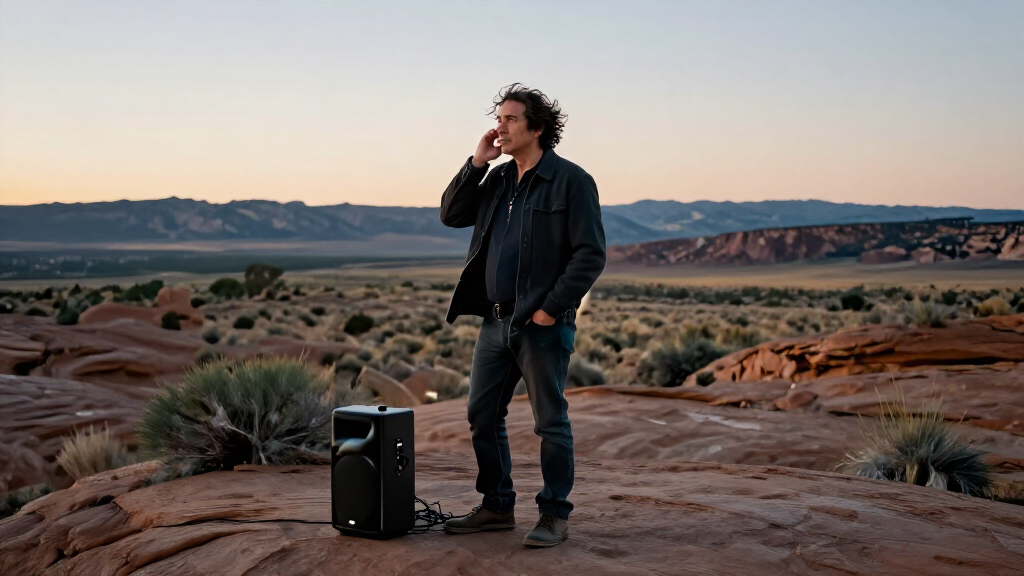
Pulitzer Prize-winning Diné composer, performer and visual artist Raven Chacon gave hour-long improvisational performances at New York’s Park Avenue Armory on October 7 and 8, 2026. The Artists Studio sessions combined electronics and unusual sound-making objects with recordings of wind and other outdoor sounds; Chacon discussed how place and ambient noise shape his work.
Diné composer and artist Raven Chacon performed two hour-long improvisations at Manhattan’s Park Avenue Armory on October 7 and 8, using electronic equipment, whistles and recordings of wind to build sound pieces shaped in part by the surrounding city. The performances were part of the Armory’s 2026 Artists Studio series; in an interview with Hyperallergic, Chacon discussed how place, outdoor recordings and ambient sounds enter his work.
At the center of the Veterans Room, Chacon placed mixers, synthesizers, pedals, speakers and whistles alongside a turkey call and a ceramic horn. During the October 8 performance, he amplified and looped a whistle, layered it with a rising electronic drone, and then interrupted the texture with recordings of his own breath. The sounds shifted between sustained tones, squeals and metallic effects.
Chacon ended that session by playing recordings of wind through a hyperdirectional speaker, moving the speaker in a circle so the sound swept across different parts of the room. The performance also had to contend with noises from outside, including traffic on Park Avenue. Hyperallergic’s report described those interruptions as part of the sound environment, rather than as a separate soundtrack.
Speaking to Hyperallergic between the performances, Chacon said that when he plays indoors in a city, he often brings in field recordings of outdoor sounds, including wind recorded in New Mexico, where he is from. He said the sounds of sirens and traffic can also become part of what he works with. The report notes that the recordings were not made specifically for the Armory.
City Noise Enters the Performance
The sessions show how Chacon’s improvisations can place sounds from different locations beside the immediate acoustic conditions of a venue. Recorded wind from New Mexico, amplified breath and the sounds of Manhattan traffic coexisted in the Armory room, making place part of the performance without presenting the recordings as specific to the building.
That approach also gives audiences a view of Chacon’s process: he works with a range of sound-making tools and changes the piece as it unfolds. The performance’s effects and meaning are interpretive; the report describes shifts from abstraction to sounds that recalled the outside world. Chacon’s own comments offer a more direct account of his choices: indoor city performances often lead him to use outdoor recordings and to incorporate sounds that reach the space from beyond it.
As an affiliate, we earn on qualifying purchases.
Recordings, Place and Ambient Sound
Chacon is a Diné composer, performer and visual artist and a Pulitzer Prize winner. The Armory performances were reported as part of its 2026 Artists Studio series. They followed other work in which, according to Chacon, the materials and setting informed his sound choices.
In the Hyperallergic interview, he discussed a work for a group exhibition at the Hammer Museum that drew on the show’s attention to the ground and materials such as soil and dirt. He also referred to local natural history and Lenape culture and history in relation to an Arts and Letters show. These examples provide context for his interest in place, but Chacon said the recordings used at the Armory were gathered elsewhere, including in New Mexico, rather than being created specifically for that venue.
“When I’m playing in the city, I tend to bring in more field recordings of the outdoors, of wind and other sounds from other places.”
— Raven Chacon, speaking to Hyperallergic
portable synthesizer for musicians
As an affiliate, we earn on qualifying purchases.
As an affiliate, we earn on qualifying purchases.
What the Report Leaves Open
The source report documents the two performances and Chacon’s remarks, but does not provide a full set list, recordings of the sessions, or a detailed account of how each sound was produced. It also does not establish that the pieces had fixed compositions or that the Armory sounds were planned in advance; Chacon described the sessions as improvisations.
The report mentions an upcoming show at the San Francisco Museum of Modern Art and Chacon’s turn toward science fiction, but does not give a date, title or further production details. The nature of that project, and whether it will use techniques heard at the Armory, remains unclear from the material provided.
loop pedal for guitar and electronics
As an affiliate, we earn on qualifying purchases.
As an affiliate, we earn on qualifying purchases.
A Future SFMOMA Presentation
Chacon told Hyperallergic he was turning to science fiction for an upcoming presentation at the San Francisco Museum of Modern Art. The source does not specify when it will open or describe its format, so those details have not been confirmed here. For now, the next reported development is that planned museum project; further information would clarify how it relates to the improvisational work heard at the Armory.
hyperdirectional speaker for outdoor sound
As an affiliate, we earn on qualifying purchases.
As an affiliate, we earn on qualifying purchases.
Key Questions
What happened at the Park Avenue Armory?
Raven Chacon performed two hour-long improvisations in the Veterans Room on October 7 and 8, 2026, as part of the Armory’s Artists Studio series.
What sounds and instruments did Chacon use?
The report lists synthesizers, mixers, pedals, speakers, whistles, a turkey call and a ceramic horn. Chacon also used recorded breath and wind in the October 8 performance.
Were the field recordings made at the Armory?
No. Chacon told Hyperallergic that many outdoor recordings came from New Mexico, where he is from. He said they were not site-specific to the Armory.
What did Chacon say about the sounds of New York?
He said that sirens and traffic can become part of the soundtrack he works with when performing indoors in a city. Traffic outside the Armory was audible during the sessions, according to the report.
What is known about Chacon’s upcoming SFMOMA project?
Chacon told Hyperallergic that he was turning to science fiction for an upcoming show at the San Francisco Museum of Modern Art. The source does not provide its date, title or further details.
Source: rss
Halloween Picks
halloween
As an affiliate, we earn on qualifying purchases.