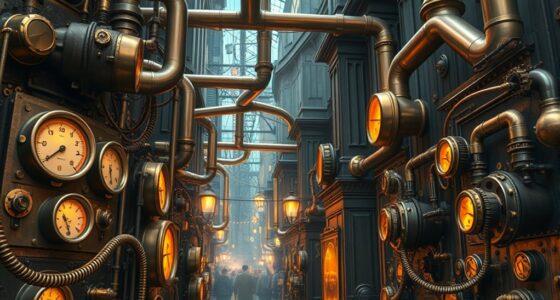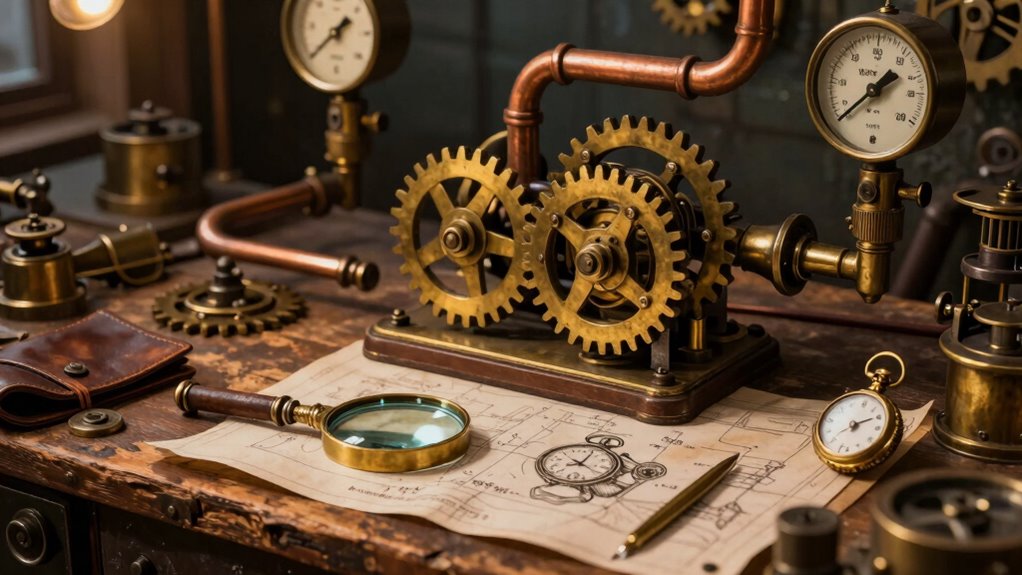

To create authentic steampunk builds, focus on studying Victorian technologies like steam engines, clockwork mechanisms, and early electrical devices. Learn how steam-powered machinery works, including gears, pistons, and valves, to make your designs more realistic. Explore old engineering manuals, blueprints, and materials such as brass, copper, and leather to replicate period-accurate textures and functions. Keep exploring these technical sources to deepen your understanding and craft even more convincing steampunk creations.

Get art and craft supplies delivered free — and shop member deals
- Fast, free delivery on millions of items
- Access to Prime Big Deal Days deals on October 6–7
- Prime Video, Amazon Music and more included
Key Takeaways
- Victorian steam engine mechanisms, including gear trains, pistons, and valves, to replicate authentic propulsion systems.
- Clockwork and gear-based devices to understand intricate mechanical movements and fine craftsmanship.
- Materials like brass, copper, and leather to achieve period-appropriate textures and finishes.
- Victorian engineering manuals and blueprints for accurate design principles and component details.
- Innovations in electrical gadgets and early electrical engineering for integrating futuristic steampunk elements.
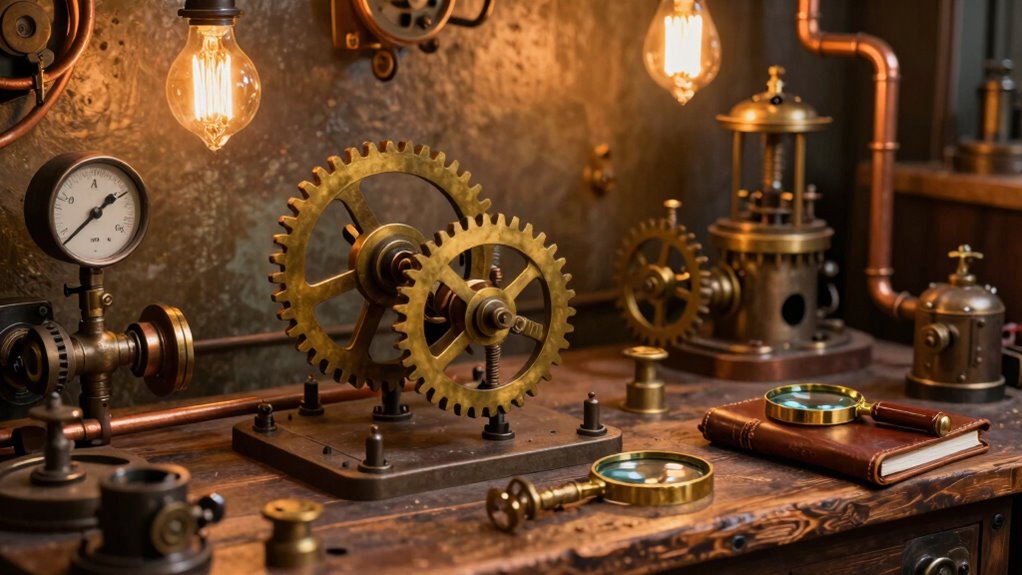
Have you ever wondered how to bring authentic steampunk flair to your builds using real-world technology? The key lies in understanding Victorian innovation and mechanical engineering, both of which form the backbone of true steampunk aesthetics. Victorian innovation refers to the rapid technological advancements during Queen Victoria’s reign, from early electrical experiments to intricate clockwork mechanisms. By studying this period, you gain insight into the design principles, materials, and inventive spirit that define steampunk style. Mechanical engineering, on the other hand, offers the practical knowledge necessary to create functional, intricate mechanisms that mimic the complex machinery of the era. Combining these fields allows you to craft pieces that are not only visually compelling but also mechanically convincing.
Start by immersing yourself in Victorian-era inventions. Look into the development of steam engines, clockwork devices, and early electrical gadgets. These technologies are rich sources of inspiration, giving your builds a sense of historical authenticity. For example, understanding how steam-powered machinery operated helps you design gears, pistons, and valves that look and feel genuine. Mechanical engineering principles reveal how these components work together, enabling you to incorporate moving parts that add life and realism to your creations. Whether you’re building a costume, a prop, or an architectural model, integrating authentic mechanical elements makes your project more immersive. Exploring Victorian-era engineering manuals can deepen your understanding of these mechanisms and inspire innovative designs. Additionally, studying the evolution of steam technology can reveal how various components were optimized for efficiency and durability during the period.
Next, delve into the craftsmanship and materials used during Victorian times. Brass, copper, leather, and wood were common, each contributing to the authentic look and feel. Learning about their properties allows you to select the right materials for your build, ensuring it appears true to period while remaining durable. Studying Victorian engineering manuals and blueprints can also teach you the intricacies of gear ratios, linkages, and mechanisms, which you can replicate or adapt for your own designs. This knowledge helps you avoid superficial decorations and instead focus on functional, well-constructed components. Additionally, understanding the properties of traditional materials can help you replicate the authentic textures and finishes of period-appropriate designs. Exploring Victorian-era engineering manuals can deepen your understanding of these mechanisms and inspire innovative designs. Incorporating traditional fabrication techniques can further enhance the authenticity of your projects, making them feel genuinely Victorian.
Victorian steam engine model kit
As an affiliate, we earn on qualifying purchases.
As an affiliate, we earn on qualifying purchases.
Frequently Asked Questions
Are There Safety Considerations When Using Real-World Steampunk Materials?
Yes, there are safety considerations when using real-world steampunk materials. You should always wear safety gear like gloves, goggles, and masks to protect against material hazards such as sharp edges, toxic fumes, or skin irritation. Research each material’s safety data sheet, work in well-ventilated areas, and handle chemicals carefully. Being cautious guarantees you enjoy your steampunk projects without risking health or safety.
How Can I Source Authentic Vintage Steampunk Components?
You can source authentic vintage steampunk components through antique sourcing and vintage restoration shops, where genuine items like brass fittings, clock parts, and Victorian-era hardware are available. Don’t worry if some pieces seem rare; online marketplaces and specialized auctions often feature authentic collectibles. Attend vintage fairs or steampunk conventions to connect with collectors. Patience and research help guarantee you find the most genuine, high-quality components for your build.
What Modern Tools Best Replicate Victorian Craftsmanship Techniques?
To replicate Victorian craftsmanship with modern tools, you should focus on precision laser cutters and 3D printers. These tools allow you to mimic intricate Victorian detailing and ornate designs accurately. Additionally, using CNC milling machines helps attain authentic metalwork and woodwork finishes. Combining these modern replication techniques with traditional hand-finishing methods ensures your steampunk builds capture the authentic Victorian craftsmanship aesthetic, blending old-world charm with contemporary efficiency.
Can These Technologies Be Integrated Into Functional Steampunk Gadgets?
Yes, you can integrate these technologies into functional steampunk gadgets by blending innovative power sources with retro-futuristic aesthetics. Use modern batteries or compact fuel cells to power your creations while incorporating Victorian-inspired design elements. This combination allows your gadgets to be both visually authentic and practically efficient. By carefully balancing modern technology with vintage craftsmanship, you create unique, functional steampunk devices that captivate and impress.
Are There Environmental Impacts Associated With These Real-World Materials?
Yes, there are environmental impacts linked to these materials. You should consider environmental sustainability by choosing eco-friendly options that reduce waste and energy use. Material toxicity is also important, as some metals and chemicals can be harmful to humans and ecosystems. By researching and selecting sustainable, non-toxic materials, you can create steampunk gadgets that are both impressive and responsible, minimizing negative effects on the environment.
As an affiliate, we earn on qualifying purchases.
Conclusion
Incorporating real-world technologies into your steampunk builds can truly elevate their authenticity and creativity. Did you know that the steampunk aesthetic has seen a 40% rise in popularity over the past five years? By using tech like vintage gauges, brass fittings, and antique-inspired mechanisms, you’ll create pieces that feel both innovative and historically inspired. So, immerse yourself in these technologies and bring your steampunk visions to life—your unique creations will captivate and inspire others.
early electrical gadgets replica
As an affiliate, we earn on qualifying purchases.
As an affiliate, we earn on qualifying purchases.
Victorian engineering blueprint prints
As an affiliate, we earn on qualifying purchases.
As an affiliate, we earn on qualifying purchases.
Fall Picks
fall essentials
As an affiliate, we earn on qualifying purchases.