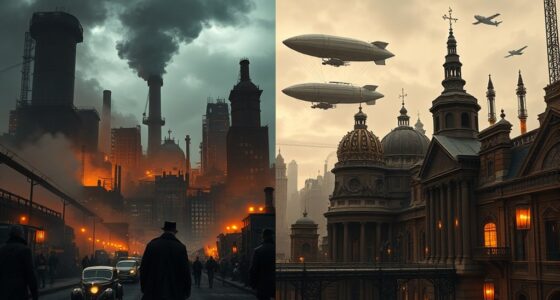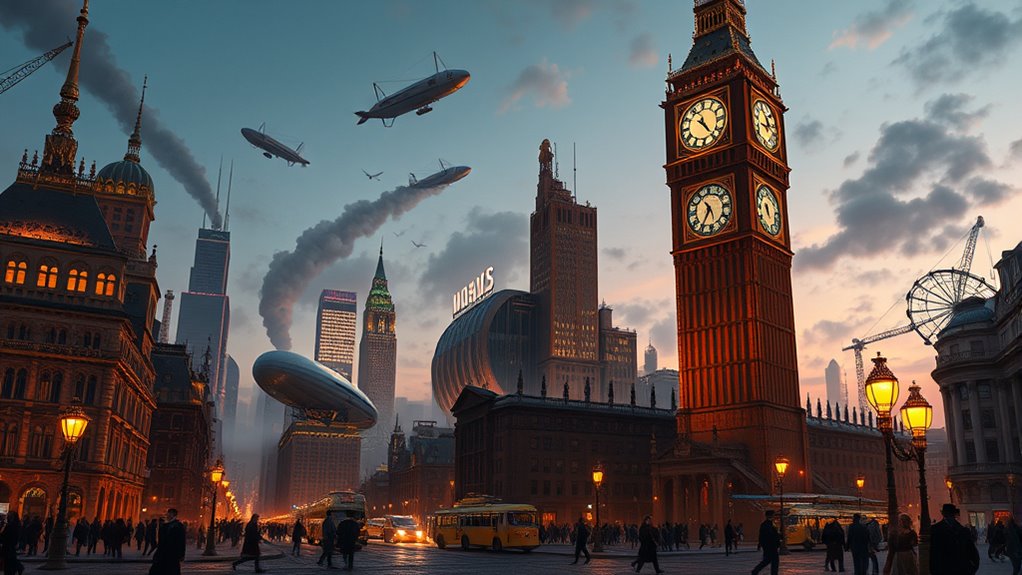
In steampunk fiction, you explore alternate histories where Victorian aesthetics mix with futuristic steam-powered technology, changing how societies, politics, and economies develop. Imagine worlds where inventions like airships, automatons, and clockwork devices follow unique paths, shaping power structures and social hierarchies differently from real history. These worlds highlight how technological divergence influences everything from government control to societal values. If you keep exploring, you’ll discover how these imaginative worlds reflect complex interactions between technology, politics, and societal change.
Key Takeaways
- Steampunk fiction reimagines history with Victorian aesthetics and futuristic steam-powered technology, creating alternate worlds.
- Divergent technological development alters societal structures, economies, and cultural norms in these histories.
- Advanced gadgets like airships and automatons reshape political power, influencing governance and international relations.
- Inventions symbolize power, often highlighting themes of inequality, rebellion, and societal change.
- These stories explore how technological divergence drives political, social, and cultural evolution in alternate timelines.
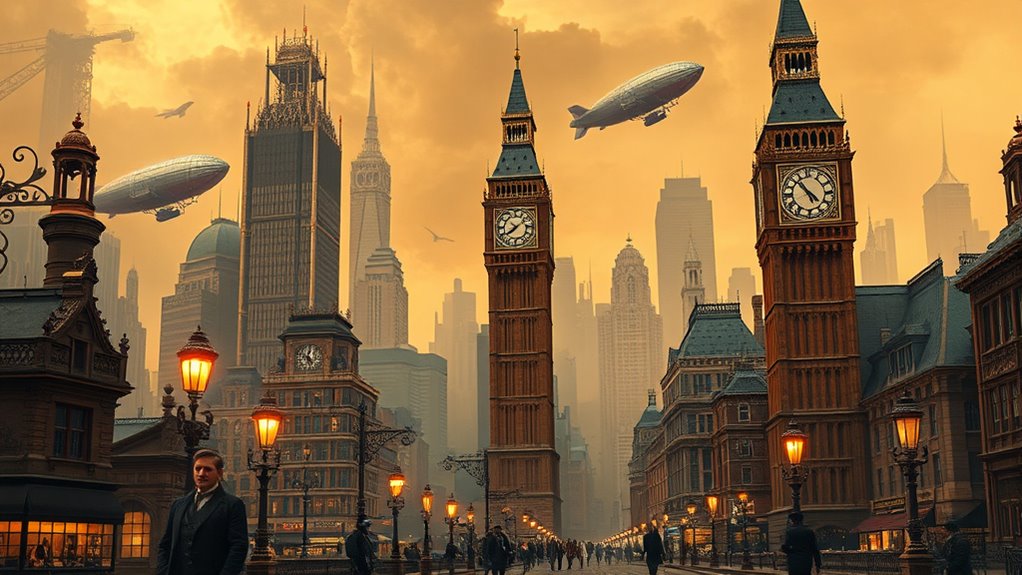
Steampunk fiction often explores alternate histories by reimagining the past with futuristic technology and Victorian aesthetics. When you immerse yourself in these worlds, you notice how technological divergence plays a pivotal role in shaping society differently from our real history. Instead of following the familiar path of industrialization, these stories imagine a world where steam-powered machines, clockwork devices, and innovative inventions develop along unique trajectories. This divergence isn’t just about gadgets; it fundamentally alters how societies function, how economies grow, and how cultures evolve. As a reader or a viewer, you see that technological divergence creates a landscape where the familiar rules of history no longer apply, leading to a universe rich with new possibilities and challenges.
This divergence also triggers significant political ramifications. In these alternate worlds, power structures are often reshaped by the technological advancements that exist—airships dominating the skies, automatons serving as soldiers or laborers, and communication devices that revolutionize diplomacy. You might find that political institutions are more centralized or decentralized depending on how technology influences control and influence. For example, a society with advanced surveillance technology could have a more oppressive government, while others might develop decentralized networks that empower local communities. The political landscape becomes a reflection of how technology either consolidates or disperses power, creating tensions and alliances unlike those in our history. Additionally, the development and deployment of these technologies are often driven by technological divergence, which significantly impacts societal structures.
As you follow these stories, you realize that the political ramifications extend beyond mere control. They influence social hierarchies, economic systems, and international relations. The inventions that define these worlds often serve as symbols of power—an empire’s dominance might hinge on its mastery of steam-powered war machines, while a rebellion might gain momentum using innovative gadgets that bypass traditional authority. These shifts challenge your understanding of morality and governance, prompting questions about whether technological progress inherently leads to greater equality or if it deepens existing inequalities. You start to see how the divergence in technology isn’t just a backdrop but a driving force behind the political evolution of these worlds, making each narrative a compelling exploration of power, innovation, and societal change.
Top picks for "alternate history steampunk"
As an affiliate, we earn on qualifying purchases.
Frequently Asked Questions
How Does Steampunk Romance Differ From Traditional Romance?
Steampunk romance differs from traditional romance by blending Victorian courtship with alternative love stories, often set against a backdrop of gears, steam, and innovation. You’ll see characters steering societal expectations while exploring unconventional relationships and futuristic ideas. Instead of classic love arcs, steampunk romances emphasize inventive, often rebellious connections, making the love stories more adventurous and unique. This genre invites you to experience romance through a lens of technological wonder and Victorian elegance.
Are Real Historical Figures Commonly Featured in Steampunk Alternate Histories?
Yes, you’ll often see famous personalities and political leaders featured in steampunk alternate histories. These figures add authenticity and intrigue, allowing you to explore how their actions or decisions might have shaped a different steampunk world. Writers like to reimagine their roles, blending real history with imaginative twists. This approach enriches the narrative, making it more engaging and thought-provoking as you imagine how history could have taken a different steampunk turn.
What Technological Advancements Are Most Popular in Steampunk Settings?
You’ll find Victorian inventions and steam-powered machinery as the most popular technological advancements in steampunk settings. These elements capture the essence of the era’s innovation, fueling elaborate machinery, airships, and intricate gadgets. You’ll often see inventors pushing the boundaries of steam technology, creating a world where Victorian ingenuity and mechanical marvels shape everything from society to adventure. It’s a vibrant blend of history and fantasy driven by these iconic advancements.
How Do Authors Balance Historical Accuracy With Creative Freedom?
You strike a balance by using symbolism to evoke the past while weaving in anachronistic inventions that spark curiosity. Your creativity allows factual deviations to enhance storytelling, but you stay rooted with historical details that lend authenticity. Think of your narrative as a clockwork mechanism—each part, whether accurate or inventive, must fit seamlessly. This blend keeps readers engaged, respecting history’s backbone while exploring imaginative possibilities.
Is Steampunk Alternate History More Popular in Literature or Film?
You’ll find steampunk alternate history more popular in literature, as it excels in visual storytelling and deep world-building that captivate readers. Authors use vivid descriptions to engage your imagination, making the genre immersive. While films bring steampunk to life visually, they often have limited time for intricate details. As a result, literature tends to offer richer, more detailed explorations of steampunk alternate history, fostering stronger audience engagement.
Conclusion
As you explore steampunk’s alternate histories, remember that over 60% of stories imagine worlds where Victorian innovations reshaped society in unexpected ways. This statistic shows how deeply you can plunge into “what if” scenarios that challenge real history. By blending imagination with history, steampunk lets you step into fascinating worlds where technology and culture collide in inventive, surprising ways. Keep exploring—your next great alternate history adventure is just a story away.