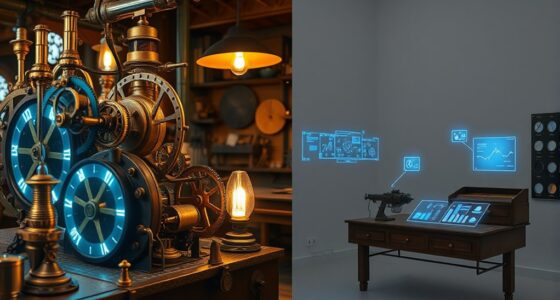

Steampunk contraptions often look intricate but can fail due to engineering challenges like unreliable energy storage, material limits, and complex biomimicry integration. Relying on steam, clockwork, or compressed air makes them prone to malfunction if not precisely engineered. Additionally, balancing Victorian aesthetic details with durable, functional design is tough—leading to fragility and frequent breakdowns. If you keep exploring, you’ll uncover how these issues can be addressed for more resilient creations.
Listen free for 30 days with Audible
Thousands of audiobooks and originals — cancel anytime.
As an affiliate, we earn on qualifying purchases.
Key Takeaways
- Biomimicry-inspired designs are complex to engineer, often leading to fragile and unreliable mechanisms.
- Energy storage devices like steam tanks and clockwork systems are bulky and prone to failure under Victorian material constraints.
- Replicating natural energy processes mechanically is difficult, requiring high-precision manufacturing that increases complexity.
- Aesthetic demands can compromise durability, causing devices to be delicate and hard to maintain or repair.
- Balancing innovative biomimicry with practical engineering limits is essential to prevent costly breakdowns and ensure reliability.

Have you ever wondered what it takes to bring steampunk visions to life? Behind those intricate gears, brass fittings, and Victorian-era aesthetics lies a complex web of engineering challenges. One of the most fascinating aspects is how creators attempt to incorporate biomimicry innovations—designs inspired by nature—to craft more efficient and resilient contraptions. These innovations can revolutionize energy storage solutions within steampunk devices, allowing them to operate longer and more reliably. However, translating these biological principles into mechanical systems isn’t straightforward. Nature’s solutions are often highly optimized through millions of years of evolution, making their adaptation into steam-powered machinery a formidable task. You might find yourself struggling with how to replicate a bird’s lightweight yet strong bones or a whale’s efficient energy use, especially when constrained by the materials and technologies of the Victorian-inspired era.
Energy storage solutions present another significant hurdle. In steampunk worlds, power sources like steam engines, clockwork mechanisms, and compressed air tanks must be carefully balanced to guarantee consistent operation. Unlike modern batteries, which can be compact and highly efficient, the energy storage options available in a steampunk setting are bulky, often unreliable, and prone to failure if not engineered meticulously. You need to consider the materials’ capacity to withstand high pressures, heat, and corrosion—all of which can cause devices to malfunction unexpectedly. Furthermore, integrating innovative energy storage methods inspired by biomimicry adds layers of complexity. For example, mimicking how certain plants or animals store energy—like how a pine cone opens and closes based on humidity or how a squirrel stores fat—can inspire clever solutions. But translating these natural processes into steam-powered or clockwork systems requires precise engineering, which is often where things fall apart. Additionally, high-precision manufacturing is crucial to ensure these delicate mechanisms function reliably over time.
The challenge increases when you factor in the aesthetic and functional demands of steampunk design. You want your contraptions to look authentic, detailed, and Victorian, but adding complexity risks making them fragile or difficult to maintain. Many inventors underestimate the importance of durability and ease of repair, leading to failures that are frustrating and costly. You might find that a beautifully crafted energy storage device fails after just a few uses because it was not engineered with the right materials or safety margins. These failures are often rooted in a mismatch between ambitious design ideas and practical engineering constraints. Ultimately, bringing steampunk visions to life demands a delicate balance—melding innovative biomimicry-driven solutions with robust, reliable energy storage systems that can withstand the rigors of Victorian-era technology and aesthetics.
Top picks for "engineer challeng steampunk"
As an affiliate, we earn on qualifying purchases.
Frequently Asked Questions
What Materials Are Most Prone to Failure in Steampunk Contraptions?
You’ll find that brittle materials and metals prone to fatigue often cause steampunk contraptions to fail. Brittle materials like glass or certain ceramics crack easily under stress, while metals experiencing metal fatigue weaken over time, increasing breakage risk. To keep your creations running smoothly, avoid using overly brittle parts and regularly inspect metal components for signs of fatigue or cracking, ensuring longevity and performance.
How Do Steam Pressure Fluctuations Affect Device Durability?
You should be aware that steam pressure fluctuations, especially pressure surges, can substantially impact your device’s durability. Sudden increases in pressure strain the components, risking cracks or bursts. Maintaining valve stability is essential because unstable valves allow pressure spikes, leading to potential failure. Regularly inspecting and fine-tuning your valves helps prevent damaging fluctuations, ensuring your steampunk contraption remains reliable and safe during operation.
Can Traditional Engineering Principles Be Applied to Steampunk Designs?
Yes, you can apply traditional engineering principles to steampunk designs, especially for steam engines and gear mechanics. By understanding fundamental concepts like thermodynamics and mechanical leverage, you guarantee your contraptions operate efficiently and reliably. Focus on proper material selection and precise gear alignment, just like in real engineering. This approach helps you create steampunk devices that are both functional and visually authentic, blending old-world craftsmanship with sound engineering practices.
What Safety Measures Are Overlooked in Steampunk Engineering?
In steampunk engineering, you often overlook safety protocols and hazard awareness, risking accidents. You might focus on aesthetic and creative design, but neglect essential safety measures like proper ventilation, secure fittings, and electrical safety. By ignoring these protocols, you increase the chance of failures or injuries. Always prioritize hazard awareness and implement safety protocols to protect yourself and others, ensuring your inventive contraptions are both spectacular and safe to operate.
How Do Aesthetic Choices Impact the Functionality of Steampunk Machines?
Your aesthetic choices can turn a steampunk machine into a work of art or a fragile spectacle. Overemphasizing ornamental design often sacrifices functional durability, making contraptions prone to breakdowns and inefficiency. When style dominates, the mechanical integrity suffers, risking safety and reliability. Balancing aesthetic allure with practical engineering guarantees your creations not only dazzle with their ornate details but also withstand the rigors of real-world use.
Conclusion
If you think steampunk gadgets are just about style, think again. Did you know that over 60% of steampunk contraptions face failure due to flawed design or materials? This highlights how engineering challenges are real, even in a world of imagination. Embracing these setbacks helps you appreciate the ingenuity behind each successful device. So next time a contraption fails, remember—it’s part of the creative journey, pushing you toward better, more resilient innovations.
Back to school Picks
back to school
As an affiliate, we earn on qualifying purchases.