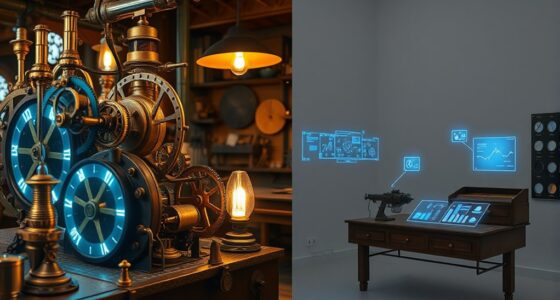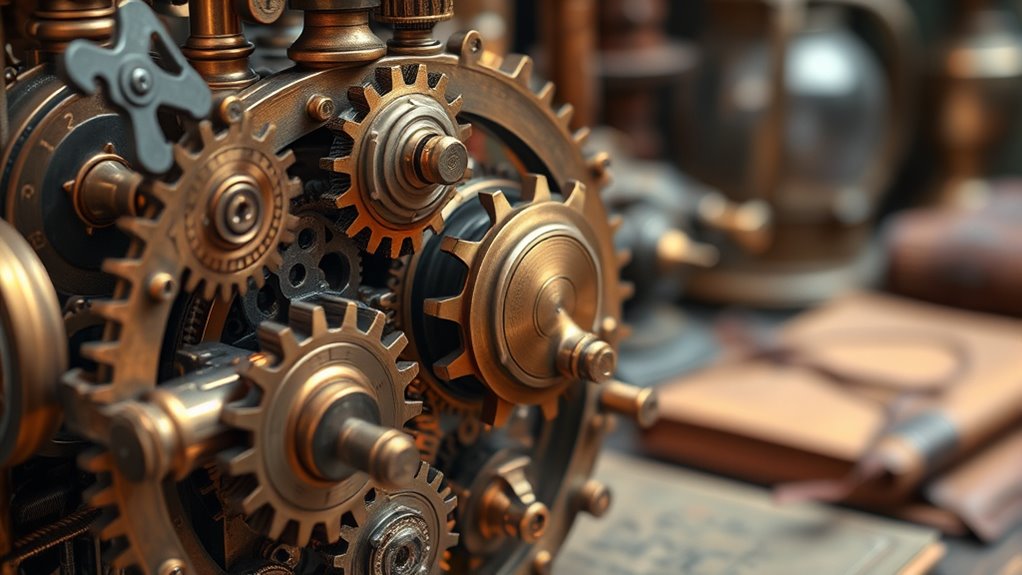

In a steampunk world, clockwork AI marries Victorian cybernetics with steam-powered mechanics to create intelligent automata. These machines, crafted with intricate gears, pistons, and sensors, simulate decision-making and sensory processing without true consciousness. They serve as helpers or companions, showcasing innovation and craftsmanship. Their behaviors hint at mechanical cognition, blending art with science. If you explore further, you’ll discover how these gears and pistons push the boundaries of what machines can achieve in this fascinating universe.
Key Takeaways
- Victorian cybernetics creates mechanical automata capable of simulated decision-making through intricate gear and piston systems.
- Steampunk AI emphasizes enhancing automata with layered routines and sensory feedback rather than full consciousness.
- Automata serve as intelligent companions or assistants in Victorian settings, showcasing advanced mechanical cognition.
- Craftsmanship and innovation merge art and engineering, pushing boundaries of mechanical intelligence with gears and steam.
- The aesthetic and function reflect a world where mechanical gears embody emerging artificial intelligence, blending science and artistry.

Have you ever wondered how artificial intelligence would fit into a world powered by steam and clockwork? Envision a society where intricate gears, piston-driven engines, and steam-powered automata form the backbone of daily life, and within this mechanical landscape, intelligent machines start to emerge. These automata aren’t just simple toys or decorative figures; they’re complex creations inspired by Victorian cybernetics, blending biology and machinery to mimic life itself. Victorian cybernetics, with its fascination for integrating human and machine, provides the perfect foundation for developing intelligent steam-powered automata. These devices are designed with intricate internal mechanisms—cogwheels, valves, and pistons—working in harmony to simulate decision-making and sensory processing. Think of them as early prototypes for AI, built not in silicon but in brass and steam, driven by clever engineering and a touch of Victorian imagination.
Imagine Victorian automata blending biology and machinery to craft early steampunk artificial intelligence.
You might encounter these automata in elegant parlors or bustling marketplaces, where they serve as assistants, storytellers, or even companions. Their movements are precise, yet deliberate, crafted to evoke both wonder and a sense of the uncanny. Behind their polished exteriors, Victorian cybernetics informs their complex control systems—tiny, interconnected mechanisms that allow them to respond to their environment, recognize faces, or perform simple tasks. These machines don’t possess consciousness in our modern sense, but they exhibit behaviors that suggest a form of mechanical cognition. They’re programmed with layered routines, enabling them to adapt to different situations, much like early forms of artificial intelligence, albeit limited by the technology of their era.
The dialogue between steam-powered automata and Victorian cybernetics sparks a vision of intelligence rooted in mechanical ingenuity. These creations are a testament to human curiosity and craftsmanship, showing how the principles of logic, mechanical engineering, and emerging cybernetic ideas could give rise to machines that seem almost alive. You can imagine inventors tinkering late into the night, trying to improve their automata’s decision-making capabilities, embedding sensors and feedback loops that mimic neural processes. Though primitive by modern standards, these systems hint at a future where artificial intelligence might evolve from the gears and pistons of a steam-driven world.
In this steampunk universe, the integration of AI isn’t about fully autonomous machines but about enhancing automata through Victorian cybernetics. It’s a fascinating intersection of art, science, and mechanical philosophy—where the pursuit of creating life-like machines pushes the boundaries of what’s possible with steam, clockwork, and ingenuity. So, as you envision this world, remember that these steam-powered automata embody a unique blend of craftsmanship and nascent intelligence, shaping a future that’s both mechanical and remarkably human in spirit.
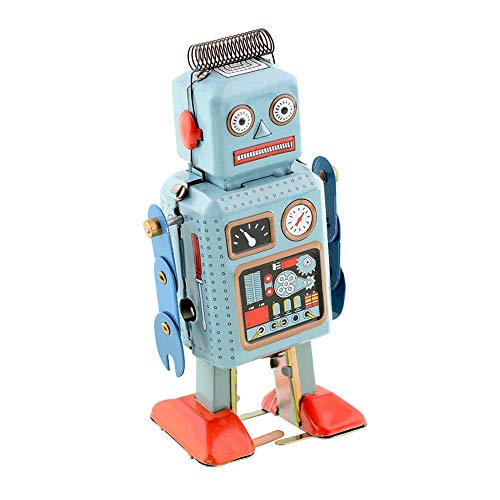
CHIMUYU Wind Up Vintage Robot Retro Classic Clockwork Spring for Collection, Xmas, Gift, Party, Birthday, Festival, Surprise, Memories
SPECIAL REMINDER: Because the robot is purely handmade and retro-style, it will not move very sensitively, its arms…
As an affiliate, we earn on qualifying purchases.
As an affiliate, we earn on qualifying purchases.
Frequently Asked Questions
How Do Steampunk Aesthetics Influence AI Design Choices?
Steampunk aesthetics influence your AI design choices by integrating gothic motifs and brass embellishments, creating a vintage yet innovative look. You incorporate intricate gears and Victorian-inspired details to evoke a sense of craftsmanship and nostalgia. These elements guide your design to blend technology with artistry, making your AI feel both functional and visually enthralling. By emphasizing these steampunk features, you foster a unique, immersive experience that highlights creativity and historical charm.
What Materials Are Used to Build Clockwork AI Components?
You use bi-metal alloys like brass and copper for clockwork AI components, as they conduct electricity and resist corrosion. Gear mechanisms, crafted from steel or bronze, form the core of your device, enabling precise movements. These materials provide durability and a vintage aesthetic, fitting seamlessly into your steampunk-inspired design. By combining bi-metal alloys with intricate gear mechanisms, you create a resilient, visually striking AI that embodies the steampunk spirit.
How Does Clockwork AI Impact Steampunk Society and Economy?
You see clockwork AI stirring society like a fiery engine, fueling industrial innovation and sparking societal shifts. Its intricate gears and steam-powered logic transform industries, creating new jobs and economic opportunities. Yet, it also challenges traditions, forcing society to adapt and rethink roles. As you watch this mechanical mind weave through the fabric of your world, you realize it’s driving your steampunk city into a bold, new era of progress and change.
Are There Ethical Concerns Unique to Steampunk AI Integration?
You should consider that steampunk AI raises unique ethical concerns, like privacy dilemmas when these intricate machines collect data through their gear-driven sensors. You also bear moral responsibilities to guarantee these AIs don’t exploit or harm society. Balancing innovation with ethics becomes vital, as the mechanical nature of steampunk AI amplifies risks of misuse or unintended consequences, demanding vigilant oversight.
Can Clockwork AI Evolve or Learn Over Time?
You might think clockwork AI is locked in timeless gears, but it can indeed evolve. Through adaptive learning, it adapts like a cog shifting to new gears, constantly refining its functions. Self-improvement fuels this process, enabling the machine to grow smarter over time. While it’s not alive in the traditional sense, its capacity to learn keeps it dynamic, transforming static machinery into a surprisingly agile thinker ready for new challenges.

CHOVY Antique Brass Robot Figurine – Heavyweight Solid Brass Retro Decor, Biomechanical Art Sculpture for Collectors, Unique Steampunk Gift for Men’s Workspace
Whimsical Charm: Forged from timeless brass, this robot embodies the soul of steampunk – where Victorian elegance meets…
As an affiliate, we earn on qualifying purchases.
As an affiliate, we earn on qualifying purchases.
Conclusion
As you step back from this steampunk AI world, you realize how the intricate gears and steam-powered machines contrast with the sleek, silent intelligence of modern technology. Here, creativity fuels innovation, and Victorian elegance meets futuristic thought. It’s a reminder that even in a world of brass and clockwork, human ingenuity and emotion remain at the heart. So, while the gears turn and steam rises, it’s your imagination that truly drives the future forward.

Thames & Kosmos | Mechanical Engineering: Machines & Vehicles STEM Experiment Kit | Build 20 Mechanical Models, Explore Physics of Force & Motion | Hands-on, Introductory Science Learning for Ages 8+
THE SCIENCE OF MACHINES & VEHICLES: Kids ages 8-14+ get an introduction to mechanical engineering through 20 hands-on…
As an affiliate, we earn on qualifying purchases.
As an affiliate, we earn on qualifying purchases.
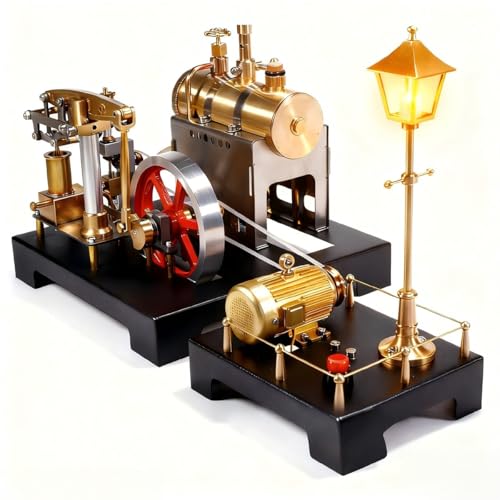
MechPuConToy Steam Engine Model with Boiler and Lamp Scene DIY Kit, SE-01 Full Metal Beam Engine Steam Engine Model Kit That Works with Centrifugal Regulator (84PCS)
Highly Restored Engine: Witness the magic of steam power as this lifelike model comes to life. With mini…
As an affiliate, we earn on qualifying purchases.
As an affiliate, we earn on qualifying purchases.